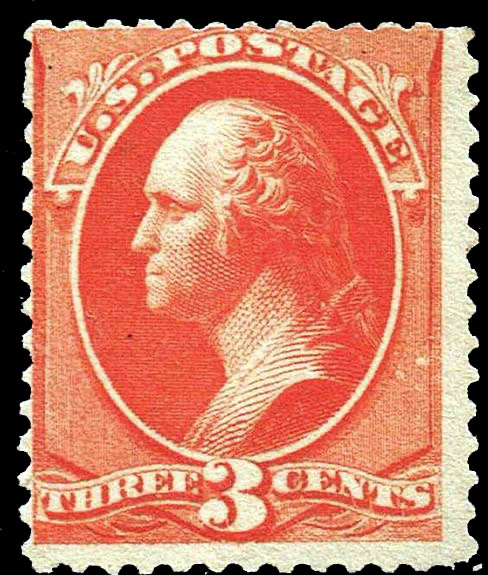
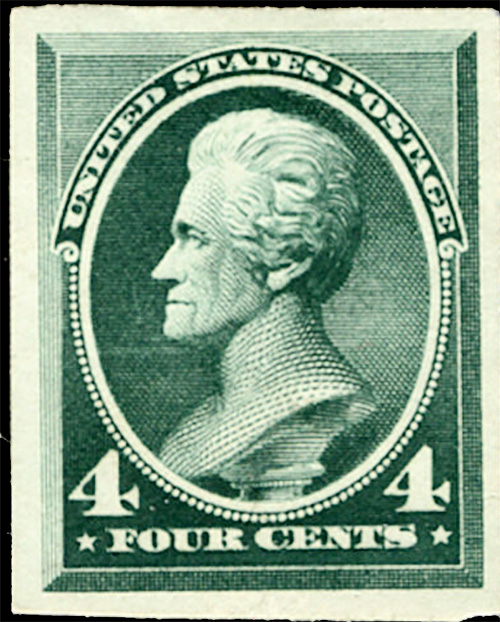
#211 - 1883 Blue Green 4¢
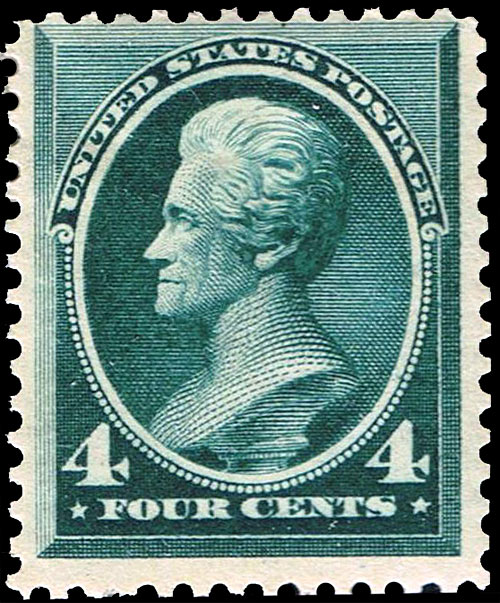
See below for details
Basic Info
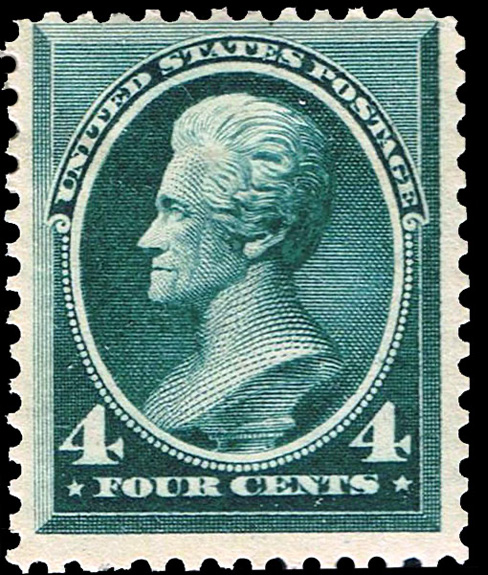
4¢
Blue green, deep blue green
Subject: Andrew Jackson
Number issued: 78,500,000
Perforations: P12
Printer: American Bank Note Co.
Scott #: 211
Earliest Date of Use: October 1st, 1883
#211 Value
Used
$1 - $2
No postmark with gum (MH)
$30 - $55
Full perfect gum, no postmark
no trace of stamp hinge mark (MNH)
$125 - $160
First Day Cover
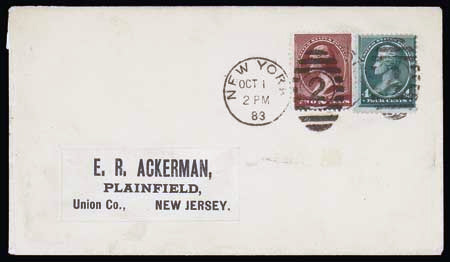
A first day cover of #211, October 1st, 1883
#211 Bisected
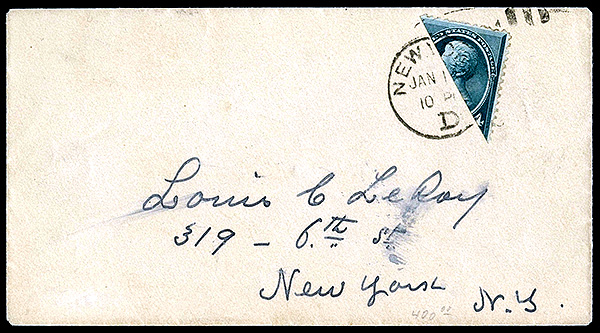
An unofficial bisect of #211, value $140-$200
Sample stamps
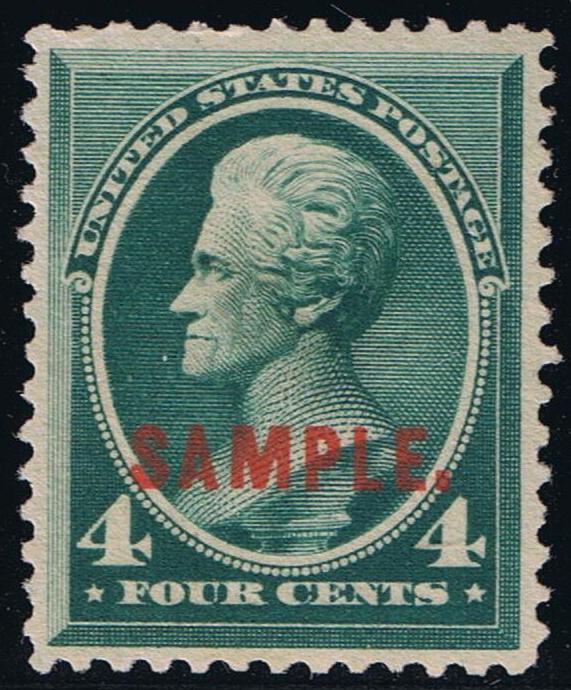
Similar to Trial Color Proofs, samples were plate printed stamps in different colors and shades for the purpose of selecting a color. Value approximately $30.
A New Stamp
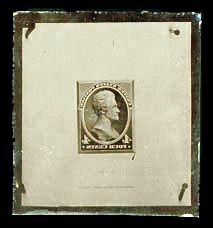
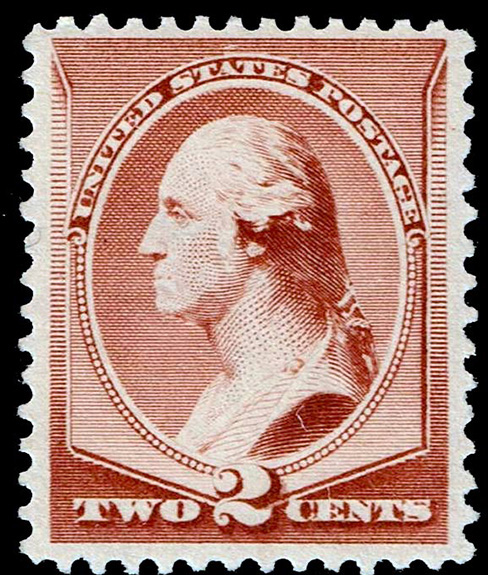
In 1882 the inland letter rate was reduced from three to two cents and, as Washington had been associated for many years with the stamp which franked the internal correspondence it was decided to transfer his profile from the 3 cents to the 2 cents (#210) value. Accordingly, a new design was prepared, for the 2 cents bearing his bust and Jackson, dethroned from the 2 cents, was given a place on the 4 cents, which was a new value.
Inspiration for the design
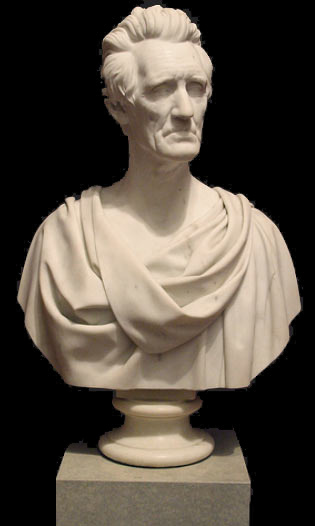
The design was taken from the portrait bust of Andrew Jackson by Hiram Powers. Now at Metropolitan Museum of Art in New York City.
Plate #'s

#211 was issued with the following plate #'s
200 subject panes
456-457, L 542-546
Essays and Proofs

211-E1
Unapdopted essay on India

211-E1

211-E var
Essay on India

211-E var
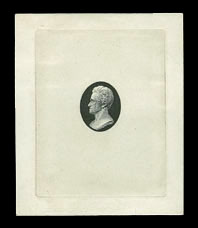
211-E3
Vignette essay on India mounted on card

211-E3

211-E6
Final design essay on India die sunk on card

211-E6
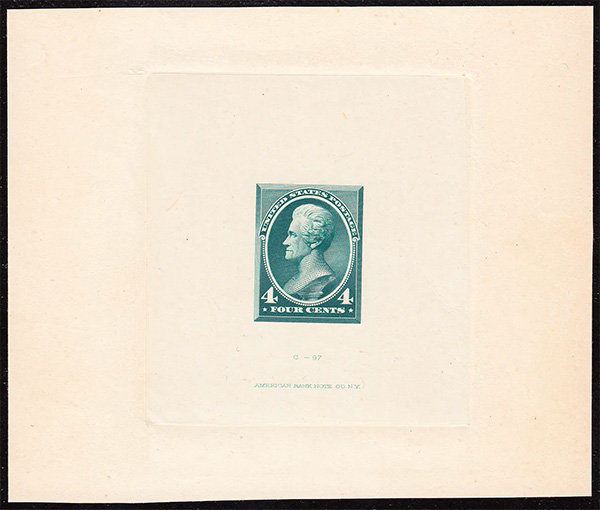
211-P1
Large die proof on India, die sunk on card

211-P1
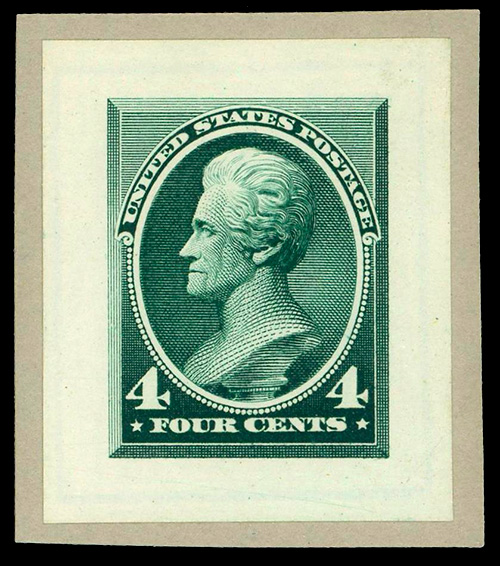
211-P2a
Roosevelt small die proof

211-P2a
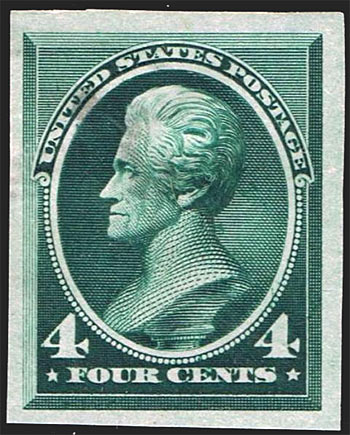
211-P3
Plate proof on India

211-P3
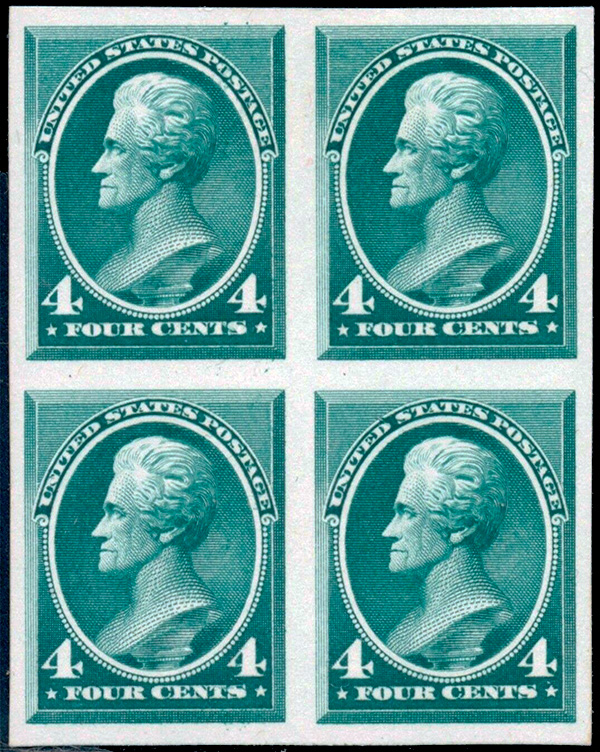
211-P4
Plate proof on card

211-P4
211-P5
Plate proof on stamp paper

211-P5
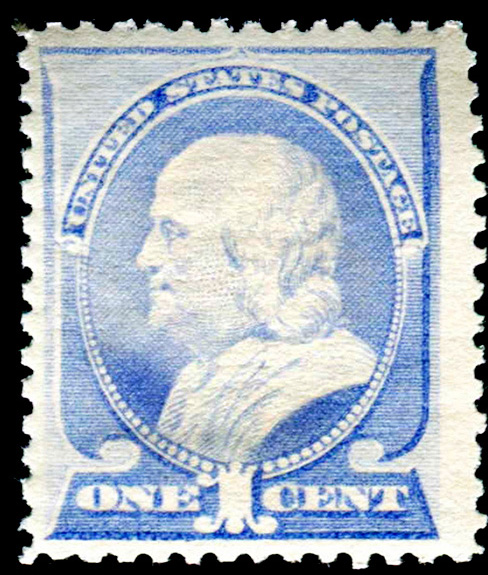
The 1883-87 Definitives
Please select a stamp by clicking it