#318 - 1908 1¢ P12 Vertical Coil

See below for details
Basic Info
1¢
Blue Green
Printing Method: FLAT PLATE
Subject: Benjamin Franklin
Number issued: Not known
Perforations: P12 Vertically
Watermark: Double Line USPS
Scott #: 318
Issued: July 31, 1908
Value of Singles
Used
No sales recorded
No postmark with gum (MH)
$2,300
Full perfect gum, no postmark
no trace of stamp hinge mark (MNH)
$7,000
Value of Pairs
Used
No sales recorded
No postmark with gum (MH)
$6,250 - $11,500
Full perfect gum, no postmark
no trace of stamp hinge mark (MNH)
No sales recorded
The Inspiration for the Design
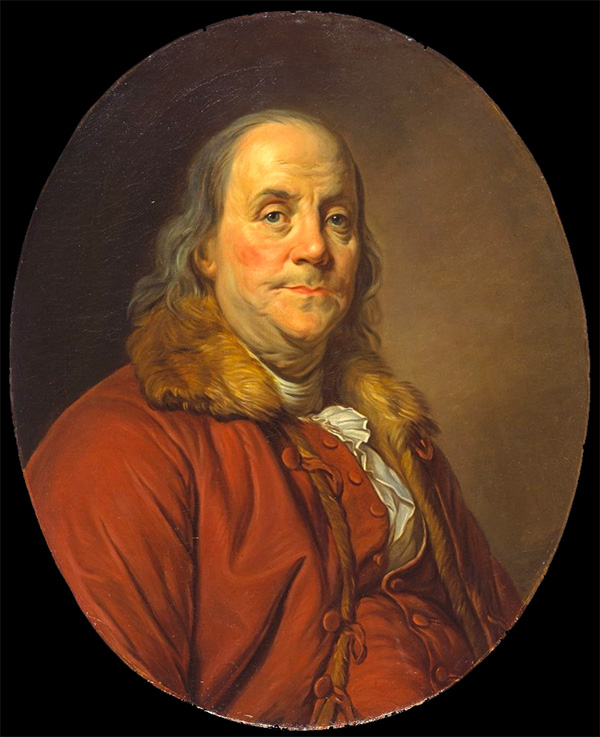
For the vignette was based on this Joseph Siffred Duplessis (1725–1802) | Oil on canvas, c. 1779. Now located in the North Carolina Museum of Art. The resultant engraving is poorly done giving the impression that Ben is looking upward and is smiling.
Counterfeits
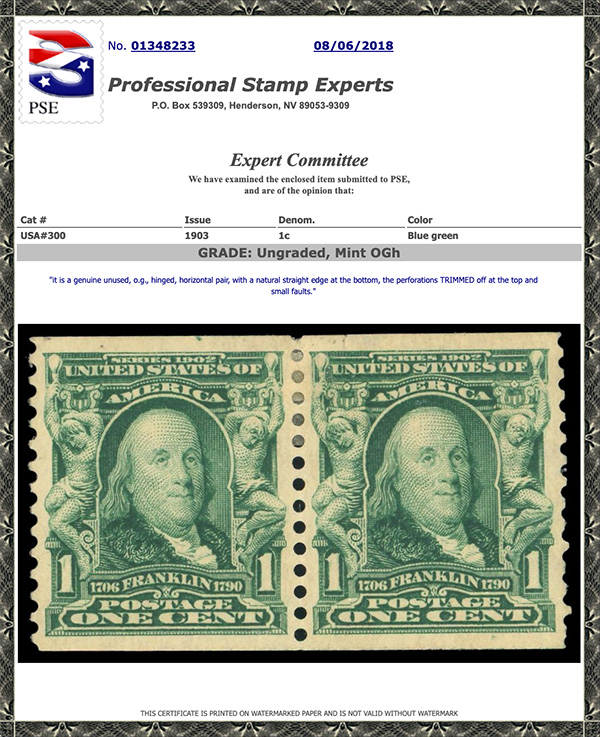
Be careful of 300's with their horizontal perforations trimmed off. For this expensive stamp a certificate is a must if considering obtaining one.
The story behind the experimental coils
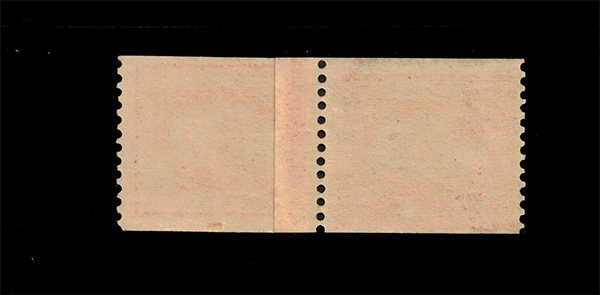
Shown below are images of the stamp affixing machines for office use and stamp vending machines for public use. Both of these machines required stamps with straight edges, either on the top and bottom or on both sides to operate the machines. Initially the Bureau perforated sheets in only one direction and then cut them into strips. These strips were then hand pasted into rolls and sold as a roll of coiled stamps.
The process of pasting together the strips was labor intensive and coils were not cheap to produce. An example of where two strips of stamps were pasted together is shown above. The advent of the rotary press saved the day.
The blades in the both the first experimental machines were much to be desired and usually meant separating the stamps meant a torn stamp. To aid separation various perforations were used. The producers of the machines purchased sheets or coils of these stamps themselves and perforated them in their own unique style (click here for a list of styles), each with the objective of making the separation easier.
The advent of coils

SIDEWAYS COILS
Due to the popularity of stamp affixing machines, an example is shown above, stamps with straight edges that fed these machines were becoming popular. These stamps were known as coils. The coils with straight edges at the top were perfect for these machines and the Bureau did several experimental printings to meet the demand.
ENDWAYS COILS
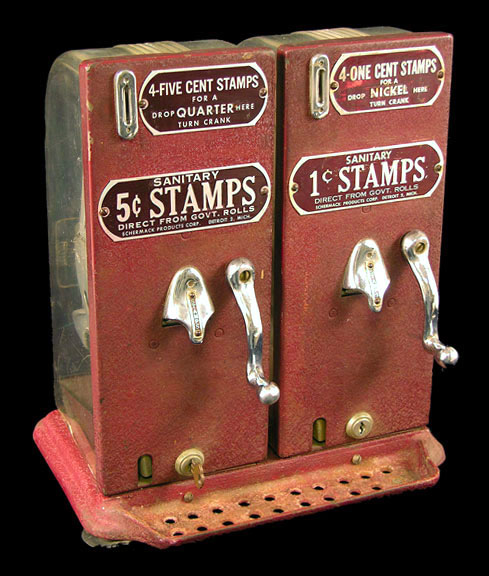
Stamp vending machines were just being introduced to the public, an example of a Schermak machine is shown above. Strips of stamps with straight edges at the sides were made for these machines and the Bureau did several experimental printings to meet the demand.
Proofs

Photo essay on card. 300 E

300 E

Pen essay of frame on card - 300-E4

300-E4

Large die essay on India die sunk on card 300-E1

300-E1
1903-08 Definitive Issue Coils


