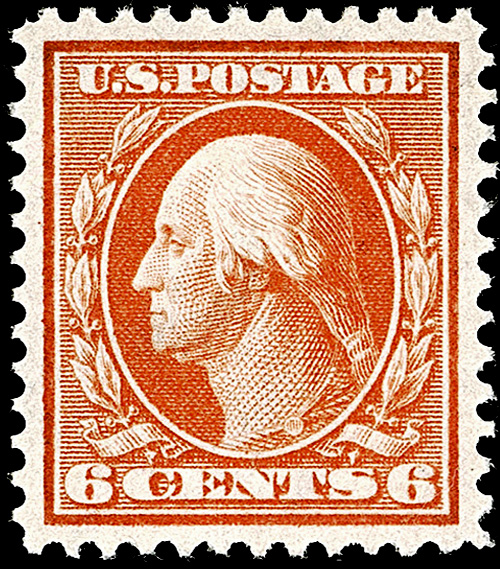
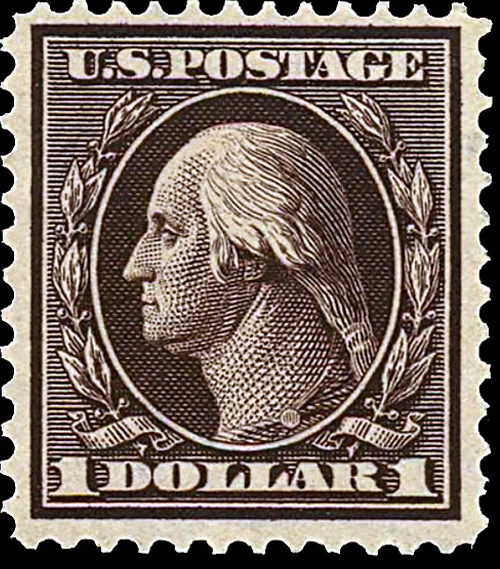
#336 - 1908 Double Line USPS Watermark P12 6¢
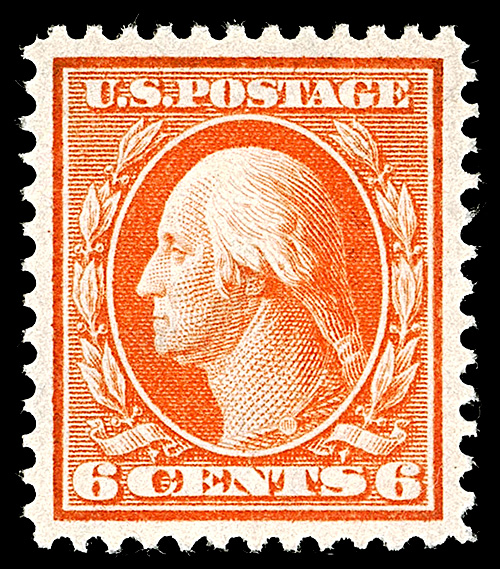
See below for details
Basic Info
6¢ - Pale red orange, red orange, orange
Printing Method: FLAT PLATE
Subject: George Washington
Number issued: 105,000,000
Perforations: P12
Watermark: Double Line USPS
Scott #: 336
Issued: December 31, 1908
Value
Used
$1 - $2
No postmark with gum (MH)
$20 - $50
Full perfect gum, no postmark
no trace of stamp hinge mark (MNH)
$90 - $125
Plate #'s

#336 was issued with the following plate #'s
Imprint and number
4936-39
Experimental Paper ?
Sometimes you will see very expensive copies of #336 advertised as experimental paper or CHINA CLAY PAPER. There is no such thing, what exists are stamps which have "dirty water" paper because silica in the water became embedded in paper produced during drought conditions when the mill pond was low.
There are some old PF certificates still around that state that a stamp is a "China Clay' stamp. The PF no longer recognises China Clay stamps and has ceased certifying them.
Do not be tempted to buy something that does not exist.
Precancels
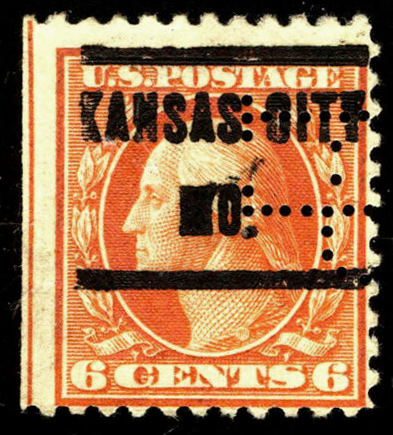
#336 did have precancels, they are fairly common.
The watermark

An illustration of the double line USPS watermark found on this stamp
The Ultramar Overprints
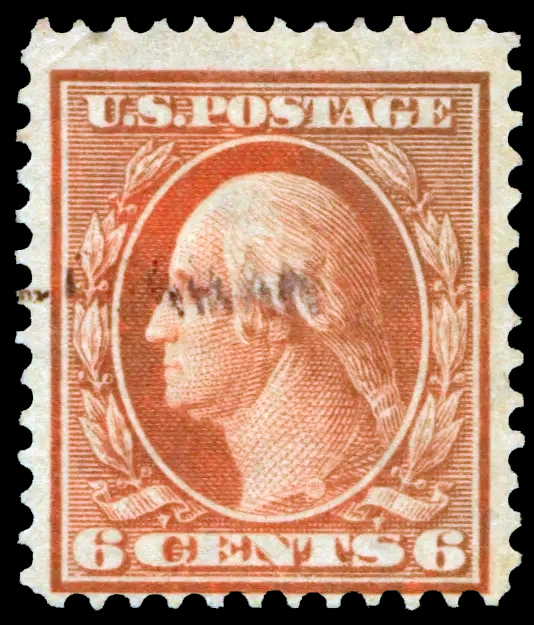
The US was a member of the Universal Postal Union (UPU) and under the terms of the agreement each member was required to send a copy of a new design to all the Universal Postal Union countries. Today, most countries still have these samples. Portugal does not, it distributed its samples long ago. Portugal overprinted all their samples with the word 'Ultramar' which translates to 'Specimen'. For the whole of the period of the production of the Washington Franklin series only one example of each value was sent to Portugal, therefore finding one is not easy.
Was this the culprit?
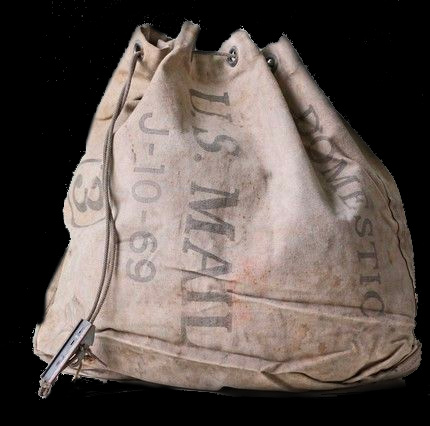
The yellow ink used for the orange 6¢ contained ferric oxyhydroxide (the chemical compound of Iron), and as everyone knows iron rusts. Normally the sulphurization occurs in the ink drying process. However as the Bureau had, supposedly, a tight control on this process, it was doubtful that this was the cause of the ink sulphurising. Another potential source of sulphurization is a reaction to acid. And here is where the mailbags come into focus. The mailbags at the time frequently got wet, they were made out of canvas and without some kind of preventive action they would mould. And mouldy mailbags is not what you would want your mail to be carried in. The mailbags were treated with a special chemical (probably ethylene oxide), one that prevented mould and also prevented the breakdown of the canvas material. The chemical would be allowed to absorb into the bag, and after spraying, would be available for use 24 hours later. But, if the bag was used before then, the chemical would not have absorbed fully and would have reacted to the iron compounds used in the ink on the stamp.
Dipping a used stamp in hydrogen peroxide will change the stamp back to the original color. Using a q-tip with hydrogen peroxide and gently rubbing the top of the stamp without soaking the stamp will correct the color on mint stamps.
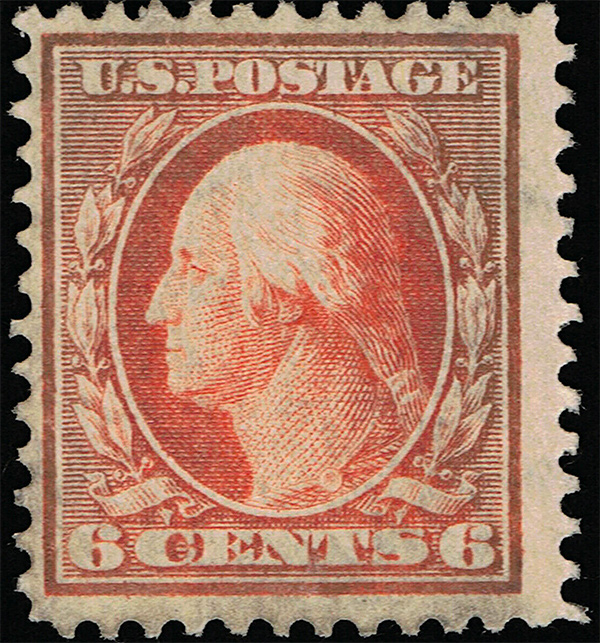
#336 showing oxidation
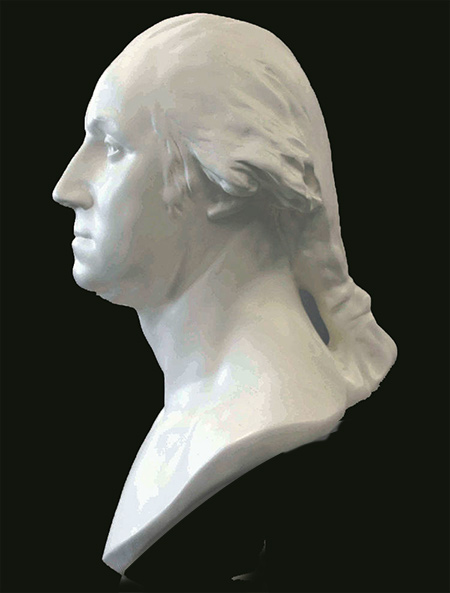
Proofs
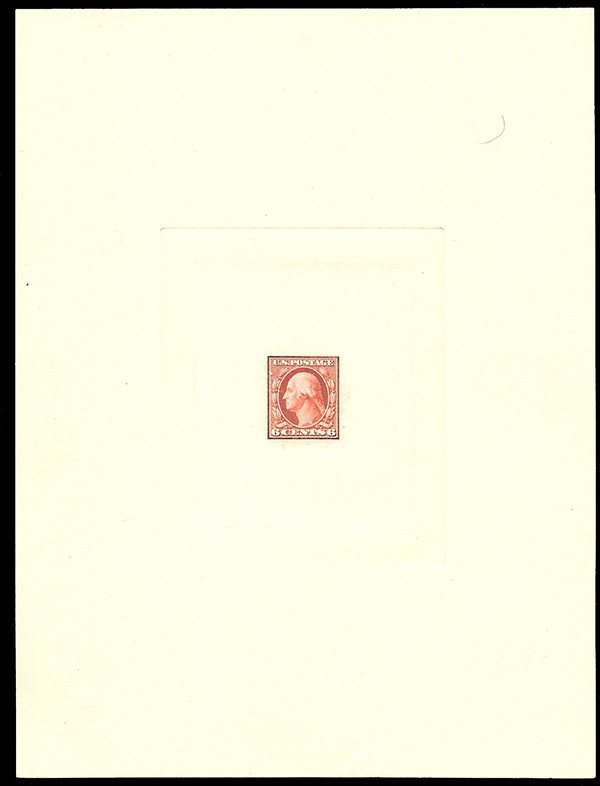
Die proof on India mounted on card
336-P1

336-P1
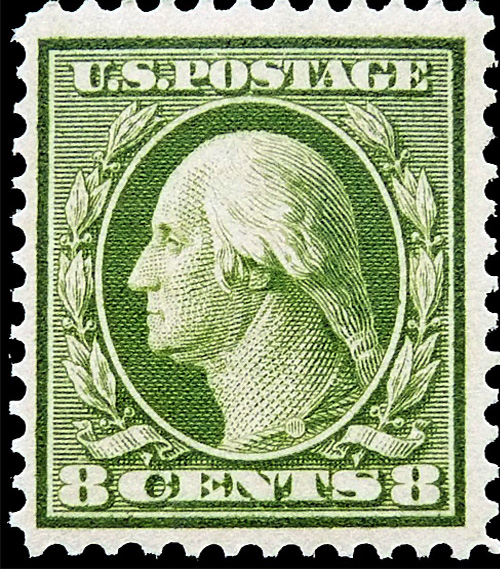
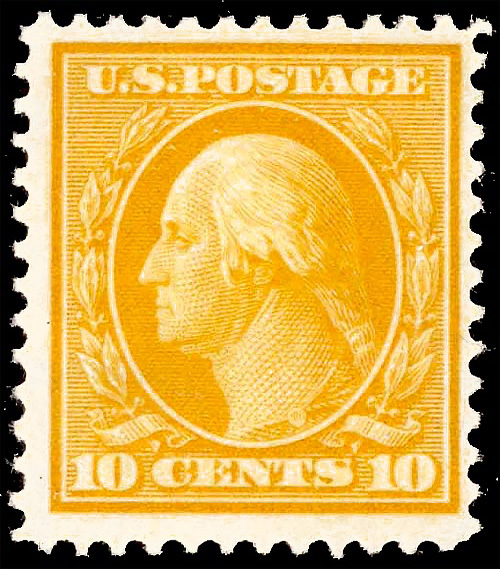
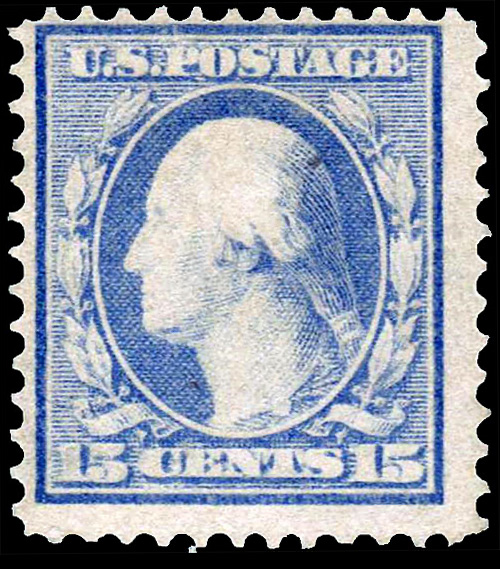
1908-09 Definitive Double Line USPS Watermark P12 Issues
Click your selected stamp