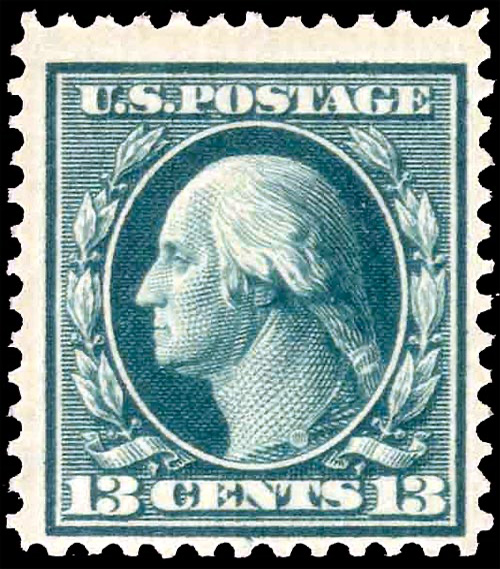
#339 - 1909 Double Line USPS Watermark P12 13¢

See below for details
Basic Info
13¢ - Blue green, deep blue green
Printing Method: FLAT PLATE
Subject: George Washington
Number issued: 2,905,000
Perforations: P12
Watermark: Double Line USPS
Scott #: 339
Issued: January 11, 1909
Value
Used
$2 - $7.50
No postmark with gum (MH)
$15 - $35
Full perfect gum, no postmark
no trace of stamp hinge mark (MNH)
$60 - $80
Plate #'s
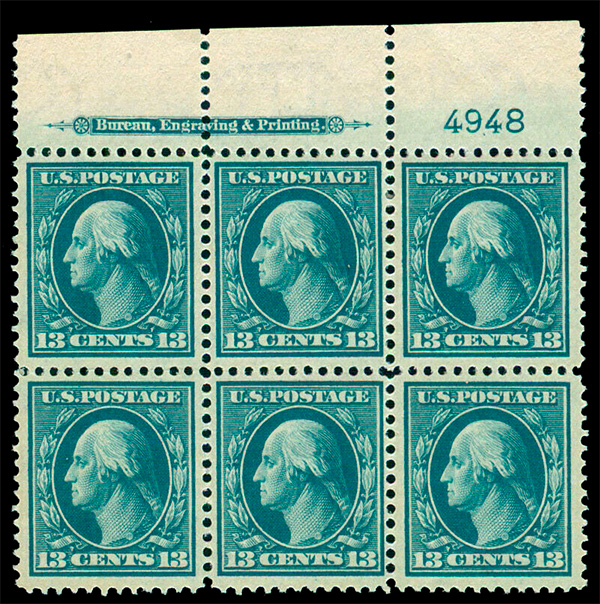
#339 was issued with the following plate #'s
Imprint and number
4942-46, 48
The watermark
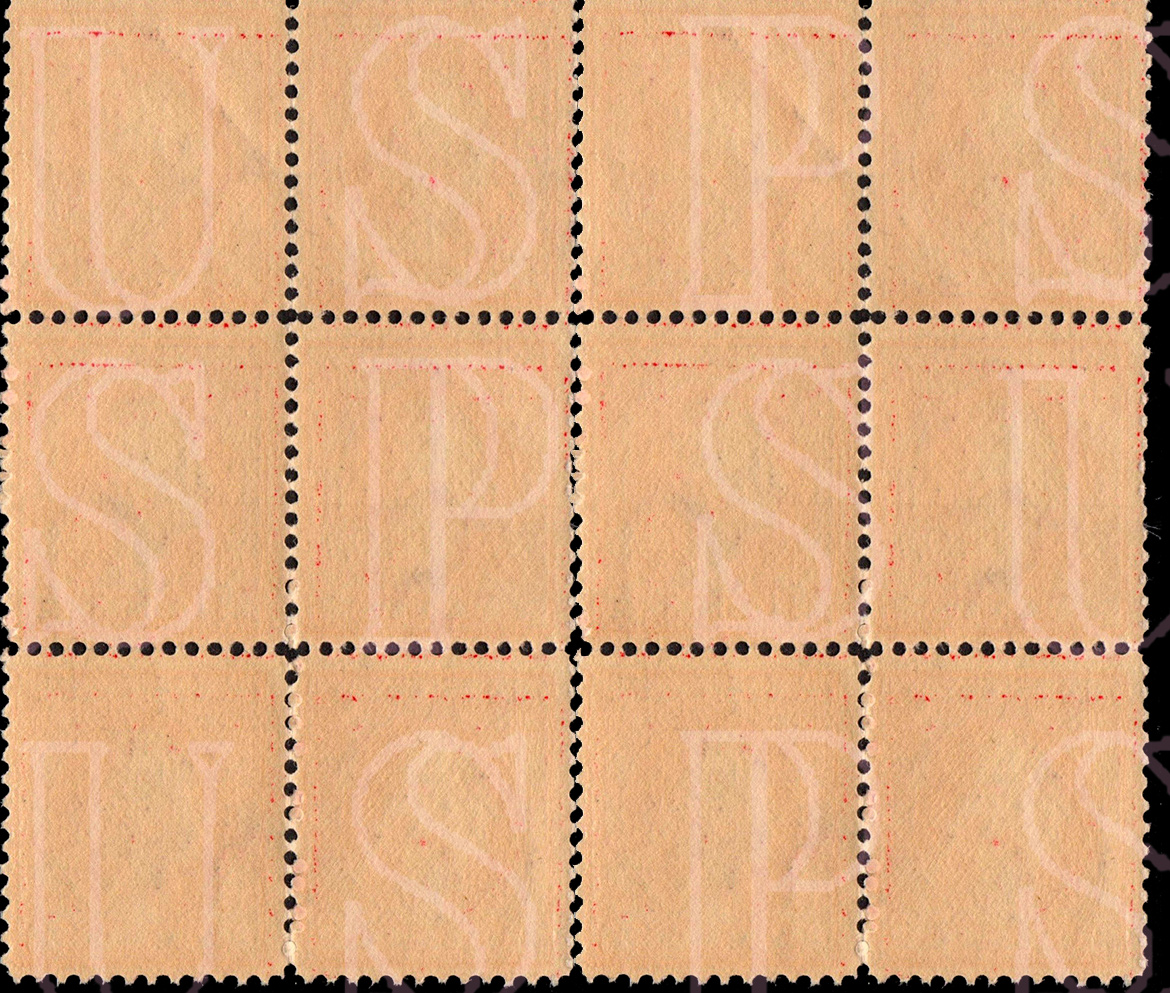
An illustration of the double line USPS watermark found on this stamp
Experimental paper ?
Sometimes you will see very expensive copies of #339 advertised as experimental paper or CHINA CLAY PAPER. There is no such thing, what exists are stamps which have "dirty water" paper because silica in the water became embedded in paper produced during drought conditions when the mill pond was low.
There are some old PF certificates still around that state that a stamp is a "China Clay' stamp. The PF no longer recognises China Clay stamps and has ceased certifying them.
Do not be tempted to buy something that does not exist.
Covers

Finding #339 on cover is especially hard. There are very few survivors. Shown above is the earliest known cover, dated March 5, 1909. The 13 c stamp was introduced to pay for the 8¢ registration rate plus the 5¢ foreign single rate. The stamp had only been in production for nine ten when the registration rate was increased to 10¢, thereby rendering this stamp pointless. The 15¢ stamp now served this purpose. The 13¢ stamp was discontinued in 1916, the pair above is a rare example of late usage
The 13¢ Used
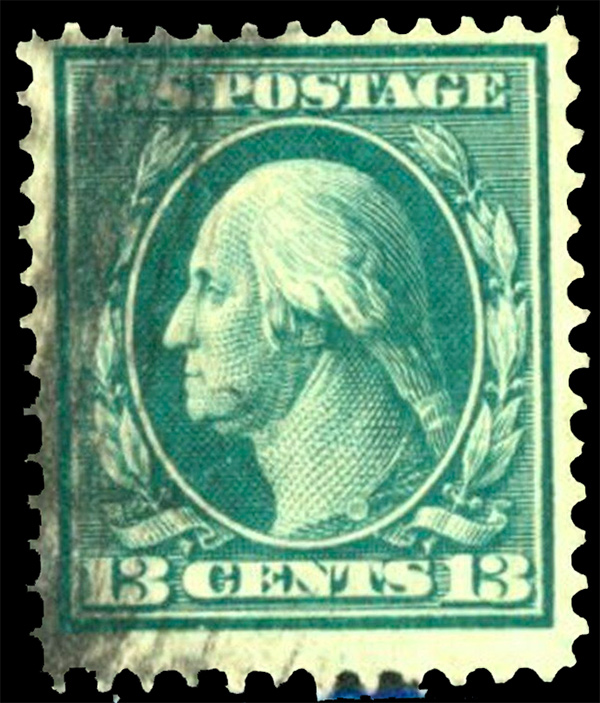
One of the very few 20th stamps which are less common used than mint. Despite that the mint stamps sell for more. For reasons as to their scarcity read the article above
Proofs
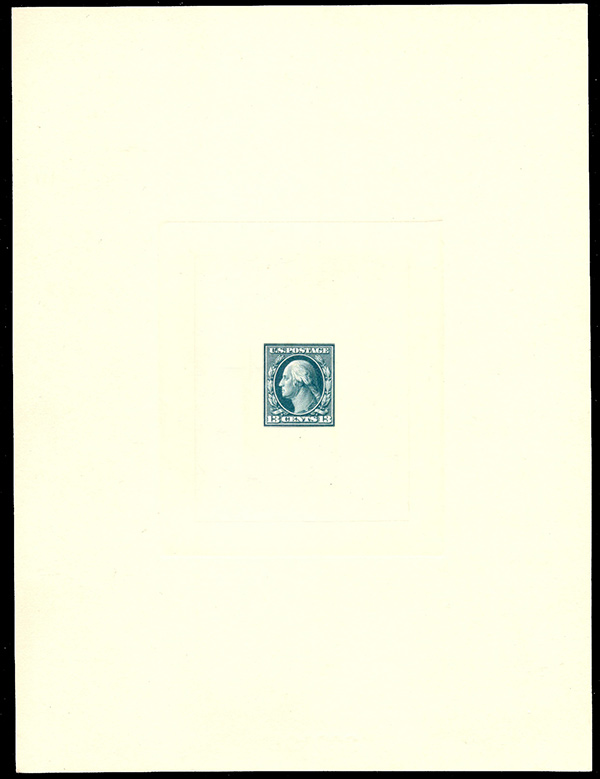
Die proof on India mounted on card
339-P1

339-P1
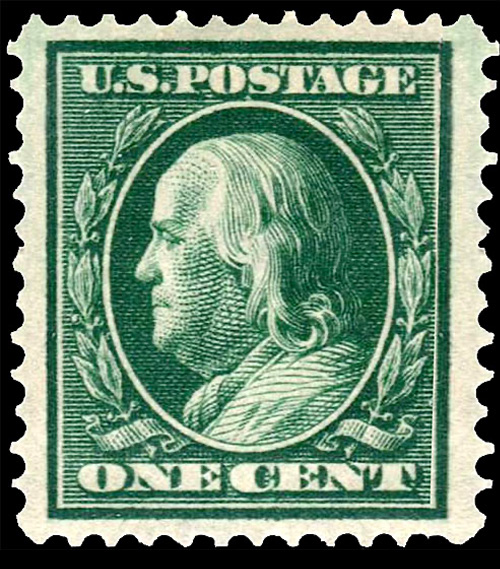
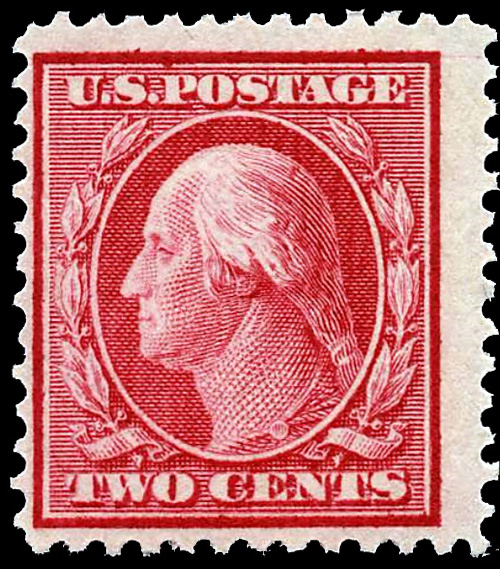
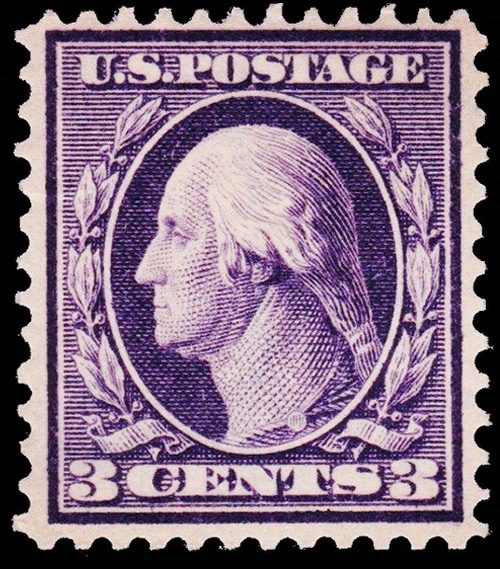
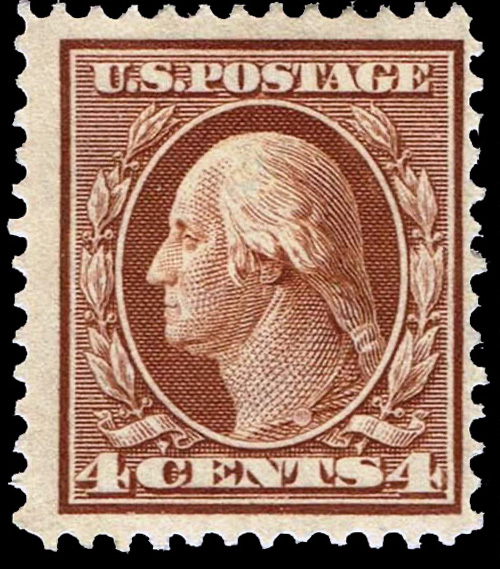
1908-09 Definitive Double Line USPS Watermark P12 Issues
Click your selected stamp