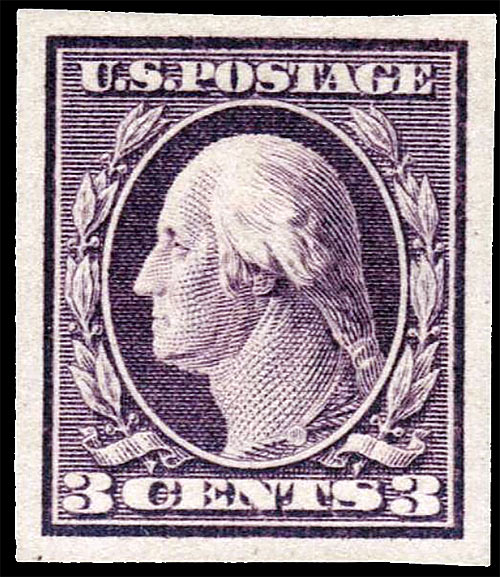
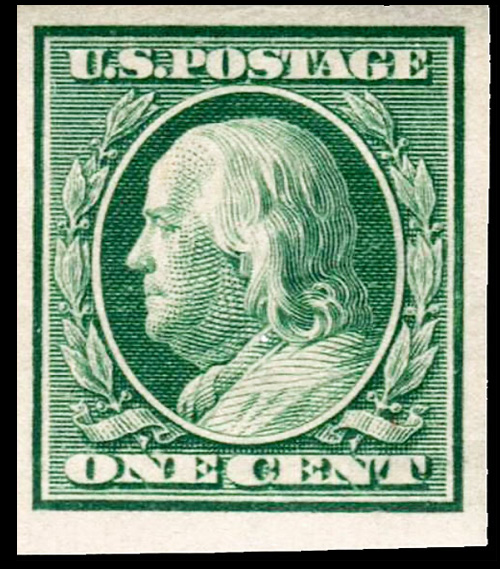
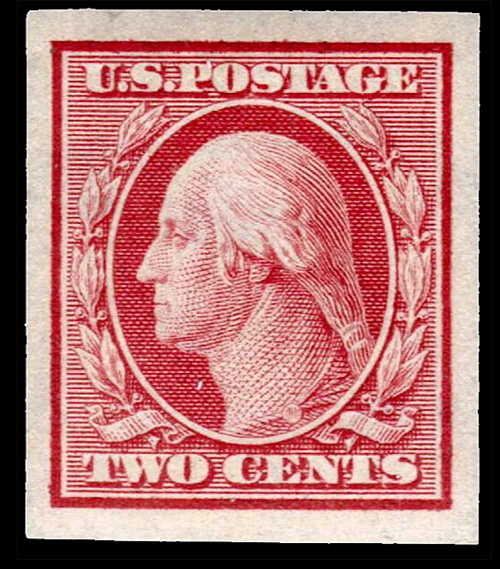
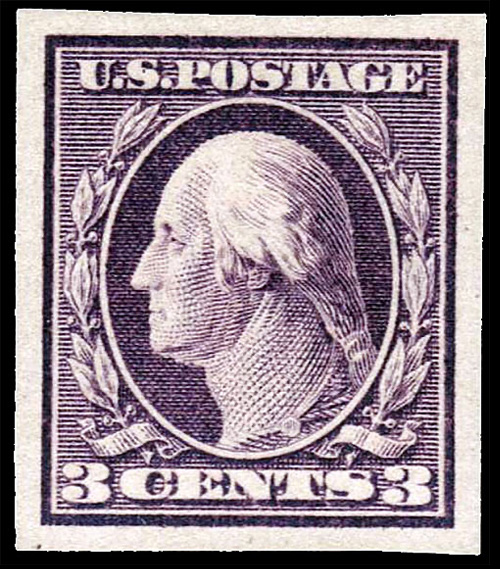
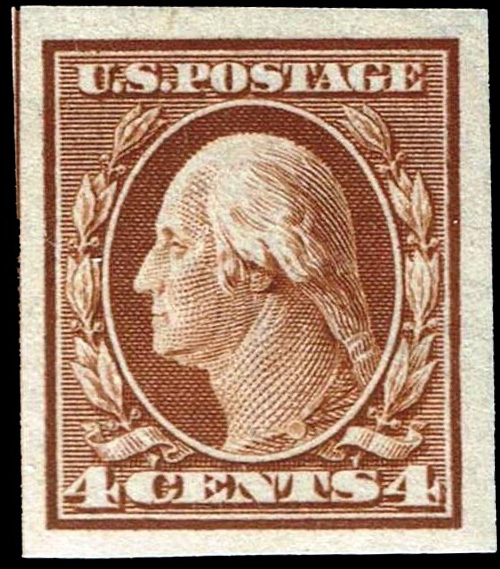
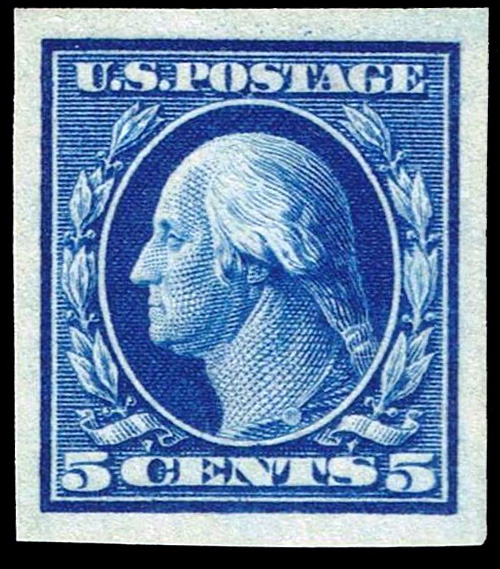
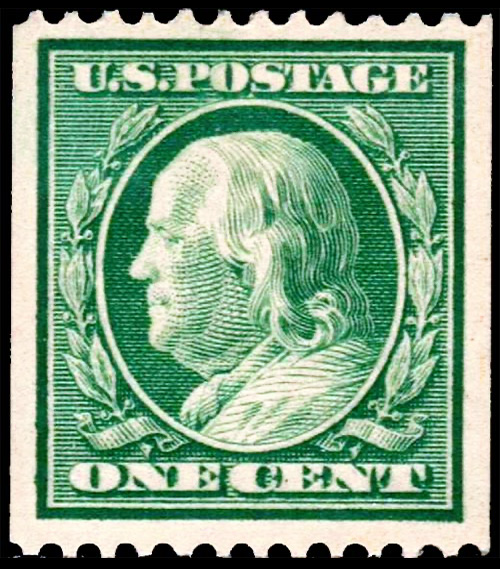
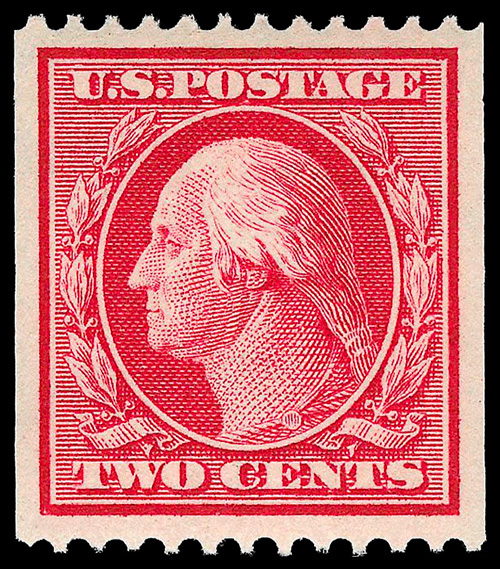
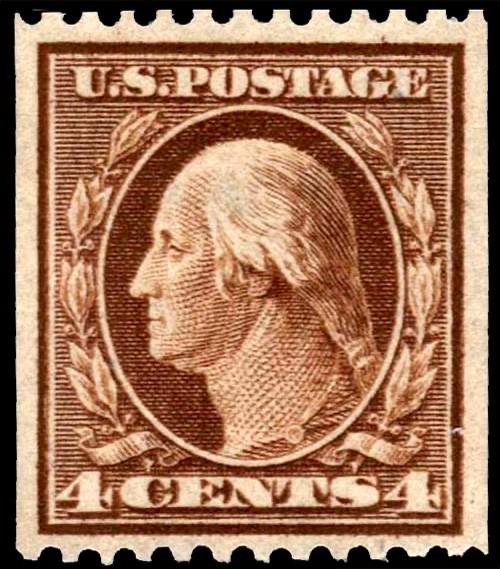
#345 1908 3¢ Imperf.

Basic Information

Color: Deep Violet
Subject: George Washington
Watermark: Watermarked double-lined USPS
Printing method: Flat plate
Perforations: Imperforate
Scott #: 345
Quantity issued: 418,700
Issued: February 13th, 1909

Value

An unused stamp with perfect gum: $2.50-$5
An unused stamp with gum and a hinge mark: $1-$2
A used stamp: $1-$2
Values are for stamps with four margins

About #345

A used block of four

These imperf. stamps were issued primarily for use in making private coils for vending machines. They were printed from the same type of plates as were used for the perforated stamps of this issue, although not all the plates noted for perforated varieties were used.

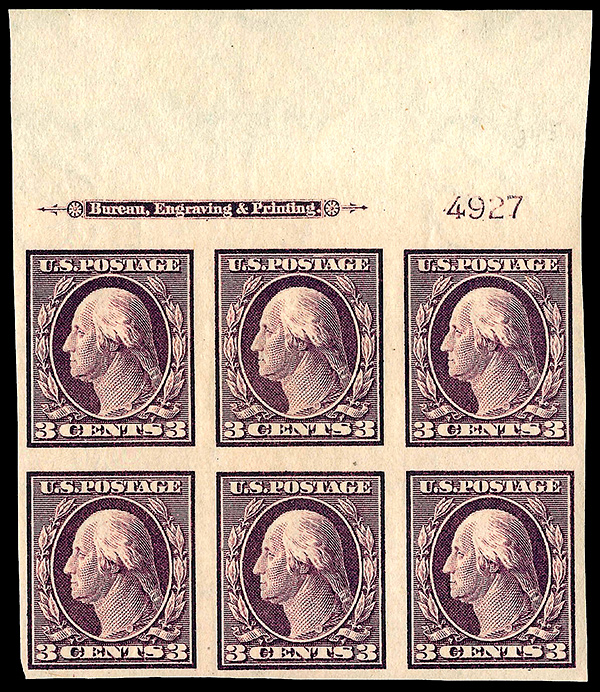
The imperf. stamps (unless in coils) were issued in full sheets containing 400 subjects, divided into four panes of 100 each by horizontal and vertical guide lines. These guide lines terminated in arrows at the margins. In the perforated varieties the guide-Iines appear as straight edges at top or bottom and right or left. On the imperforate sheets they permit additional position varieties.

Paste-up Pairs

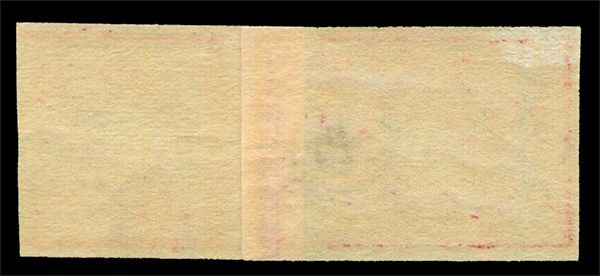
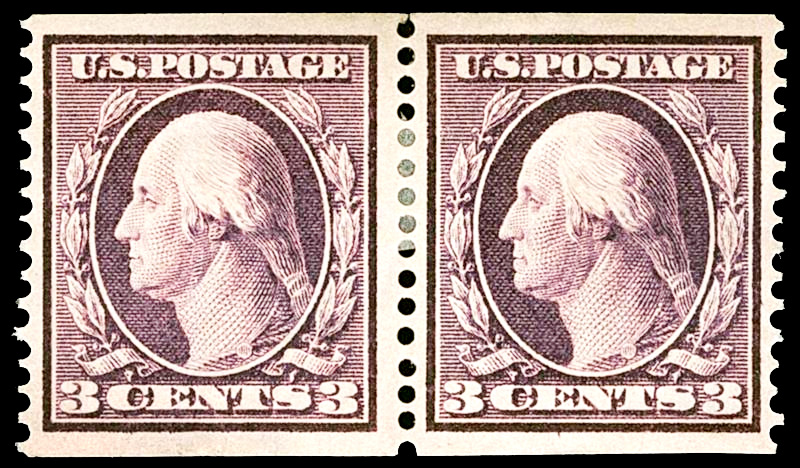
A paste up pair

The makers of private coils pasted fifteen of these sheets together, end to end or side to side. These were then perforated, cut into strips and rolled into coils of 3,000. A paste up, occurred every twenty stamps, each strip being divided by the guide line running in the same direction as the perforations. The primary reason for issuing imperforate stamps in sheets being for the use of makers of private perforations, Above is shown an example of where two stamps have been pasted together.

Guide Lines

The guide line as it appears on the sides of the sheets

A guide line between each pane of 100 in a sheet of 400 was printed. Guide lines on the 3¢ value are uncommon. They do increase the price of the stamp.

1906-08 imperforate stamps and private perforations

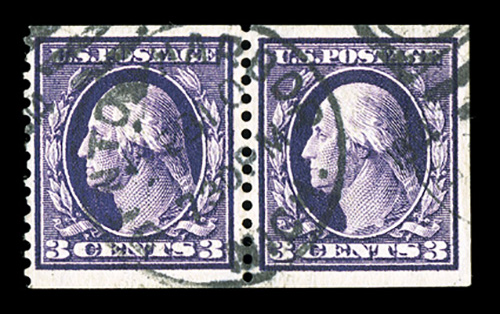
An International private perforation, a rare perforation.

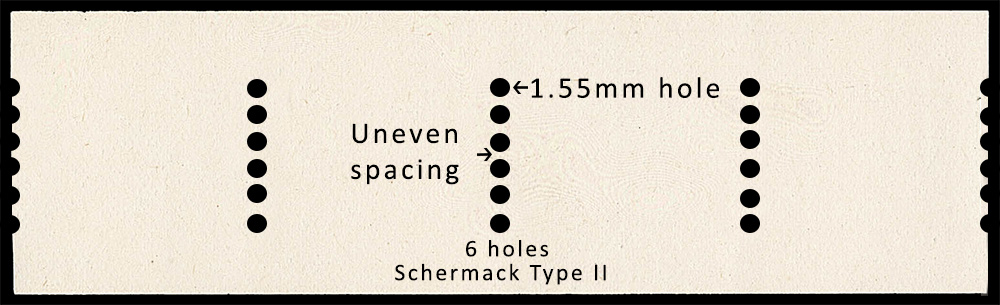
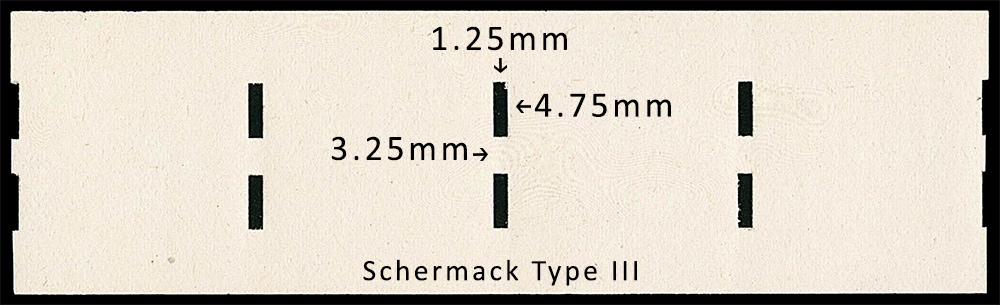
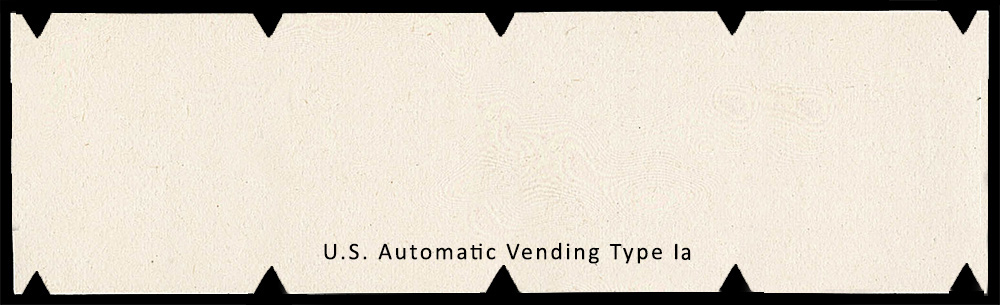
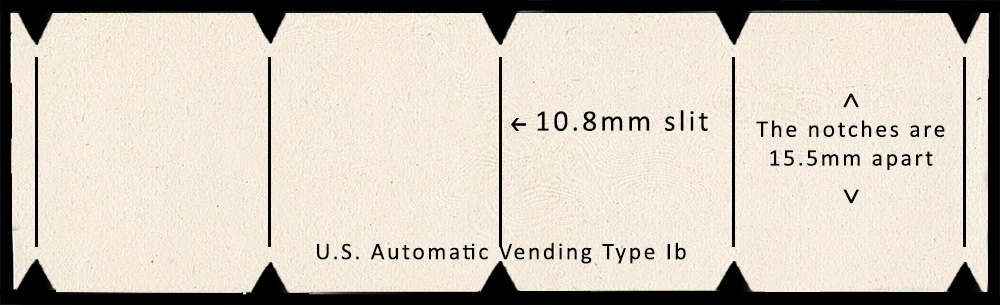
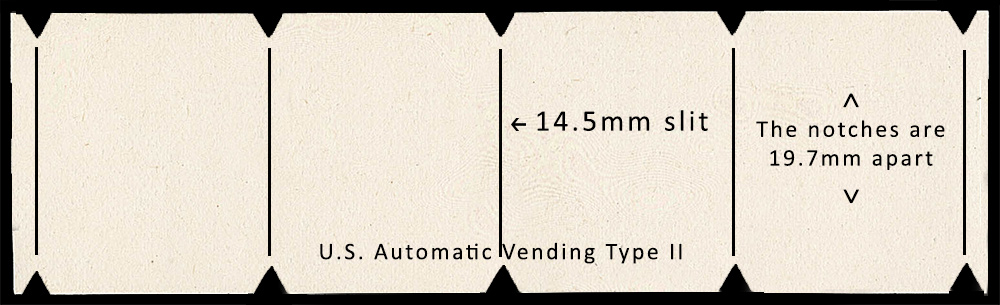
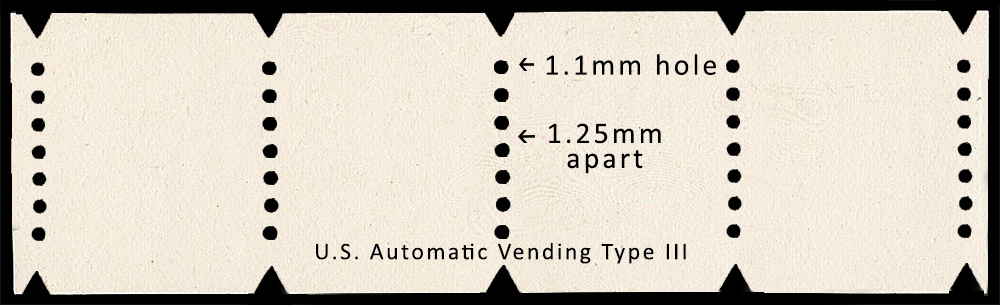
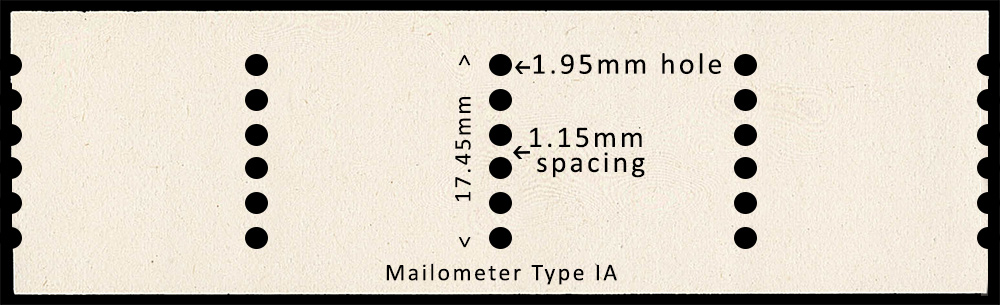
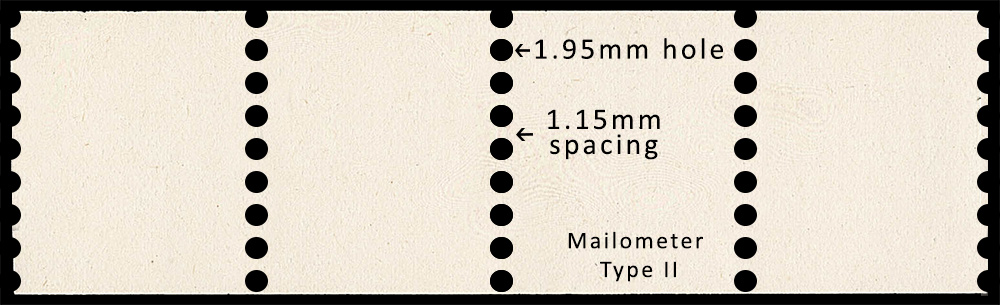
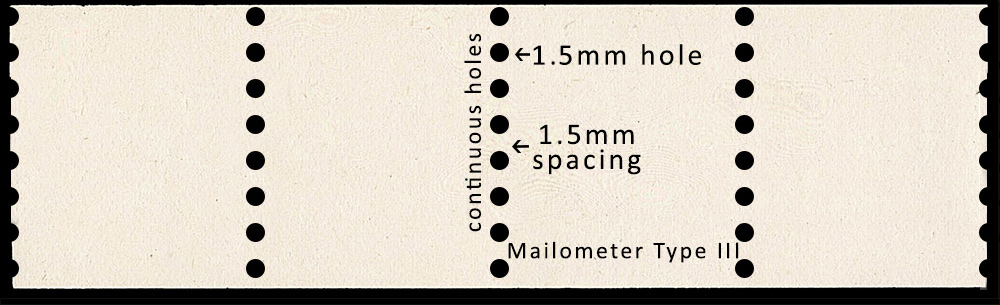
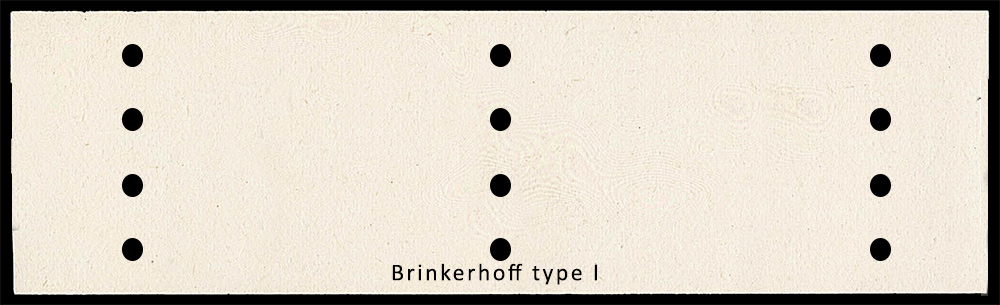
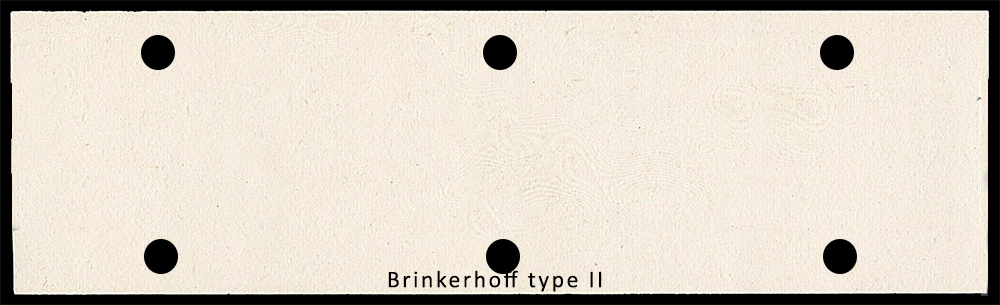
The imperforate stamps from 1906-08 were issued without perforations specifically to supply private stamp vending and affixing machine companies. These early automated companies purchased uncut sheets of 400 stamps from the Post Office. They then cut the sheets into rolls (coils) and applied their own proprietary perforations or slots so the stamps could dispense from their machines. A guide to these proprietary perforations can be found by clicking the button below.

Vending machines required stamps with straight edges, either on the top and bottom or on both sides to operate the machines. Initially the Bureau perforated sheets in only one direction and then cut them into strips. These strips were then hand pasted into rolls and sold as a roll of coiled stamps.

The process of pasting together the strips was labor intensive and coils were not cheap to produce. The advent of the rotary press saved the day.

The blades in the both the first experimental machines were much to be desired and usually meant separating the stamps meant a torn stamp. The private perforations were employed to aid separation. Various perforations were used.

Because of high demand from philatelists, postal authorities made these imperforate sheets generally available to the collecting public, allowing them to acquire blocks, strips, and position pieces.

The Schermack Punch Controls

An example of a punch control

The Schermack Company used a control pin pattern of nine pins. Pins were removed to identify the company that their stamp was sold to. This 'punch control' was a security device to deter stamp theft.

Usage

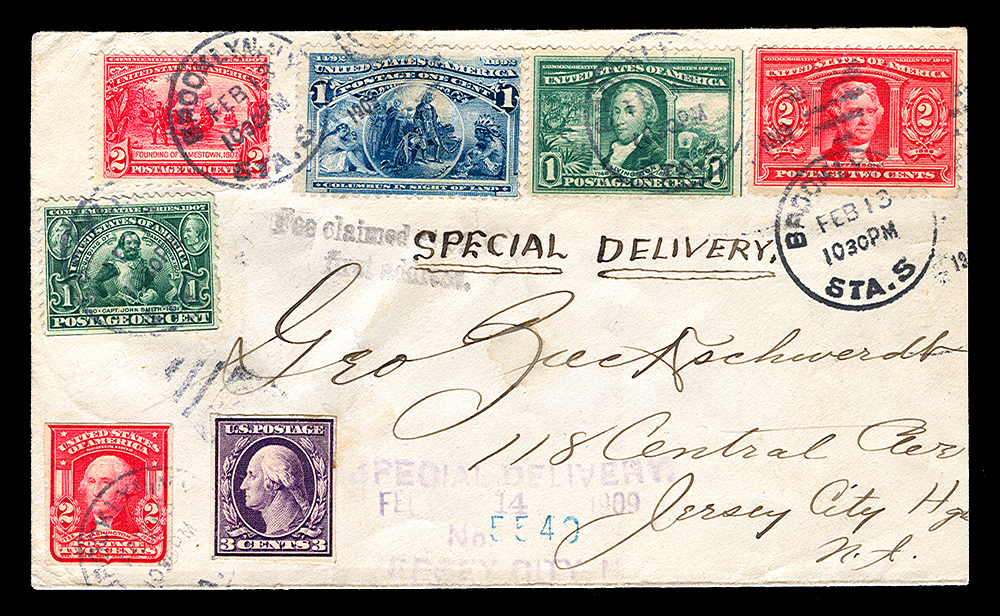
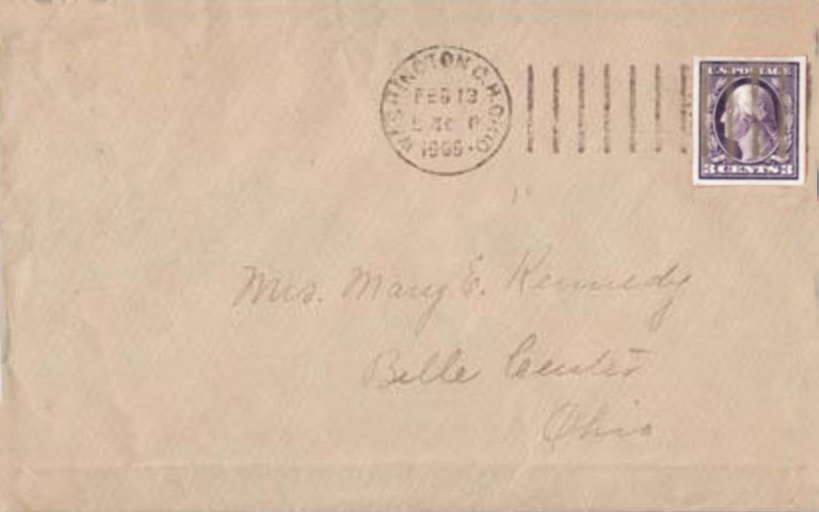
#345 - Earliest documented date of use, February 13th, 1909

The 3¢ stamp was commonly used for mail that exceeded the standard ½ ounce rate or was used in combination with other stamps to pay a higher rate.

The Plates

#345 was issued with the following plate #'s

Imprint and number
1586-89
2516-19
2806-09
3511-23, 27, 36

The plate finishers initials

The initials, frequently seen in the selvage are the initials of the sideographer or plate finisher, for reasons of quality control. Typically, the first, middle, and last initial was used, each followed by a period. This can only be seen on flat plate or offset press printings, not on rotary press printings. The plate finishers initials are on the lower left margin of a sheet of 400 stamps.

Identifying the Watermark on #345

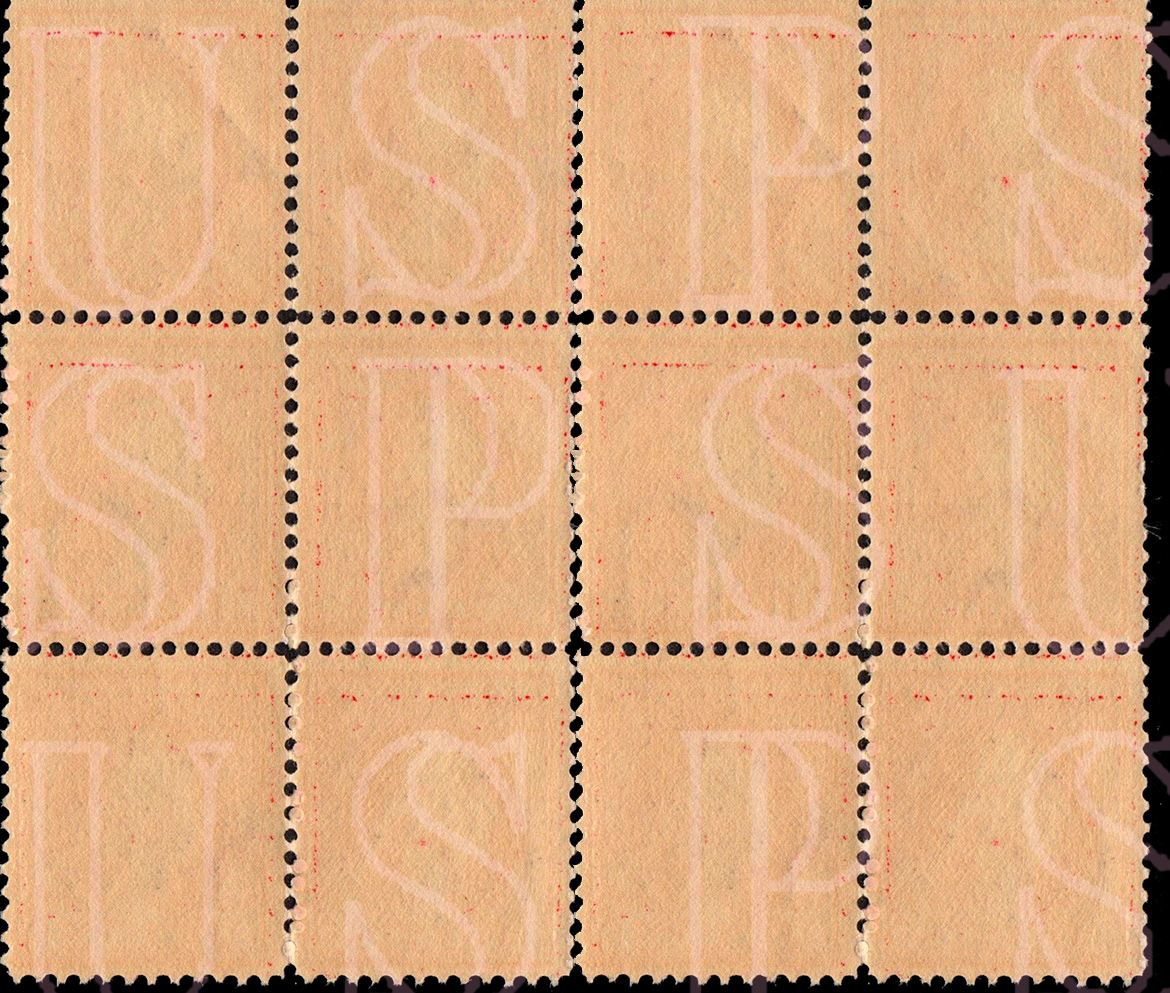
The DOUBLE lined USPS watermark

The SINGLE lined USPS watermark

Between 1895 and 1916 the U.S. government used two different watermarks, double line and single line with the letters "USPS".

By placing the watermark face down on a dark surface or holding it up to bright light you might be able to see the watermark. If you cannot see the watermark it might be a good idea to invest in watermark fluid and a watermark tray. Ronsons lighter fluid works just as well as watermark fluid. Both fluids evaporate quickly.

Pour a little fluid in the tray, lay the stamp face down. In a few seconds the stamp will absorb the fluid and reveal the watermark to you.

As you will see from the illustrations the letters can span several stamps, so on the watermark, for instance, you can see only part of the letter S in one corner and only part the letter P in the other corner.

The Inspiration for the Design

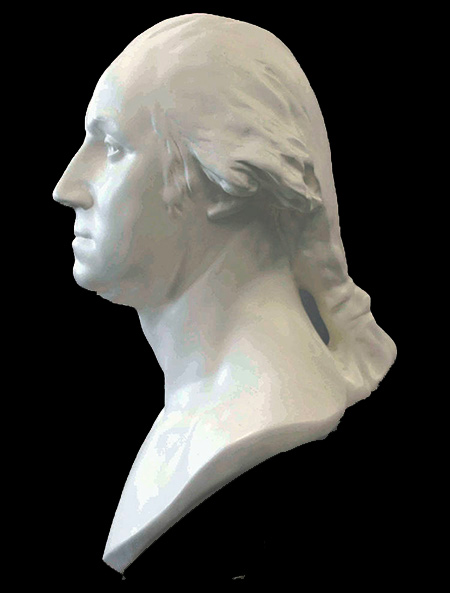
George Washington bust by Jean-Antoine Houdon

The vignette was based on a bust of George Washington by french sculptor Jean-Antoine Houdon.

Created in 1785 the bust is considered the most accurate likeness of the first U.S. president. Based on a life mask and clay model made at Mount Vernon, it captures Washington at age 53 with precise facial details, blending a Roman, toga-style aesthetic with realistic aging. It is considered one of the most accurate representations of Washington.

Proofs

333-P1

Click image to enlarge