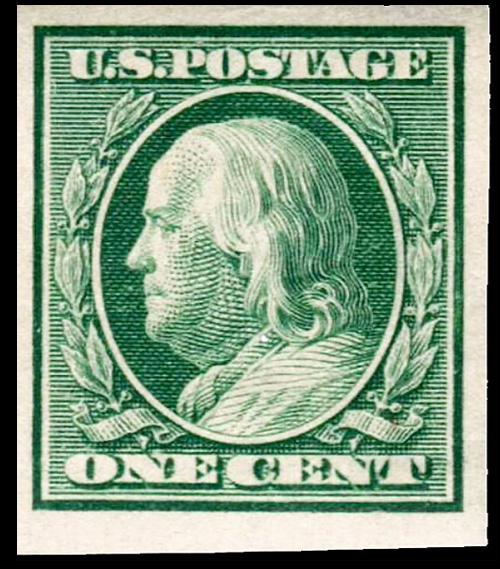
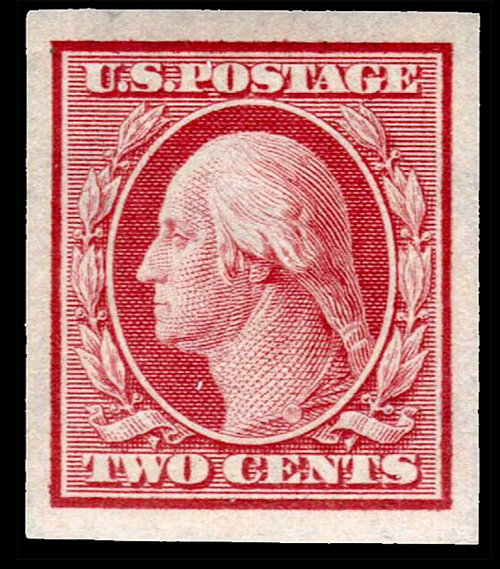
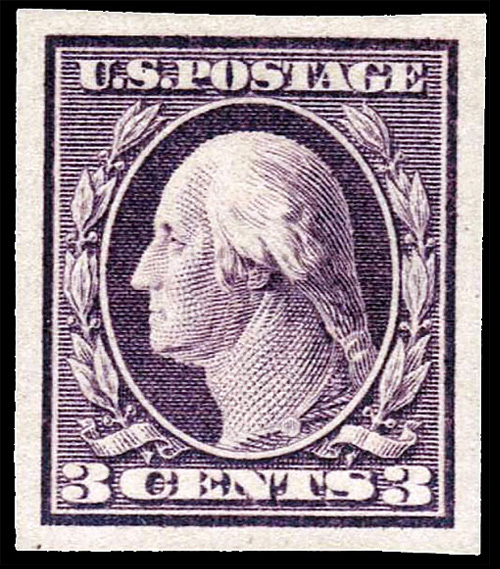
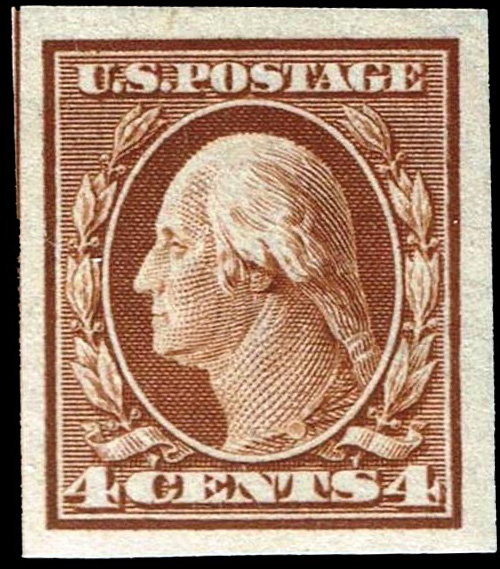
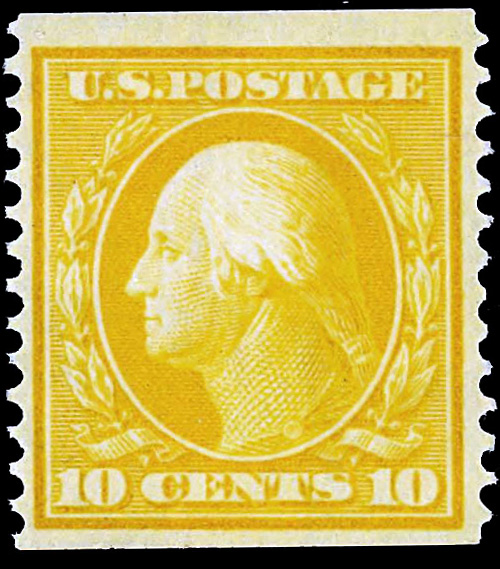
#356 - 1909 10¢ Double line USPS watermark, perf 12 Vertically
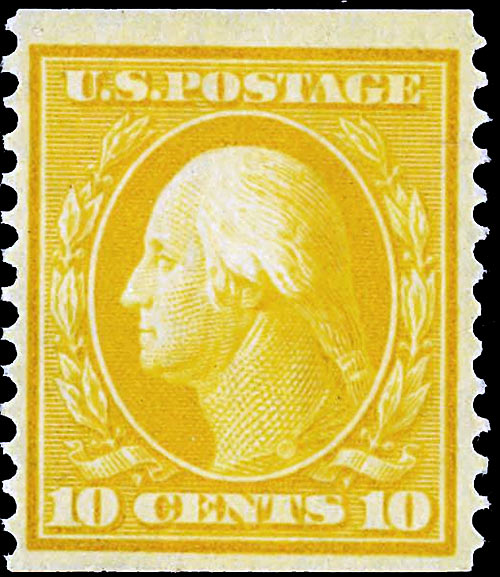
See below for details
Basic Info
10¢ Yellow, golden yellow
Subject: George Washington
Printing Method: Flat Plate
Perforations: Imperforate
Watermark: double line USPS (see below)
Scott #: 356
Quantity Issued: 10,000
Issued: January 7th, 1909
Value for pairs
Used
$6,000 - $17,250
No postmark with gum (MH)
$5,250 - $12,500
Full perfect gum, no postmark
no trace of stamp hinge mark (MNH)
$13,000 - $24,000
Beware of fakes
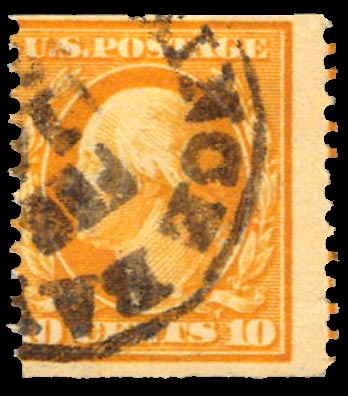
Look closely at the bottom edge of the stamp and you will see the remains of perforations. That is because this was perforated on all sides 10¢ stamp (#338) with the bottom and top perforations trimmed off so as to give the appearance of #355. This is a commonly forged stamp.
As this stamp is so rare and expensive I recommend that they should only be purchased with a certificate of authenticity.
Line pairs
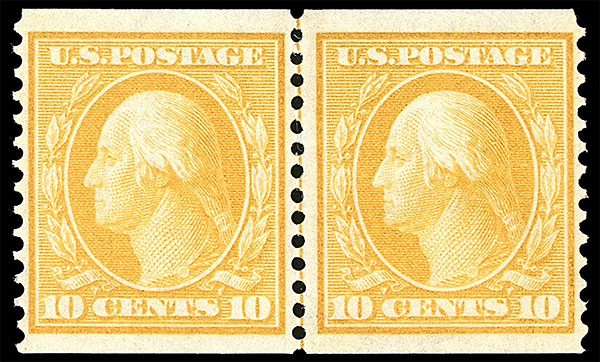
A solid line between two stamps, seen along the perforations in the middle, was the guide line used on sheets of stamps. They would be placed between each pane (usually 100) of stamps. They can triple the value of the pair.
Paste up pairs
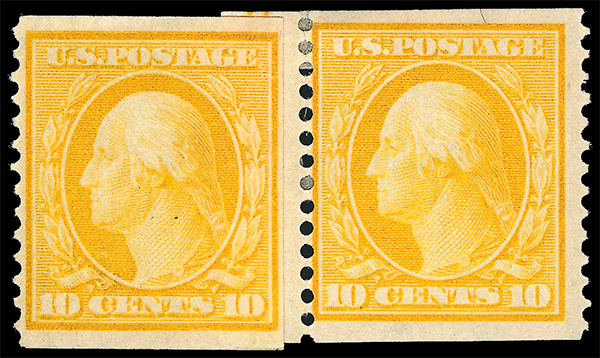
Above is shown an example of where two stamps have been pasted together. Each strip of twenty stamps were pasted together by hand, an expensive and slow procedure. Interestingly you can just see the imprint on the selvedge of the right stamp.
Plate Numbers
The plate #'s on the top & bottom have been cut off and those numbers on the sides being covered by the paste-up.
The first coil stamps
It was not until early in 1908 that the Post Office Department issued some coil stamps of the 1902 series for use in vending and stamp affixing machines, but purely as an experiment. They were found to be satisfactory and as the Department realized that a demand existed for this type of stamp it was less than three weeks after the new design had been issued in the ordinary form that it was also available in coil form.
As in the previous issue they were made from the regular 400 subject sheets which were perforated twelve in the vertical spaces between the stamps and then cut into strips of twenty. The vertical guide line at the center of each strip of twenty, which were pasted together by hand and rolled into coils of 500 and 1,000. These were coiled on one half inch diameter pasteboard cores.
Most were purchased by collectors, and almost all the used stamps originated from the only company to order coils of these.
Earliest documented use
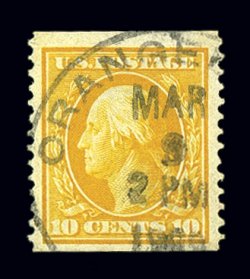
Earliest documented date of use, March 9th, 1909
Double line letters watermark
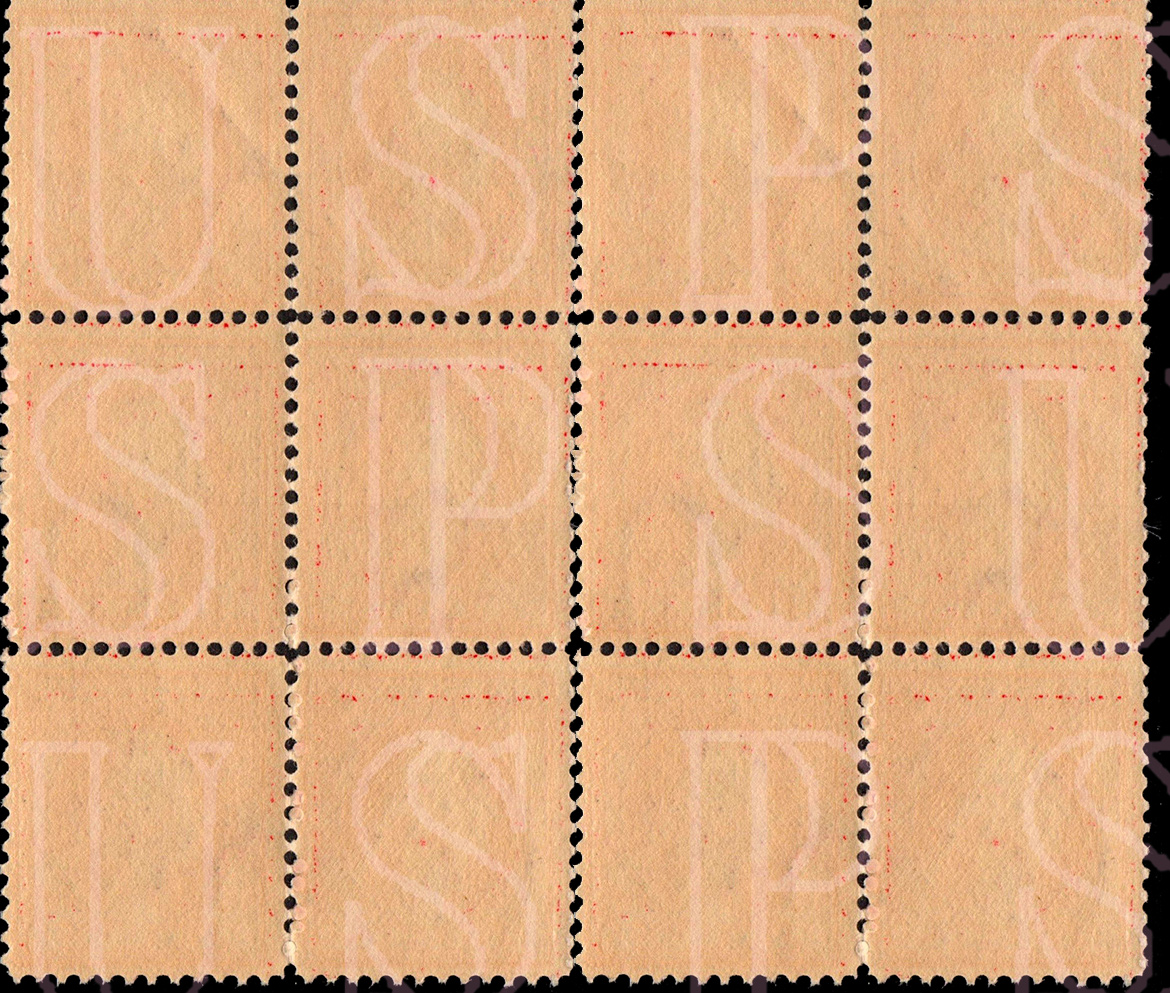
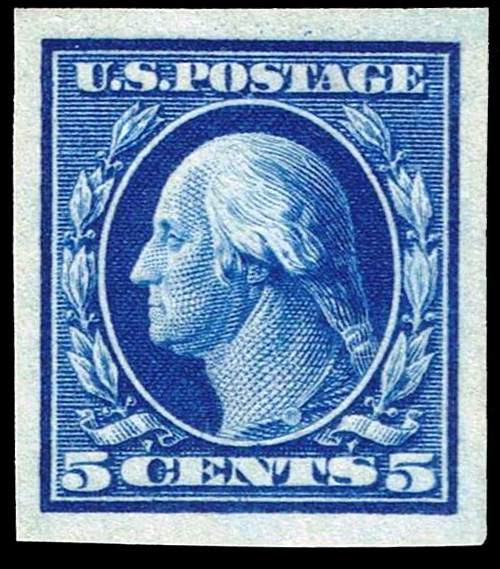
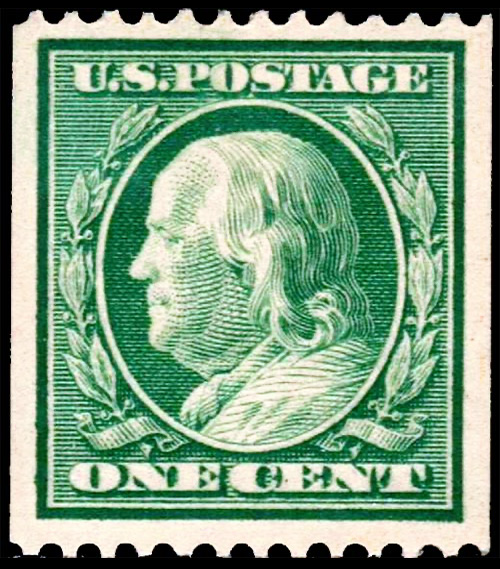
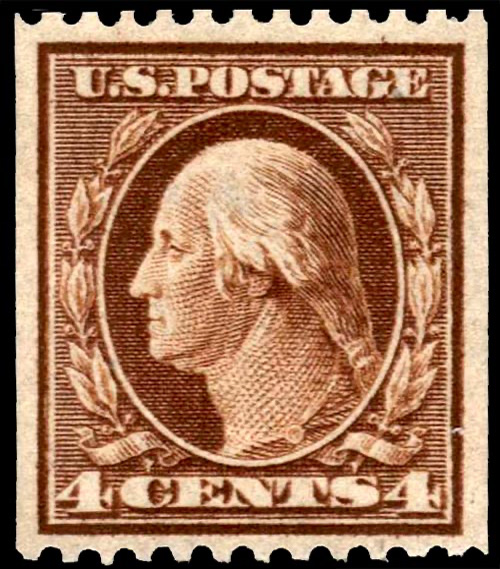
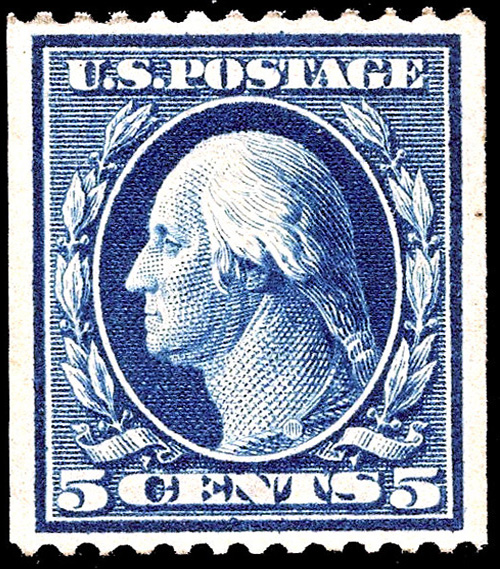
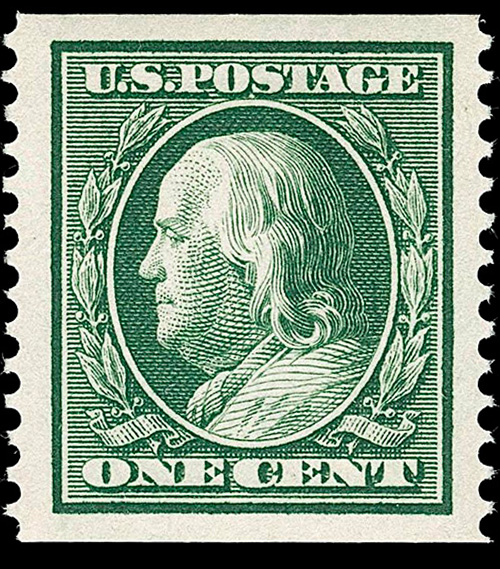
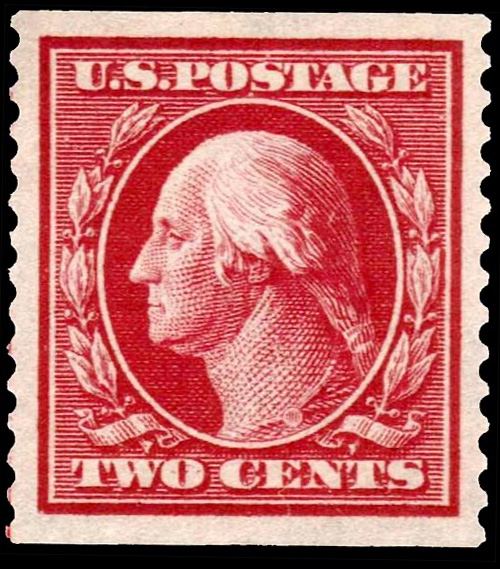
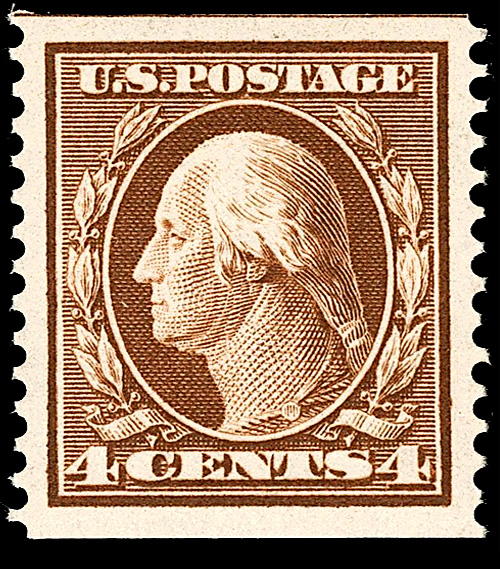
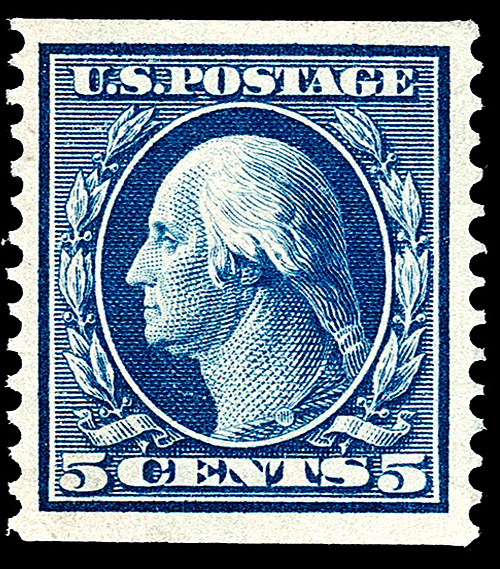
1908-09 Definitive Double Line USPS Watermark Coil Issues
Click your selected stamp