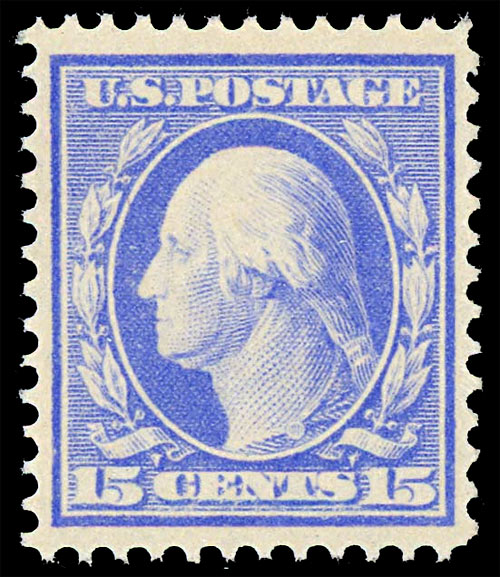
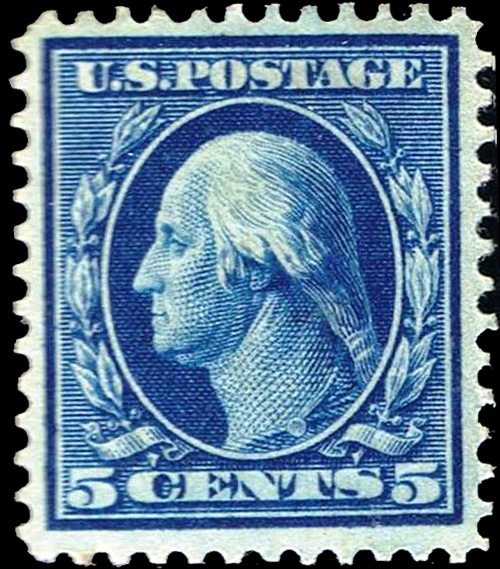
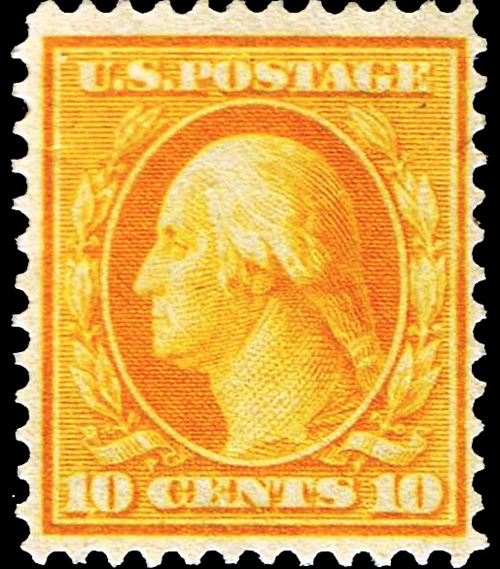
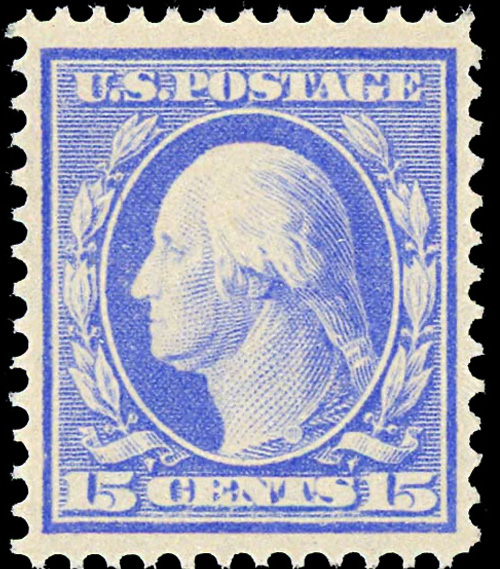
#382 1911 15¢

Basic Information

Color: Pale ultramarine
Subject: George Washington
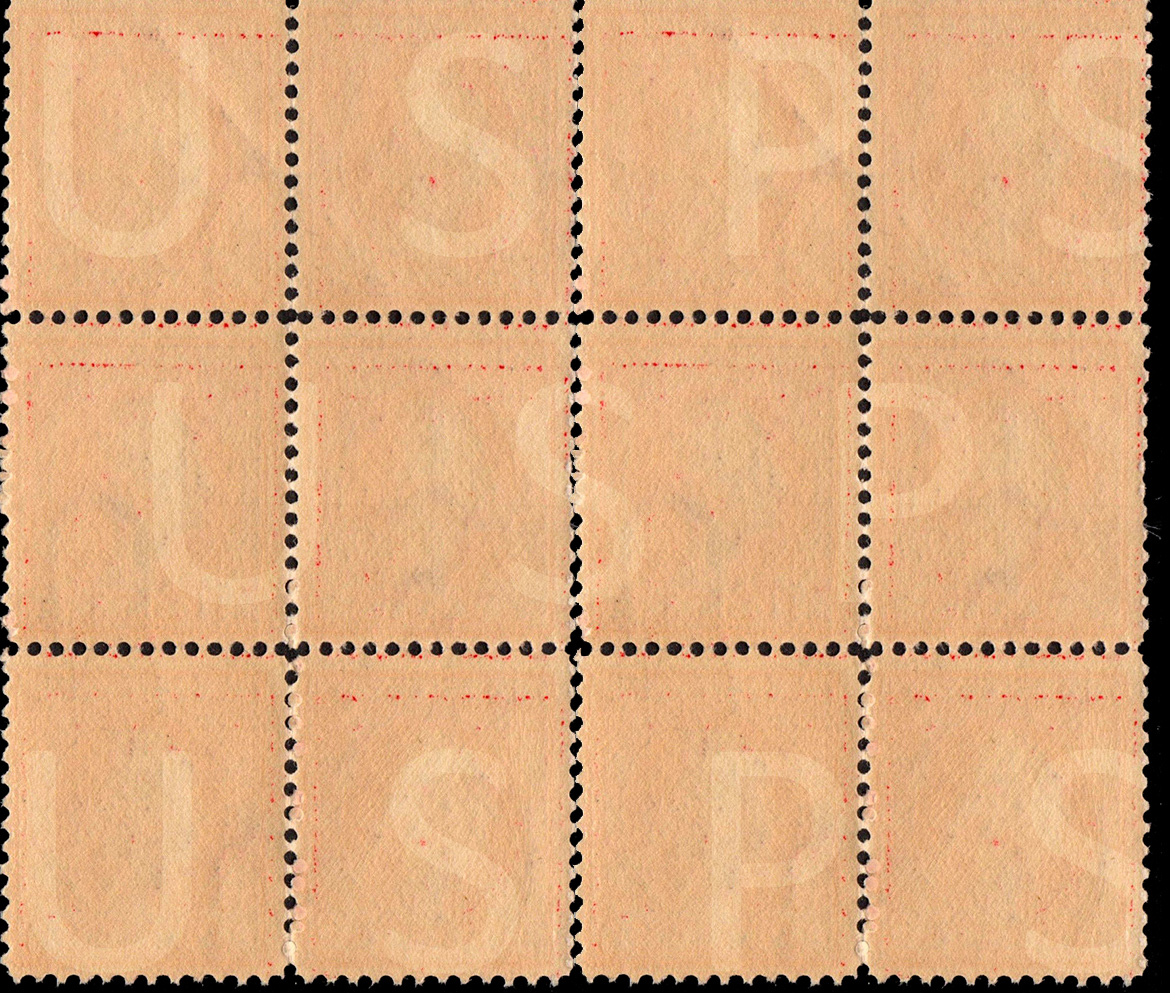
Watermark: SINGLE-lined USPS
Printing method: Flat plate
Perforations: 12
Scott #: 382
Quantity issued: 16,000,000
Issued: March 1st, 1911

Value

An unused stamp with perfect gum: $150-$300
An unused stamp with gum and a hinge mark: $75-$125
A used stamp: $3-$5

Usage

#382 earliest known use, April 25th, 1911

In 1911, a single 15-cent stamp was primarily used to pay the combined cost of the international foreign letter rate (5-cents per half-ounce) plus a 10-cent registry fee. It was also used to pay for larger fourth-class mail parcels or to cover multiple units of weight on overseas mail.

Common Usages in Detail:

Registered Mail: A single 15¢ stamp perfectly covered the combined postage ($0.05) and registration fee ($0.10) for a standard half-ounce international letter.
Foreign Mail Weights: Before October 1907, the international Universal Postal Union rate was 5-cents per half-ounce. By 1908, the 15-cent stamp remained valuable for prepaying heavier items (up to 1.5 ounces) destined for overseas.
Domestic Parcels: Larger fourth-class packages and merchandise requiring higher postage frequently utilized the 15-cent denomination to meet weight-based costs.

The Plates

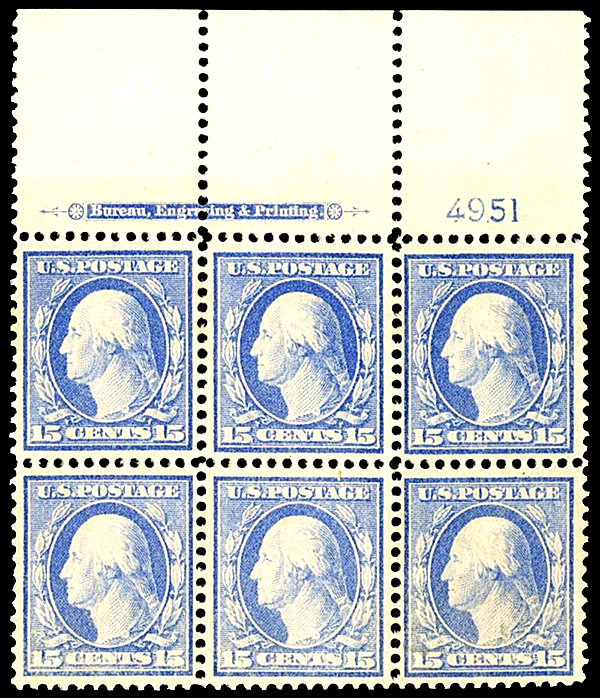
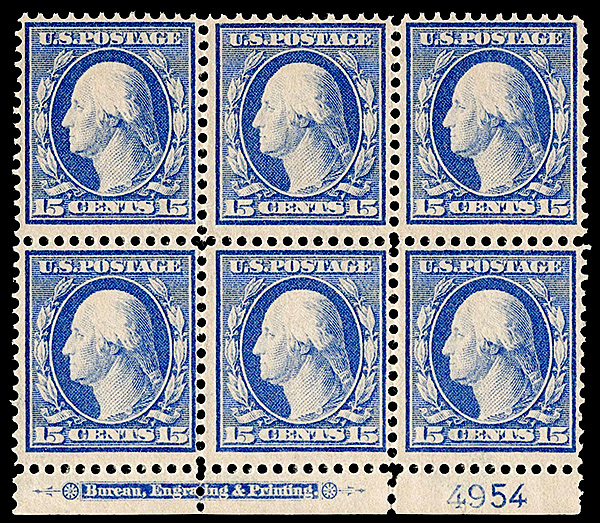
#382 was issued with the following plate #'s

Imprint and number
4949-52, 54

Proofs

340-P1

Click image to enlarge

Identifying the Watermark on #382

The SINGLE lined USPS watermark found on #374

The DOUBLE lined USPS watermark

Between 1895 and 1916 the U.S. government used two different watermarks, double line and single line with the letters "USPS".

By placing the watermark face down on a dark surface or holding it up to bright light you might be able to see the watermark. If you cannot see the watermark it might be a good idea to invest in watermark fluid and a watermark tray. Ronsons lighter fluid works just as well as watermark fluid. Both fluids evaporate quickly.

Pour a little fluid in the tray, lay the stamp face down. In a few seconds the stamp will absorb the fluid and reveal the watermark to you.

As you will see from the illustrations the letters can span several stamps, so on the watermark, for instance, you can see only part of the letter S in one corner and only part the letter P in the other corner.

The Switch from Double to Single Line USPS Watermark
The purpose of this change was to strengthen the paper and to give it a more uniform thickness. The old double line watermark covered too much space and made the lettered area quite a bit thinner than the rest of the paper, which caused variation in the shrinkage of the paper. The new watermark was also smaller, occurring 400 letters to a full sheet instead of 360

The Inspiration for the Design

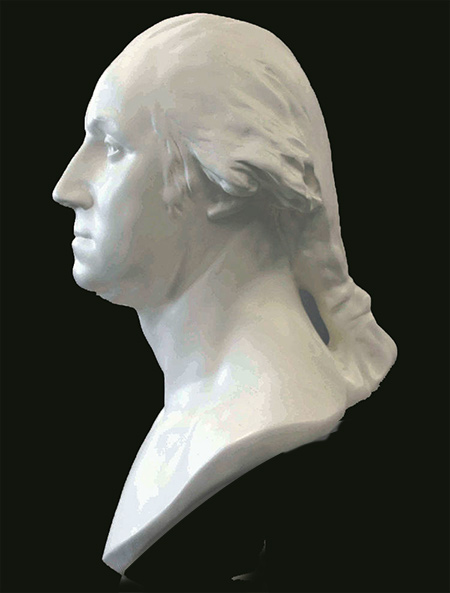
George Washington bust by Jean-Antoine Houdon

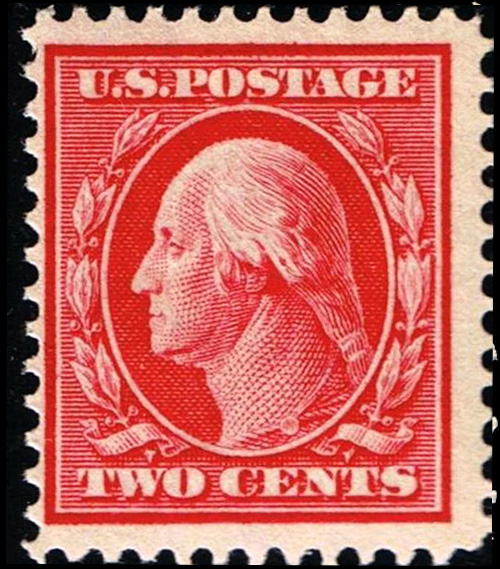
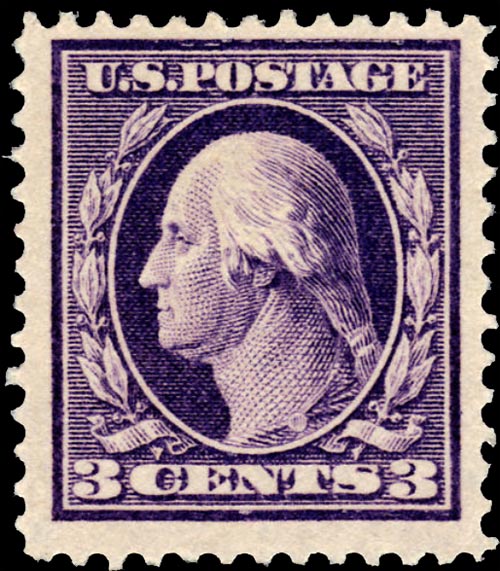
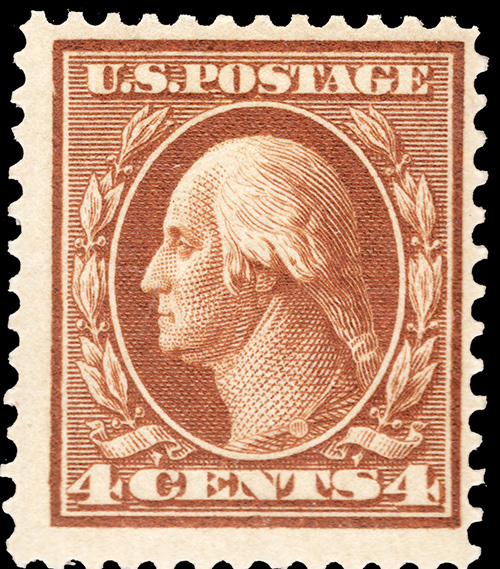
The vignette was based on a bust of George Washington by french sculptor Jean-Antoine Houdon.

Created in 1785 the bust is considered the most accurate likeness of the first U.S. president. Based on a life mask and clay model made at Mount Vernon, it captures Washington at age 53 with precise facial details, blending a Roman, toga-style aesthetic with realistic aging. It is considered one of the most accurate representations of Washington.