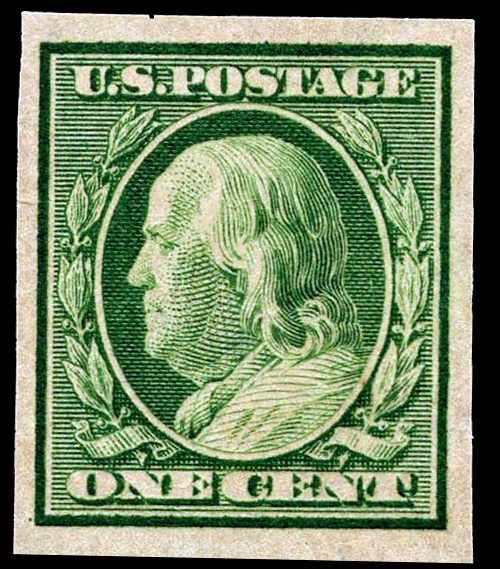
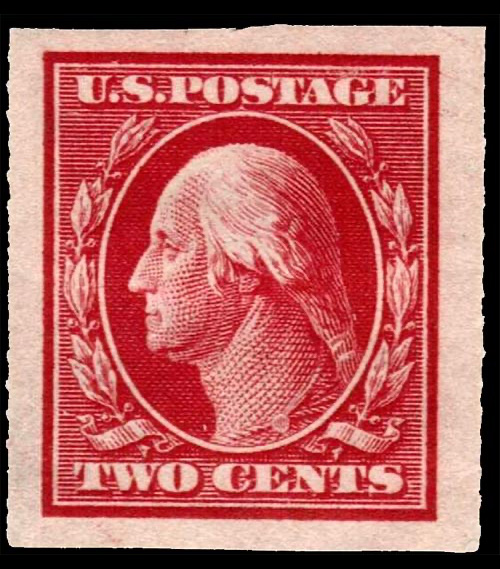
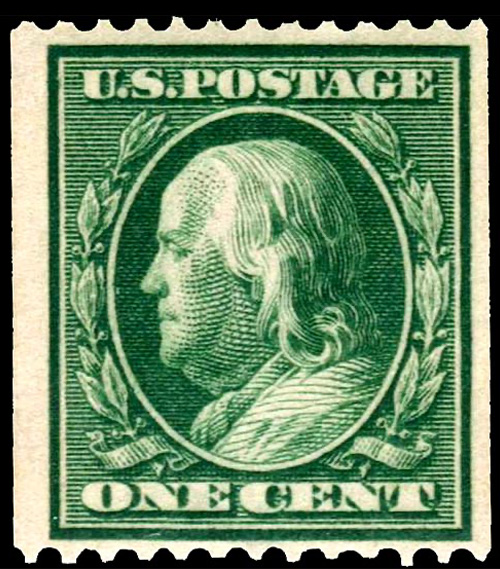
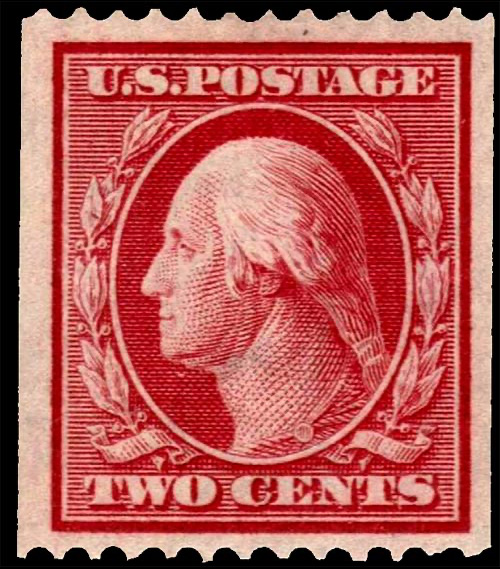
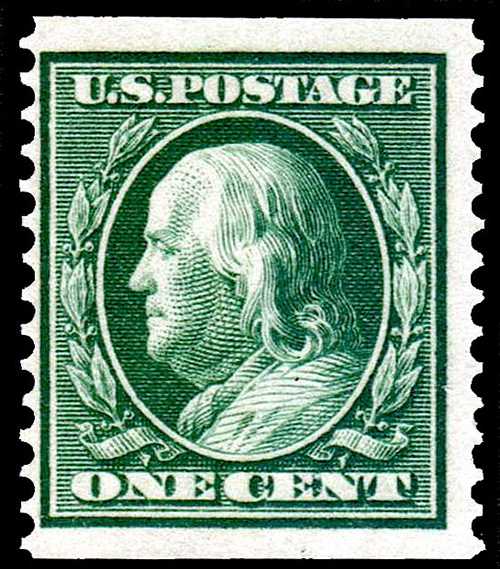
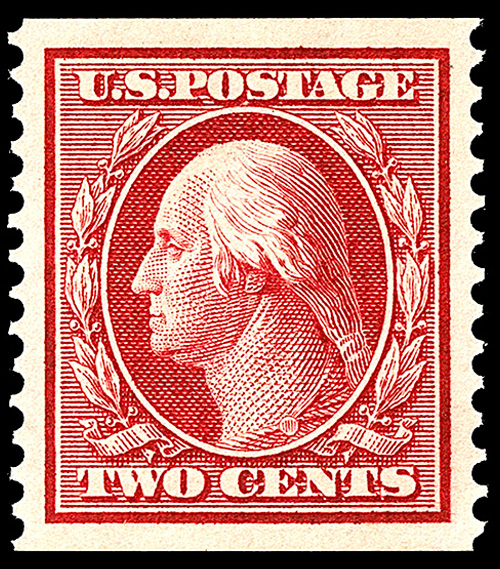
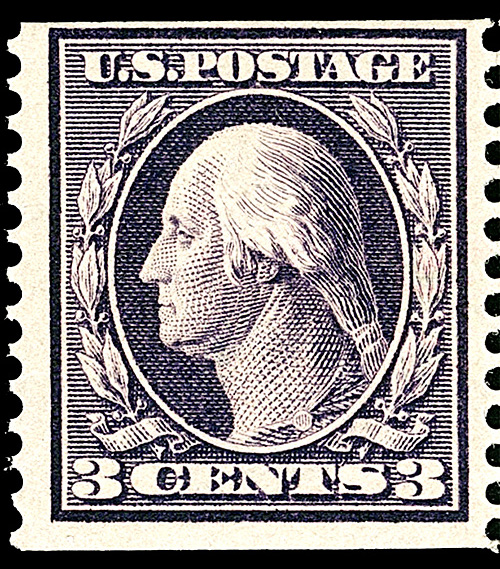
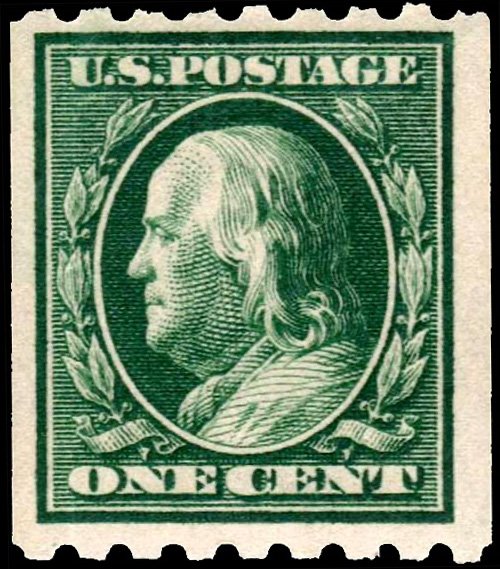
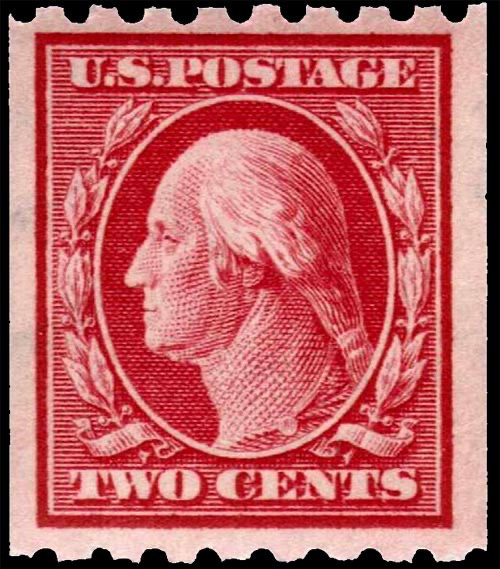
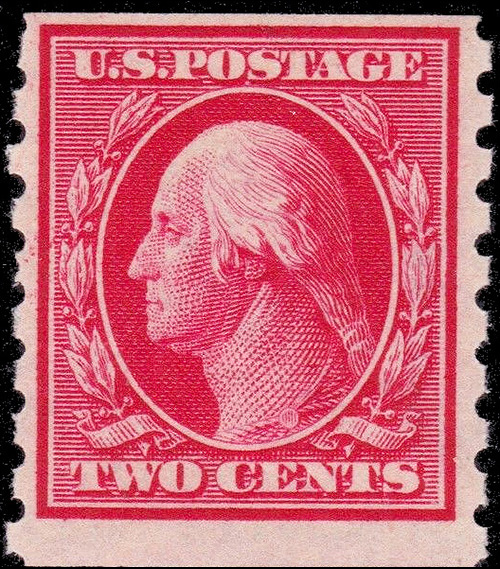
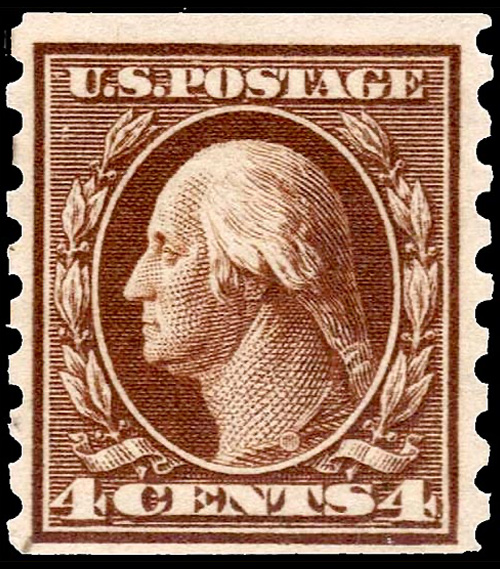
#391 - 1910 2¢ Single line USPS watermark, perf 8½ horizontally
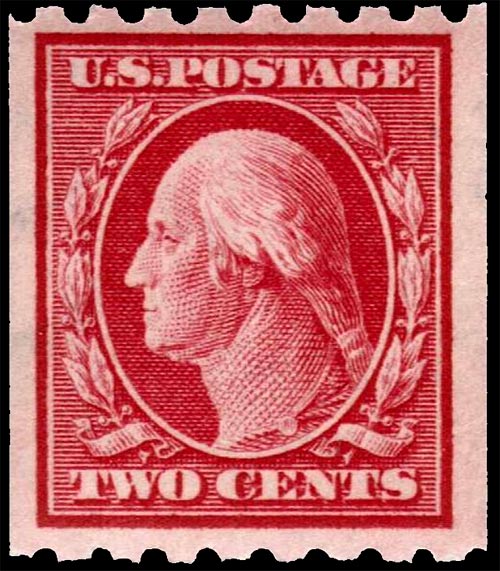
See below for details
Basic Info
2¢ light carmine, carmine
Subject: George Washington
Printing Method: Flat Plate
Perforations: 8½ horizontally
Watermark: single line USPS watermark (see below)
Scott #: 391
Quantity Issued: 38,658,500
Issued: December 23, 1910
Earliest Documented Use: May 3rd, 1911
Value
SINGLES
Used
$4- $12.50
No postmark with (MH)
$15 - $24
Full perfect gum, no postmark
no trace of stamp hinge mark (MNH)
$35 - $45
PAIRS
Used
$10 - $75
No postmark with (MH)
$25 - $45
Full perfect gum, no postmark
no trace of stamp hinge mark (MNH)
$70 - $120
Multiply by 2 for line pairs
Notable Sales

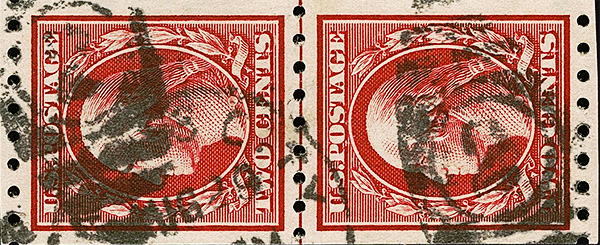
A well centered used line pair. Prices have fallen for this issue recently.
Sold July 2022 for $1,770
Explore Robert Siegel's Auction Galleries
Guide Line Pairs
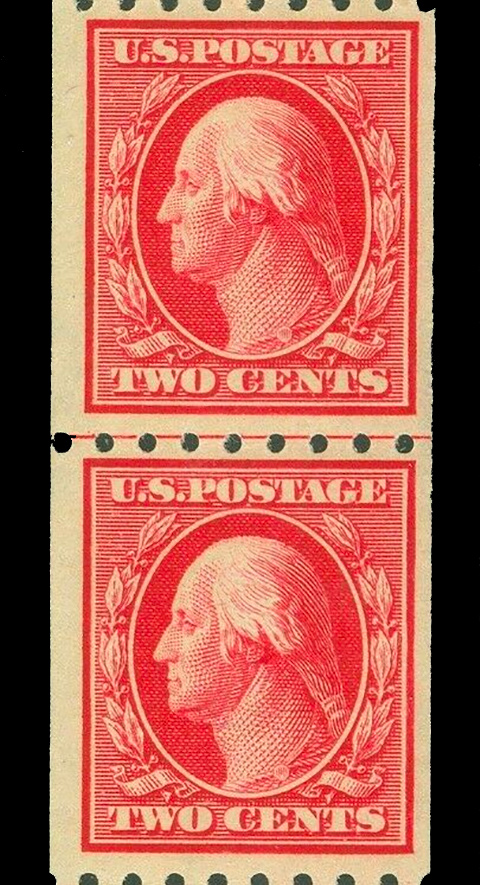
Ideally vertical coil stamps should be collected in pairs. The guide line pair is so called because it is where the lines that separated panes are placed One can see the line along the center of the perforations.
'Paste Up' Pairs
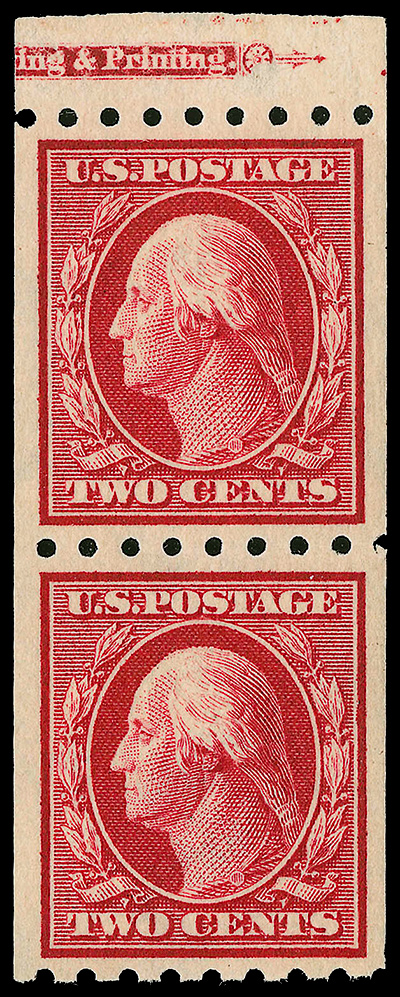
In making this coil the ordinary 400 subject sheets were perforated in the horizontal spaces and then cut into 200 subject sheets along the vertical guide lines. These part perforated sheets were pasted together side by side and fed into a coiling machine which cut the sheets into strips and reeled them on cardboard cylinders in units of 500 and 1,000 stamps. The strips of 20 had a "paste up" at each end where joined and a section of the vertical guide line showed between each tenth and eleventh stamp. One row of each ten had a plate number covered by the "paste up."
A New Watermark
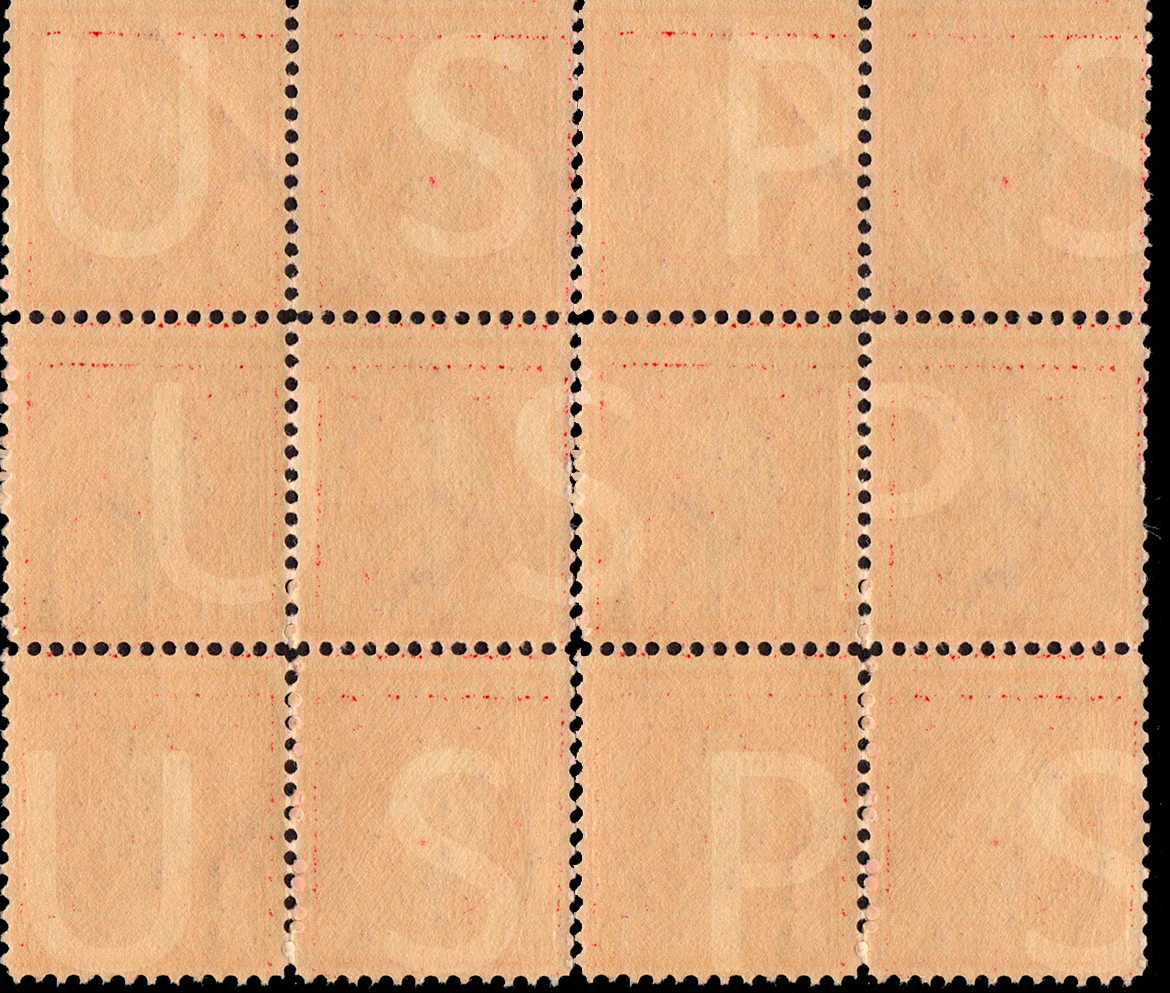
The purpose of this change was to strengthen the paper and to give it a more uniform thickness. The old double line watermark covered too much space and made the lettered area quite a bit thinner than the rest of the paper, which caused variation in the shrinkage of the paper. The new watermark was also smaller, occurring 400 letters to a full sheet instead of 360.
Single Line USPS Watermark
A change of perforation
As coils had now passed through the experimental stage and business houses were finding the stamp affixing machines a great labor saving device, demands for coils increased rapidly. The increased use of coil stamps made it essential that some method be devised to make unnecessary the pasting together of single strips of twenty stamps to form a coil.
After various experiments a machine was perfected whereby it was possible to feed into the machines a series of partly perforated one-half sheets (200 subjects) which had been pasted together, and make ten coils at one time. With_this machine, two girls could do the work formerly done by seventeen. The only difficulty however, was due to the frequent breaks caused by perforations between the stamps as the coils were being cut and wound. It was found that this was due to the lack of uncut space between the stamps caused by 12 gauge perforation. To overcome this, the perforations for coils were reduced to 8½, which greatly increased the amount of uncut space between the stamps and made the coils less likely to tear in the machines
Earliest documented use

Earliest documented date of use, May 3rd, 1911
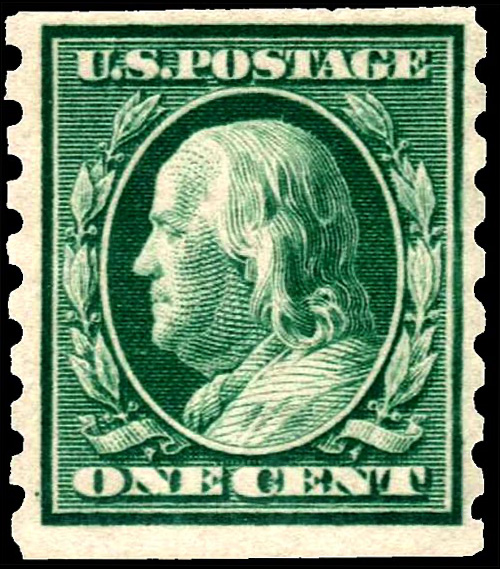
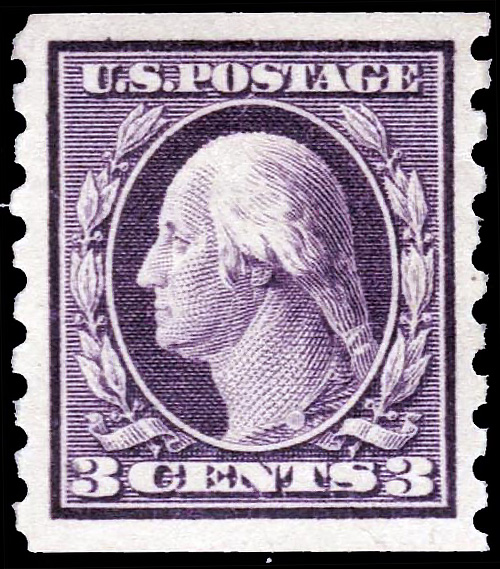
The 1910-13 Coils and Imperfs
Click your selected stamp