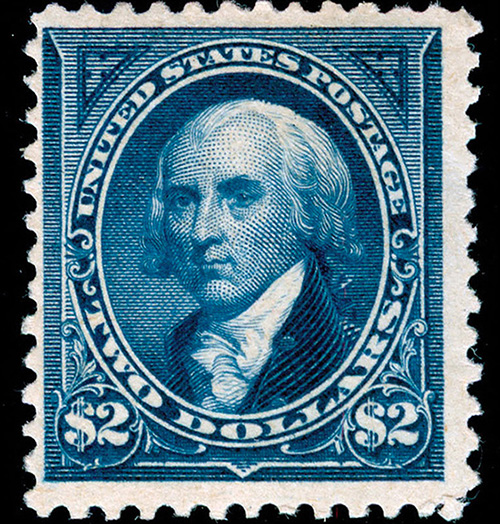
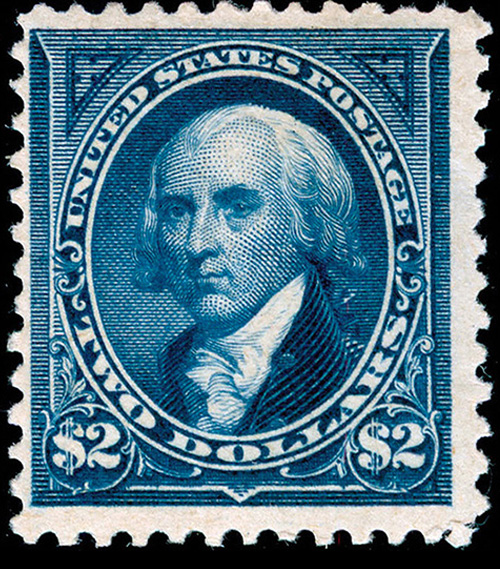
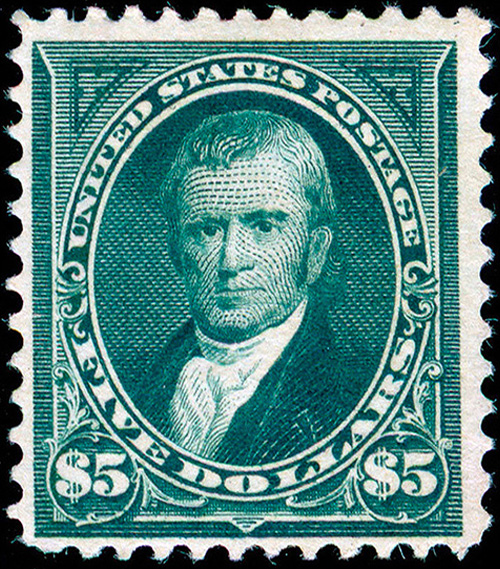
Color: Bright Blue Subject: James Madison Watermark: Watermarked double-lined USPS Paper: Soft porous paper Printing method: line-engraved intaglio on flat plates Printer: The Bureau of Printing and Engraving Perforations: 12 Scott #: 277 Quantity issued: 31,720 Issued: August 13th, 1895
Value
An unused stamp with perfect gum:$1,000-$3,000 An unused stamp with gum and a hinge mark: $190-$275 A used stamp: $75-$150
About the small bank note stamps
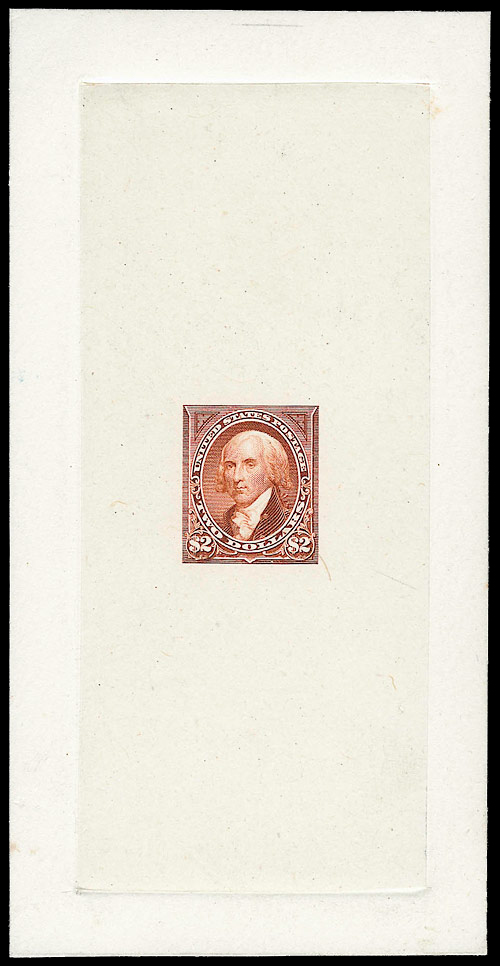
An essay for the $2 value. #262E2
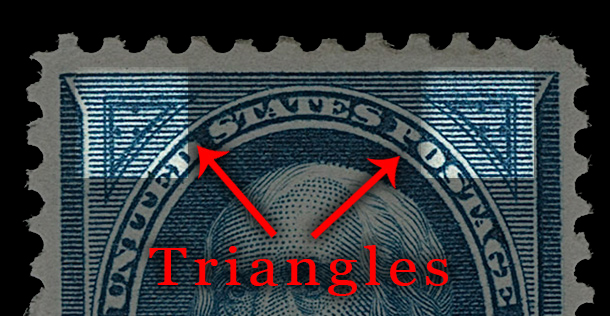
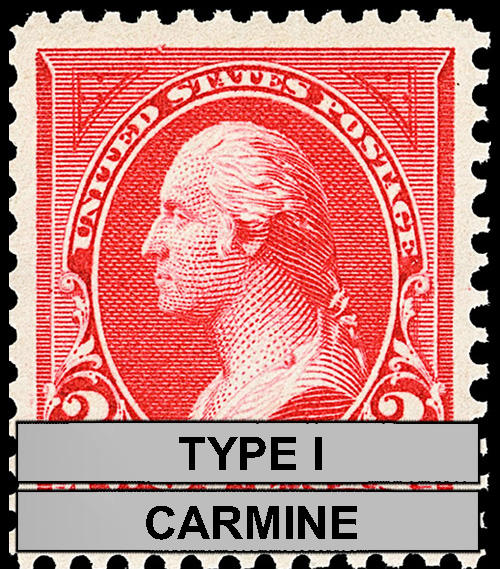
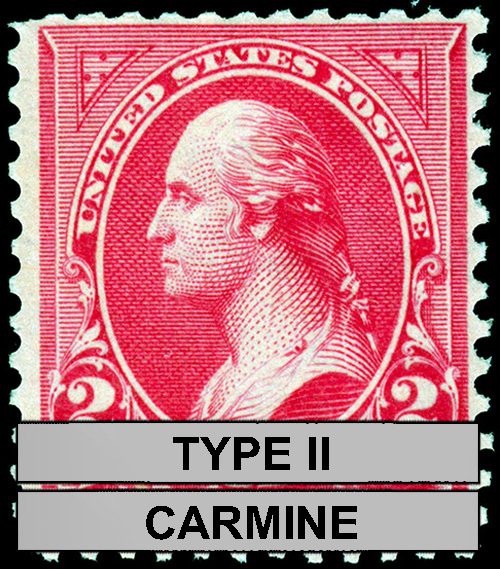
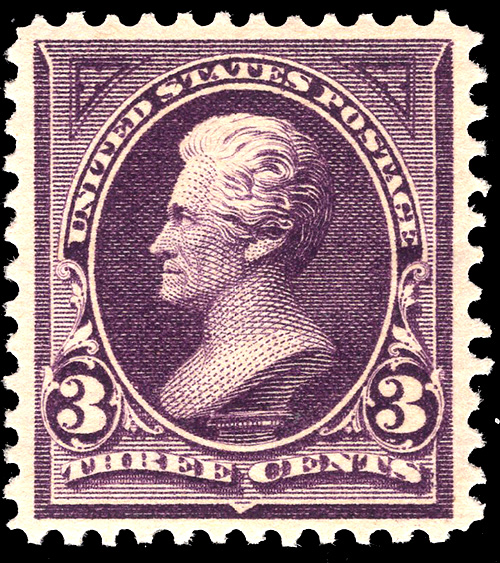
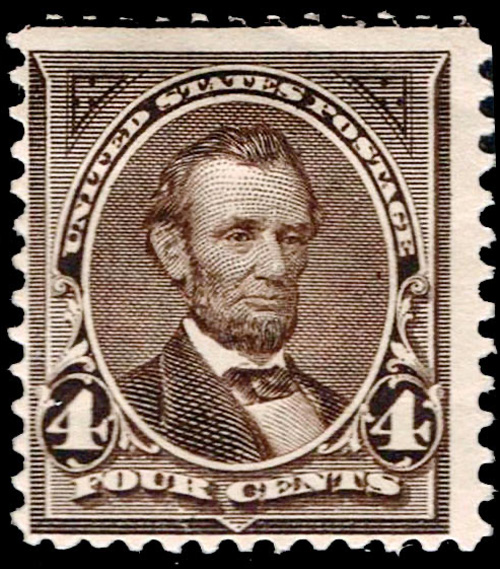
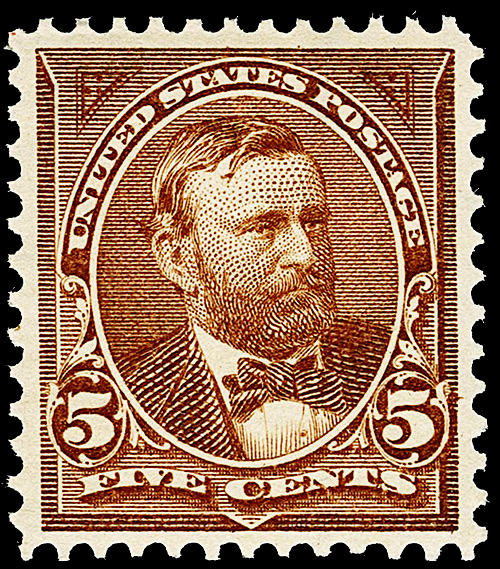
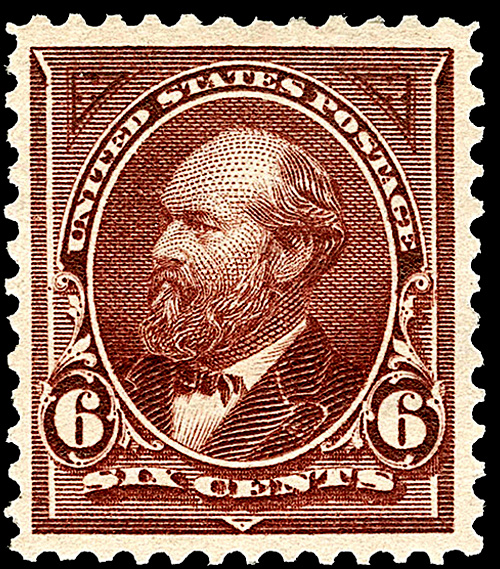
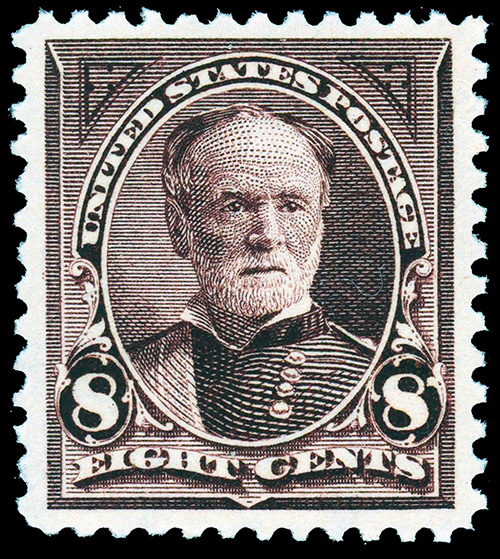
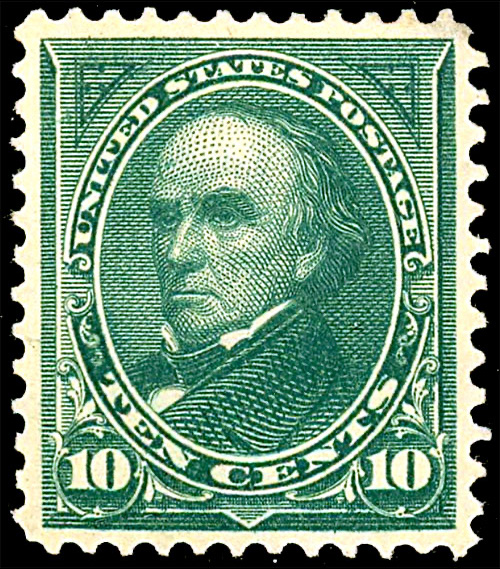
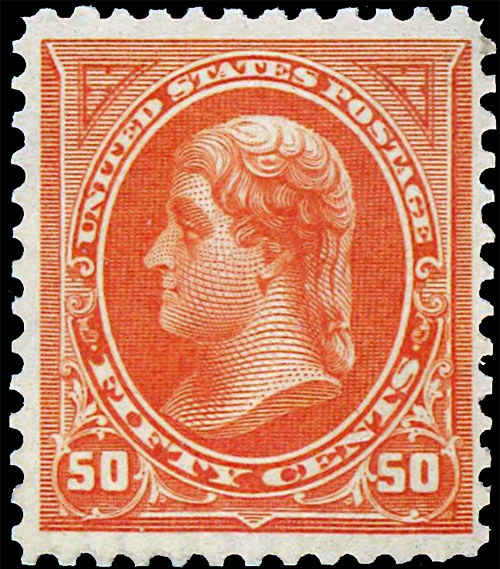
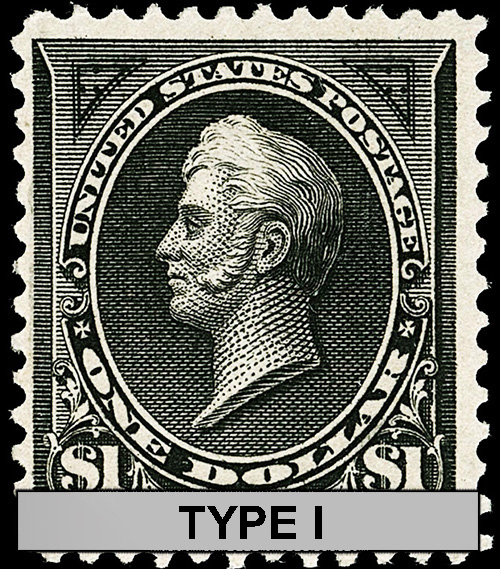
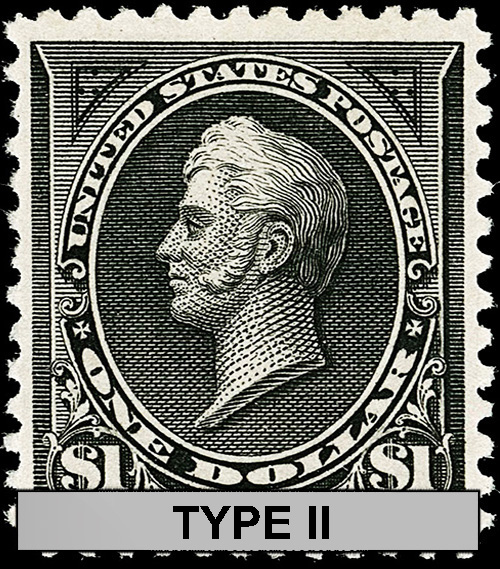
The 1894 Series, known as the "First Bureau Issue," marked the first time the U.S. government printed its own postage stamps, ending the 47-year monopoly of private contractors. Produced by the Bureau of Engraving and Printing (BEP), this series used existing designs but introduced small, unique "triangles" in the corners of the stamps to distinguish them from earlier American Bank Note Company issues.
The BEP, which had been established in 1862, successfully bid for the contract to print postage stamps, overcoming intense opposition from private firms that claimed the government was incapable of the work. The BEP reused the 1890–1893 stamp dies. The most defining feature of this series is the addition of small triangles in the upper corners of the designs.
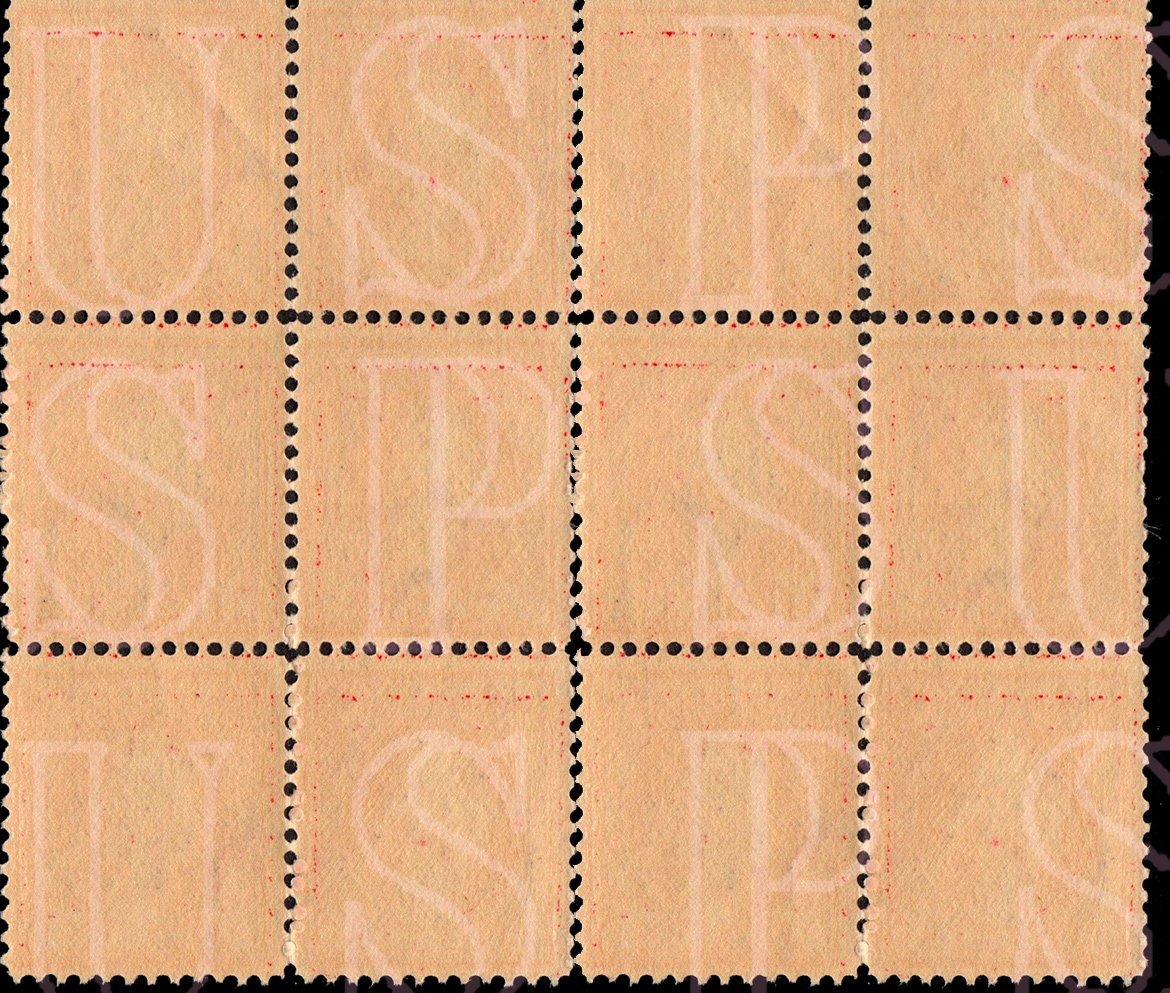
The Bureau of Engraving and Printing introduced the watermarked paper—which featured the letters "USPS" (United States Postage Stamp) in double-lined letters—shortly after discovering counterfeits of the 2-cent stamp. The counterfeits were lithographed and as such were easily identified, however the appearance of counterfeits must have spooked the Bureau.
#277a
#277a
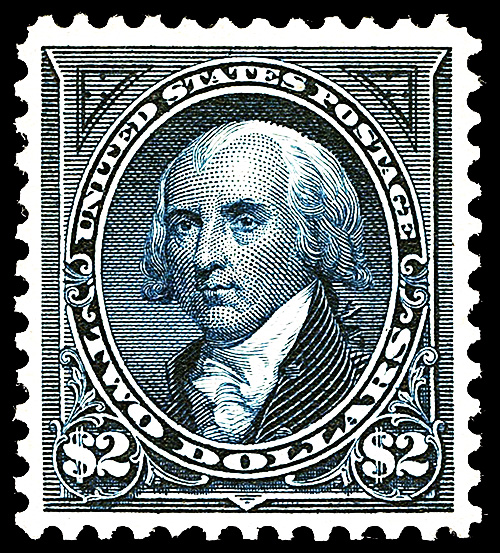
#277a Dark Blue There is no difference in the value between #277 and #277a,
Usage
#277 on cover
#277 While intended for heavy overseas mail, it was also frequently used for internal Post Office Department accounting
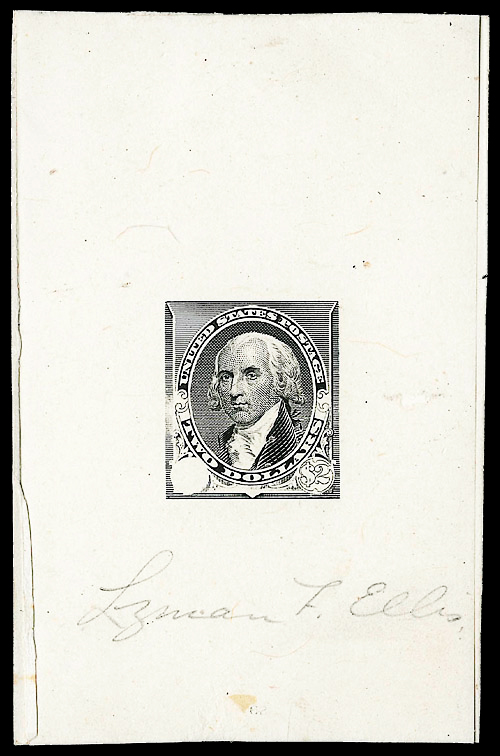
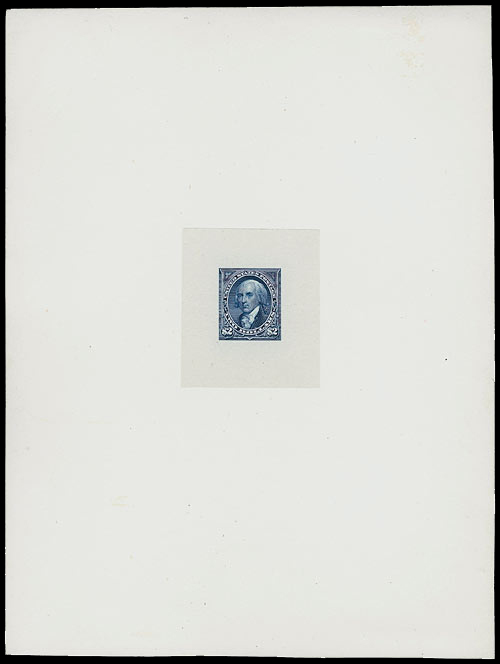
Proofs
277-P5
Click image to enlarge
Plates
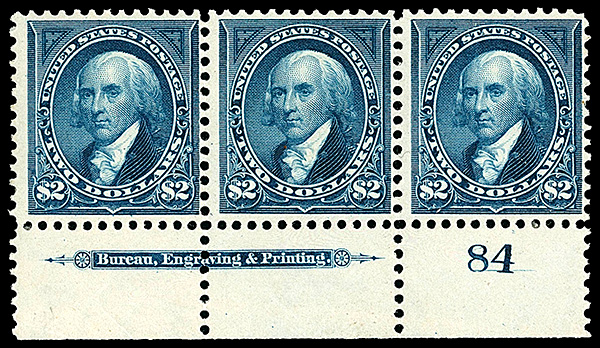
#277 was issued with the following plate #'s
200 subject plates 84
Identifying the Watermark
The double lined USPS watermark
Between 1895 and 1916 the U.S. government used two different watermarks, double line and single line with the letters "USPS".
By placing the watermark face down on a dark surface or holding it up to bright light you might be able to see the watermark. If you cannot see the watermark it might be a good idea to invest in watermark fluid and a watermark tray. Ronsons lighter fluid works just as well as watermark fluid. Both fluids evaporate quickly.
Pour a little fluid in the tray, lay the stamp face down. In a few seconds the stamp will absorb the fluid and reveal the watermark to you.
As you will see from the illustrations the letters can span several stamps, so on the watermark, for instance, you can see only part of the letter S in one corner and only part the letter P in the other corner.
The Inspiration for the Design
James Madison by Gilbert Stuart
The image is modeled after a painting of James Madison by renowned artist Gilbert Stuart.
Gilbert Stuart painted several portraits of James Madison, most notably a circa 1804 oil-on-canvas portrait when Madison was Secretary of State, and another in 1821. The 1804 portrait was designed to pair with a portrait of Dolley Madison. These portraits are celebrated for their realistic depiction of the fourth U.S. President and are now housed in major collections, including the National Gallery of Art and the National Portrait Gallery.