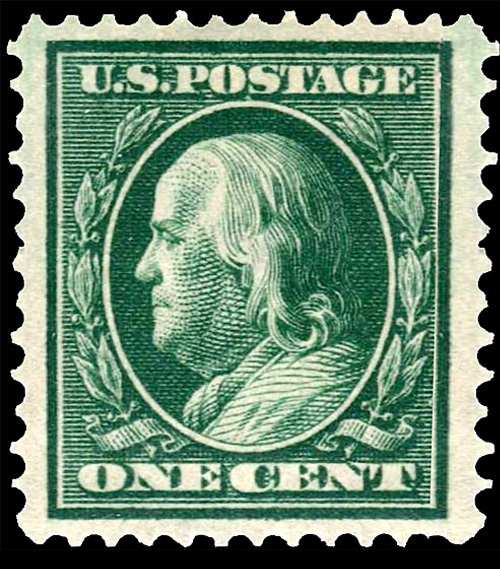
#331 - 1908 Double Line USPS Watermark P12 1¢
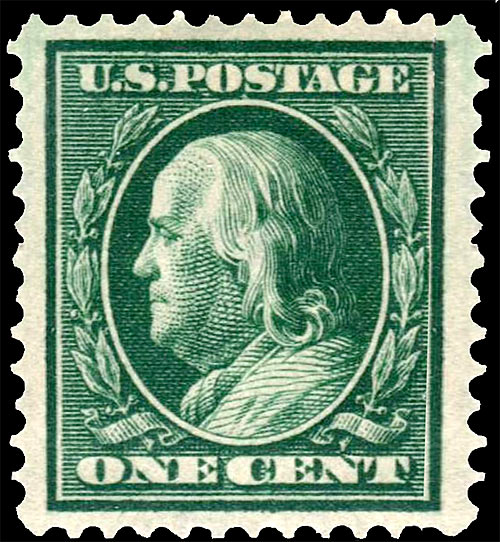
See below for details
Basic Info
1¢ - Yellow-green, bright green, green, dark green
Printing Method: FLAT PLATE
Subject: Benjamin Franklin
Number issued: 5,300,000,000
Perforations: P12
Watermark: Double Line USPS
Scott #: 331
Issued: December 2. 1908
Value of #331
Used
25¢
No postmark with gum (MH)
$1 - $2
Full perfect gum, no postmark
no trace of stamp hinge mark (MNH)
$2 - $3
Plate #'s
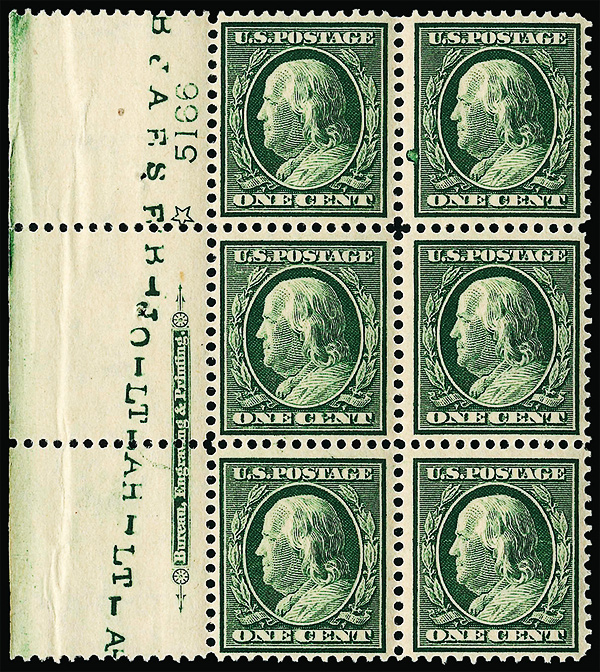
#331 was issued with the following plate #'s
Imprint and number
4874-75, 80-82, 85-86, 88-92, 94-95, 97-99
4900-04, 06-15, 60, 62, 66-67, 71-72, 74-75
Imprint, small solid star and number
4980
Imprint, star and plate number
4985-86, 89, 91, 93-95, 97-99
5000-14, 23-24, 76-87, 89, 91, 93, 97-98
5100-01, 03, 11, 18, 24, 37, 52, 53, 59, 62, 66, 69, 79-80, 86-87, 92-93, 98
5206-16, 23, 27, 32, 34, 42, 55, 59, 79 ,87, 94
5301-13, 20, 22, 30, 33, 36, 40, 45, 52, 59, 60, 73, 78, 80, 82-83, 85-87
5401-02, 03, 04, t3, t4, 16, 18, 20, 29, 82, 35, 38, 41, 44, 74, 76, 88, 89
5490-91, 94, 95
A Full Pane
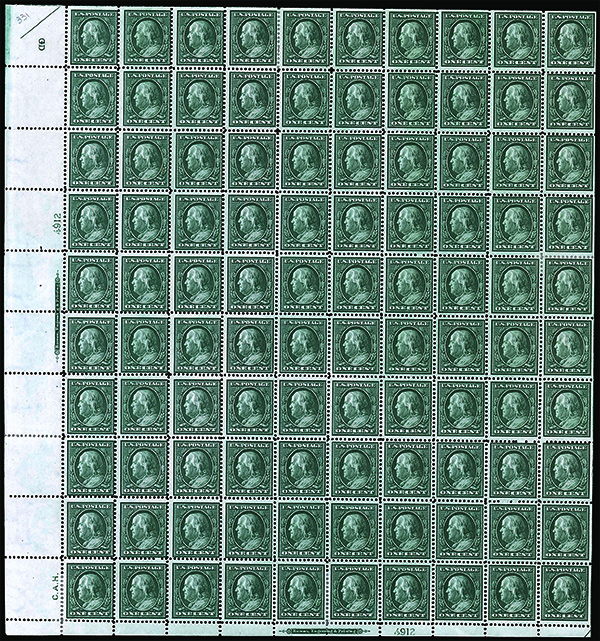
A pane of 100 of #331. There are four panes to a sheet of 400
Not regulatory
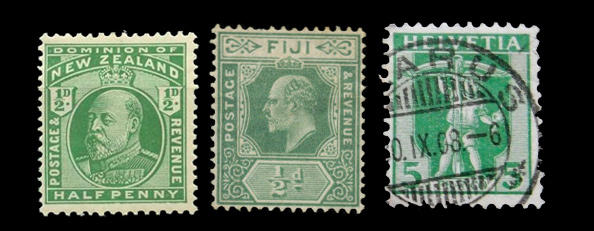
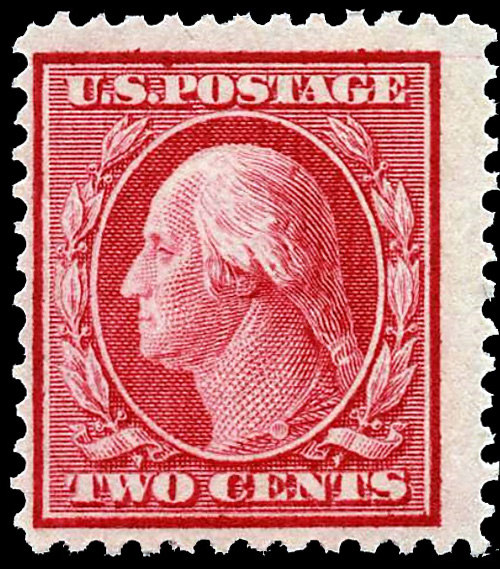
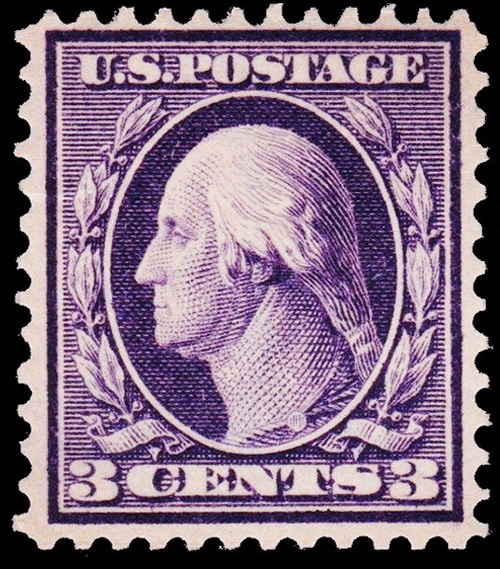
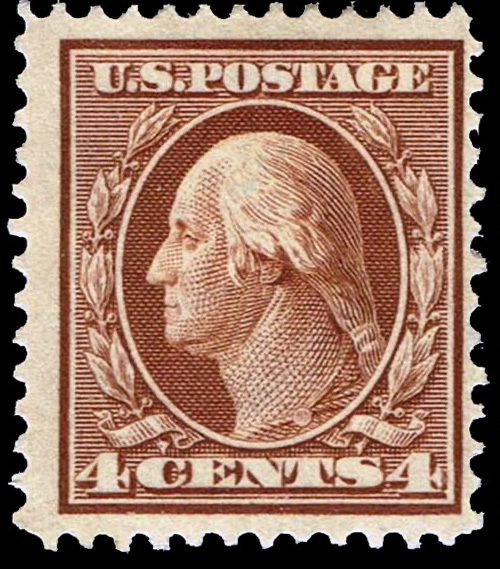
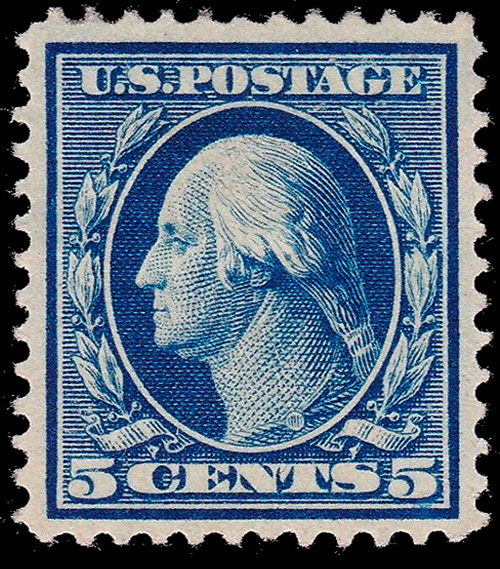
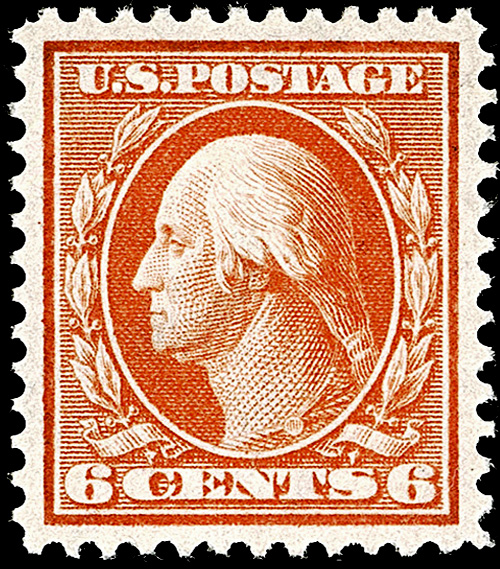
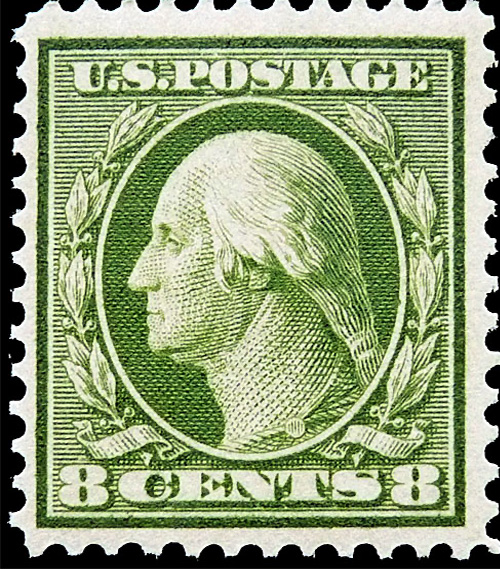
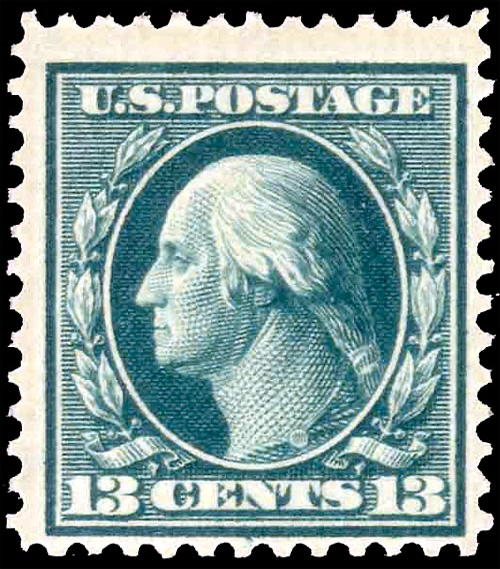
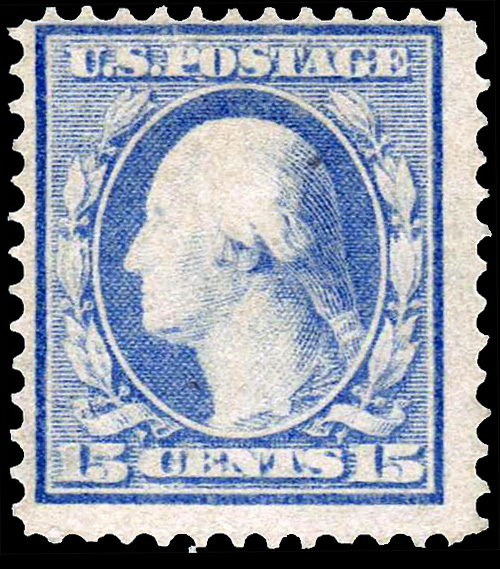
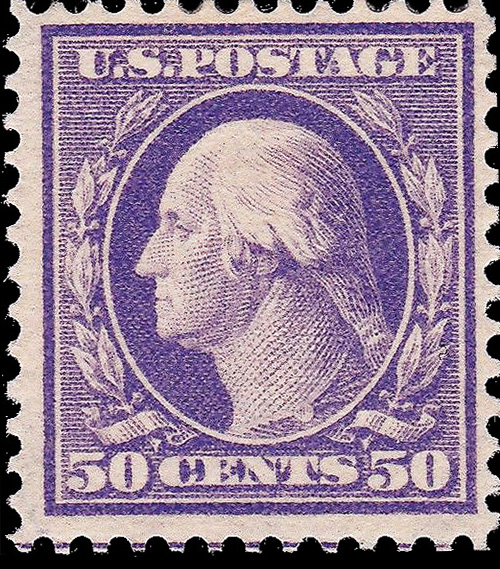
According to the Universal Postal Union regulations the standard postcard rate stamp should be green and should have the value in figures, not letters. Some examples of stamps that complied with the regulations are shown above. The reason for this regulation was that postal workers around the world could easily identify the rate used on incoming mail.
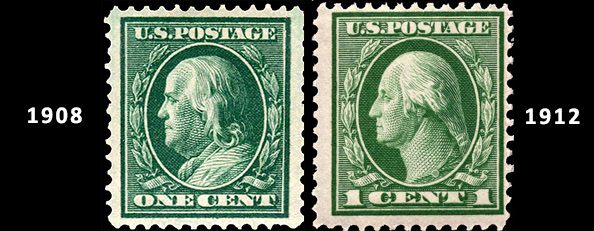
#331 stamp's design depicted the value in words and not figures, which was not regulatory. This was allowed to continue until finally, four years later, in 1912, the value was changed from words to figures.
The watermark

An illustration of the double line USPS watermark found on this stamp (note the booklet pane's watermark is sideways)
Experimental Paper ?
Sometimes you will see very expensive copies of #331 advertised as experimental paper or CHINA CLAY PAPER. There is no such thing, what exists are stamps which have "dirty water" paper because silica in the water became embedded in paper produced during drought conditions when the mill pond was low.
There are some old PF certificates still around that state that a stamp is a "China Clay' stamp. The PF no longer recognises China Clay stamps and has ceased certifying them.
Do not be tempted to buy something that does not exist.
#331a

The booklet pane was issued on November 18, 1908, two weeks before the regular issue. It was envisioned that this issue would only be printed in booklet form as it was the postal rate of postcards and the booklet pane would offer convenience.
There are nine different positions of the plate number on the 180 pane and 12 different positions on the 350 subject plate. An example of each is shown above. As the panes had their side margins trimmed off there are no side plate numbers. There were two types of sheets, one with a single pane of 180 stamps, another with two panes of 180 stamps, making a total of 360 stamps. See below for a diagram of the plates
The booklet pane was issued with the following plate #'s
Plates used:
180 subjects
4867-69, 70, 77
6029-30, 34-35, 37-38, 40-41
360 subjects
5263-64, 67-68
Value of #331a
Used
$250-$300
No postmark with gum (MH)
$150-$200
Full perfect gum, no postmark
no trace of stamp hinge mark (MNH)
$300-$350
Please note that the values are for full panes with the top tabs intact
Booklet pane watermark
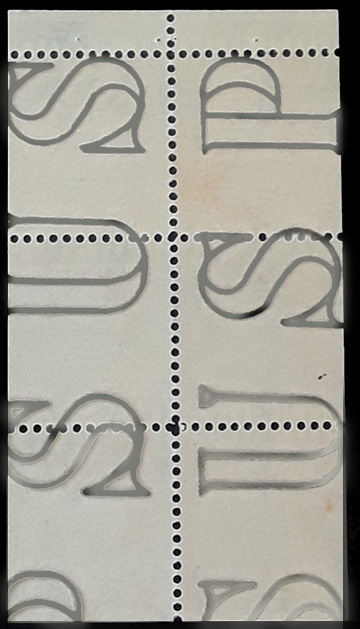
An illustration of the double line USPS watermark found on this stamp (note the regular stamps watermark is upright)
Booklets
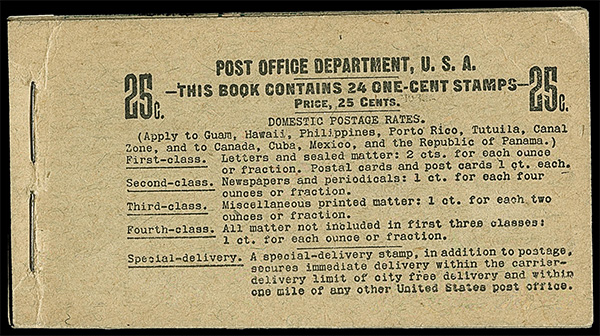
BK18
1¢ Green booklet with four panes of six
Value: $900
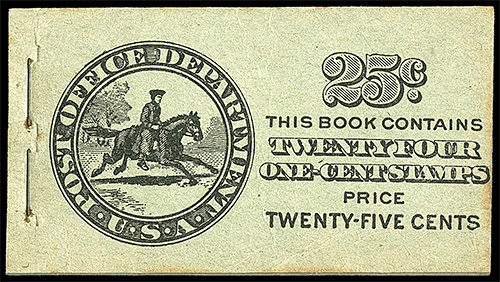
BK19
1¢ Green booklet with four panes of six
Value: $900
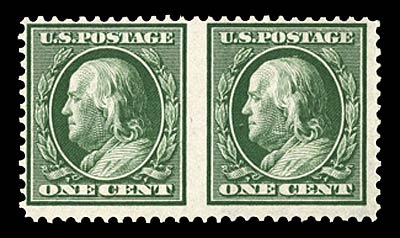
331a var
Imperforate in-between, derived by an incorrectly perforated booklet pane. Value $3,250

Plate Positions of the Booklet Pane
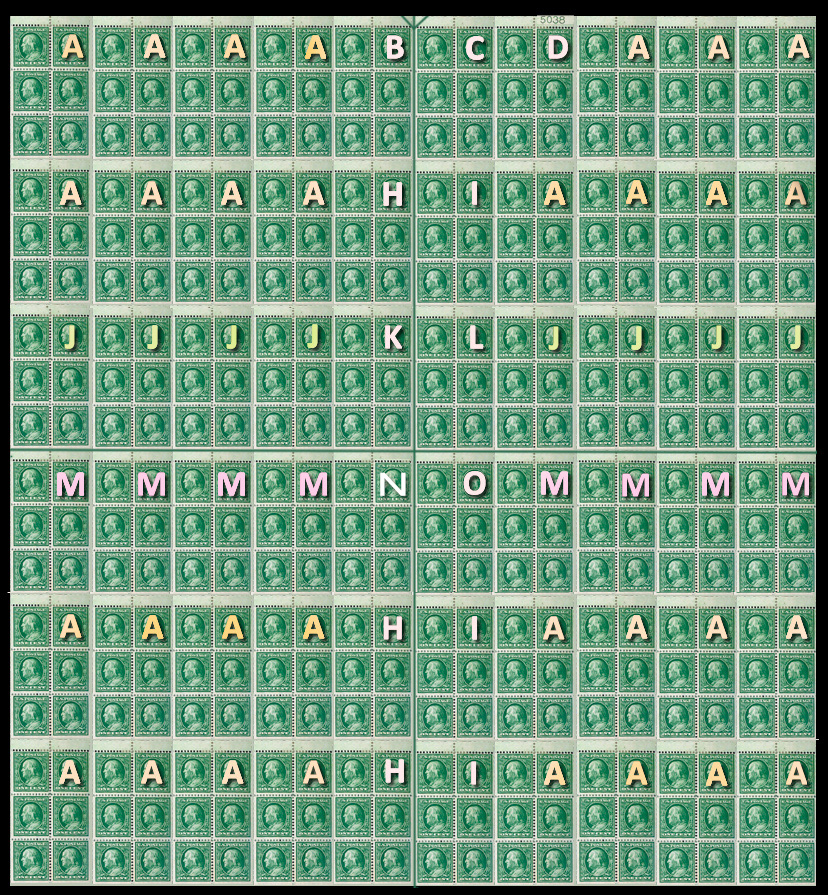
Diagram of a 36O Subject Booklet Plate
Position panes on 360 subject plates
A-Ordinary pane.
B-Pane with half arrow line in margin, guide line at right.
C-Pane with half arrow line in margin, guide line at left.
D-Pane with plate number in margin.
H-Pane with vertical guide line at right.
I-Pane with vertical guide line at left.
J-Pane with horizontal guide line at bottom.
K-with vertical guide line at right and line at bottom.
L-Pane with vertical guide line at left and line at bottom.
M-Pane with horizontal guide line at top of margin,
N-Pane with vertical guide line at right and at top of margin.
O-Pane with vertical guide line at left and at top of margin.
Panes A, B, C and D are found on both types of plates and are listed merely to account for the various position panes on each plate.
Panes H and I, of the 180 subject sheets, are the same as H and I of the 360 sheets. They are exactly the same and there is no method of telling them apart.
The 180 subject sheets were used for the booklets of this issue, while the 360 subject sheets were used for this and. all succeeding booklets of ordinary stamps. The above list of positions will, therefore, hold true for all succeeding issues unless otherwise specified
1908-09 Definitive Double Line USPS Watermark P12 Issues
Click your selected stamp