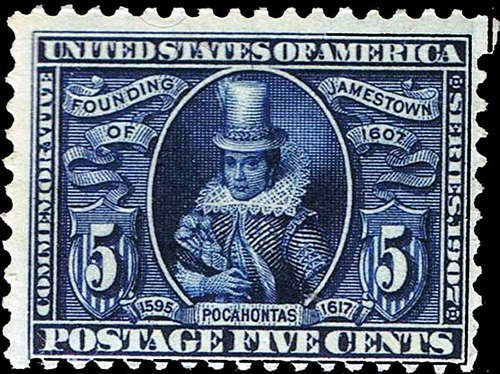
An unused stamp with perfect gum: $50-$60
An unused stamp with gum and a hinge mark: $14-$19
A used stamp: $2-$5
About the Jamestown Exposition Series
{ if (window.innerWidth >= bp.minWidth) enabled = bp.enabled; });
if (!enabled) return;
const pic = $el.closest('picture');
const light = pic && pic.querySelector('source[data-lightbox-role="light"]');
const dark = pic && pic.querySelector('source[data-lightbox-role="dark"]');
$dispatch('image-lightbox-open', {
id: 'rwB5E3A52C_7AE6_480A_819F_E0A744AAC590',
src: (light && light.getAttribute('srcset')) || $el.currentSrc || $el.src,
srcDark: (dark && dark.getAttribute('srcset')) || null,
alt: $el.alt,
});
" oncontextmenu="return false" ondragstart="return false" onmousedown="return false" decoding="async" />
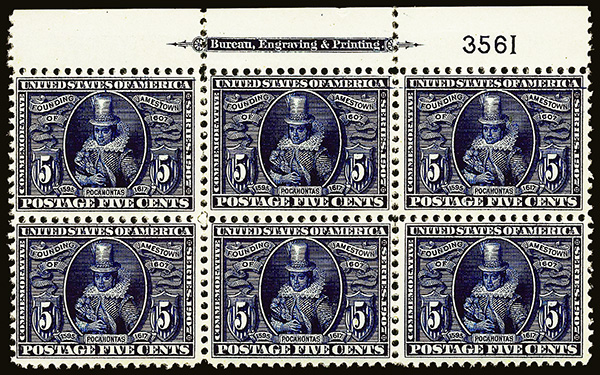
An essay of #330 (330E4)
The Jamestown Exposition series of US stamps was created in 1907 to commemorate the 300th anniversary of the founding of the Jamestown settlement, which was the first permanent English colony in America.
Key Factors Behind Its Creation
The World's Fair Request: Organizers of the Jamestown Ter-Centennial Exposition requested a dedicated set of promotional stamps, following a precedent set by previous world's fairs like the 1893 World's Columbian Exposition.
Presidential Intervention: Postmaster General George B. Cortelyou originally refused the request. He changed his mind after President Theodore Roosevelt personally urged the Post Office Department to issue the commemorative stamps.
Honoring Historical Figures: The final three-stamp collection was expanded from its original scope to satisfy public demand for depictions of specific iconic historical figures from the colony's early history.
Usage
{ if (window.innerWidth >= bp.minWidth) enabled = bp.enabled; });
if (!enabled) return;
const pic = $el.closest('picture');
const light = pic && pic.querySelector('source[data-lightbox-role="light"]');
const dark = pic && pic.querySelector('source[data-lightbox-role="dark"]');
$dispatch('image-lightbox-open', {
id: 'rw37318419_2B5B_4E09_BB27_781890BD8478',
src: (light && light.getAttribute('srcset')) || $el.currentSrc || $el.src,
srcDark: (dark && dark.getAttribute('srcset')) || null,
alt: $el.alt,
});
" decoding="async" />
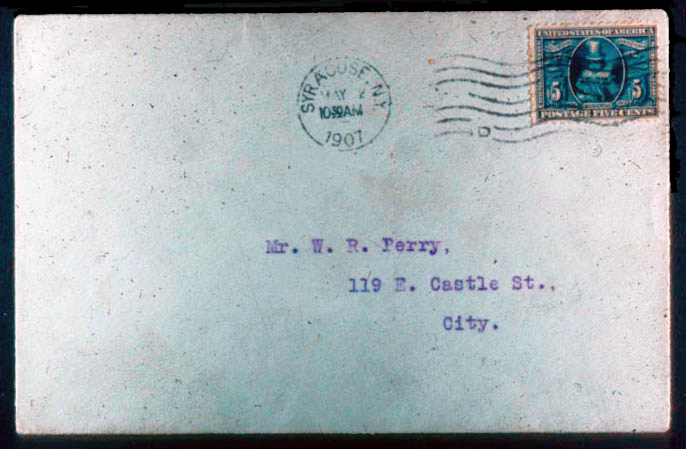
#330 on a cover postmarked one day before the official issue
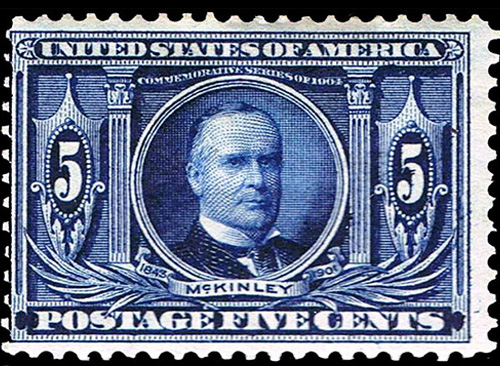
The 5¢ stamp was primarily used to meet the 5-cent U.S. postage rate for letters to foreign countries within the Universal Postal Union (UPU). It was a staple of late 19th-century US international postage.
The Plates
#330 was issued with the following plate #'s
3554-56, 60-61
Proofs
{ if (window.innerWidth >= bp.minWidth) enabled = bp.enabled; });
if (!enabled) return;
const pic = $el.closest('picture');
const light = pic && pic.querySelector('source[data-lightbox-role="light"]');
const dark = pic && pic.querySelector('source[data-lightbox-role="dark"]');
$dispatch('image-lightbox-open', {
id: 'rw645D117A_0CA6_4122_ABA4_B5243C258B3C',
src: (light && light.getAttribute('srcset')) || $el.currentSrc || $el.src,
srcDark: (dark && dark.getAttribute('srcset')) || null,
alt: $el.alt,
});
" oncontextmenu="return false" ondragstart="return false" onmousedown="return false" loading="lazy" decoding="async" />
{ if (window.innerWidth >= bp.minWidth) enabled = bp.enabled; });
if (!enabled) return;
const pic = $el.closest('picture');
const light = pic && pic.querySelector('source[data-lightbox-role="light"]');
const dark = pic && pic.querySelector('source[data-lightbox-role="dark"]');
$dispatch('image-lightbox-open', {
id: 'rw3814B01C_33D2_4F06_9945_75AEC87893A1',
src: (light && light.getAttribute('srcset')) || $el.currentSrc || $el.src,
srcDark: (dark && dark.getAttribute('srcset')) || null,
alt: $el.alt,
});
" oncontextmenu="return false" ondragstart="return false" onmousedown="return false" loading="lazy" decoding="async" />
{ if (window.innerWidth >= bp.minWidth) enabled = bp.enabled; });
if (!enabled) return;
const pic = $el.closest('picture');
const light = pic && pic.querySelector('source[data-lightbox-role="light"]');
const dark = pic && pic.querySelector('source[data-lightbox-role="dark"]');
$dispatch('image-lightbox-open', {
id: 'rwE460A09E_C496_4AED_929C_A19CD605FE8A',
src: (light && light.getAttribute('srcset')) || $el.currentSrc || $el.src,
srcDark: (dark && dark.getAttribute('srcset')) || null,
alt: $el.alt,
});
" oncontextmenu="return false" ondragstart="return false" onmousedown="return false" loading="lazy" decoding="async" />
{ if (window.innerWidth >= bp.minWidth) enabled = bp.enabled; });
if (!enabled) return;
const pic = $el.closest('picture');
const light = pic && pic.querySelector('source[data-lightbox-role="light"]');
const dark = pic && pic.querySelector('source[data-lightbox-role="dark"]');
$dispatch('image-lightbox-open', {
id: 'rw6BA0E3C6_B3DB_421D_B680_F2ECE0C82BFA',
src: (light && light.getAttribute('srcset')) || $el.currentSrc || $el.src,
srcDark: (dark && dark.getAttribute('srcset')) || null,
alt: $el.alt,
});
" oncontextmenu="return false" ondragstart="return false" onmousedown="return false" loading="lazy" decoding="async" />
{ if (window.innerWidth >= bp.minWidth) enabled = bp.enabled; });
if (!enabled) return;
const pic = $el.closest('picture');
const light = pic && pic.querySelector('source[data-lightbox-role="light"]');
const dark = pic && pic.querySelector('source[data-lightbox-role="dark"]');
$dispatch('image-lightbox-open', {
id: 'rwAE8DE4EC_7F41_4668_9510_F955CA91CF09',
src: (light && light.getAttribute('srcset')) || $el.currentSrc || $el.src,
srcDark: (dark && dark.getAttribute('srcset')) || null,
alt: $el.alt,
});
" oncontextmenu="return false" ondragstart="return false" onmousedown="return false" loading="lazy" decoding="async" />
{ if (window.innerWidth >= bp.minWidth) enabled = bp.enabled; });
if (!enabled) return;
const pic = $el.closest('picture');
const light = pic && pic.querySelector('source[data-lightbox-role="light"]');
const dark = pic && pic.querySelector('source[data-lightbox-role="dark"]');
$dispatch('image-lightbox-open', {
id: 'rwA26C90CC_CB6F_4800_964C_EE7A4B87901B',
src: (light && light.getAttribute('srcset')) || $el.currentSrc || $el.src,
srcDark: (dark && dark.getAttribute('srcset')) || null,
alt: $el.alt,
});
" oncontextmenu="return false" ondragstart="return false" onmousedown="return false" loading="lazy" decoding="async" />
About the (almost) Jamestown Exposition
{ if (window.innerWidth >= bp.minWidth) enabled = bp.enabled; });
if (!enabled) return;
const pic = $el.closest('picture');
const light = pic && pic.querySelector('source[data-lightbox-role="light"]');
const dark = pic && pic.querySelector('source[data-lightbox-role="dark"]');
$dispatch('image-lightbox-open', {
id: 'rw9D1D0A70_ED97_4053_A40B_62CB23AA0C05',
src: (light && light.getAttribute('srcset')) || $el.currentSrc || $el.src,
srcDark: (dark && dark.getAttribute('srcset')) || null,
alt: $el.alt,
});
" decoding="async" />
{ if (window.innerWidth >= bp.minWidth) enabled = bp.enabled; });
if (!enabled) return;
const pic = $el.closest('picture');
const light = pic && pic.querySelector('source[data-lightbox-role="light"]');
const dark = pic && pic.querySelector('source[data-lightbox-role="dark"]');
$dispatch('image-lightbox-open', {
id: 'rw8D04825B_750B_44C4_AC2C_B6EF66FB6B09',
src: (light && light.getAttribute('srcset')) || $el.currentSrc || $el.src,
srcDark: (dark && dark.getAttribute('srcset')) || null,
alt: $el.alt,
});
" decoding="async" />
{ if (window.innerWidth >= bp.minWidth) enabled = bp.enabled; });
if (!enabled) return;
const pic = $el.closest('picture');
const light = pic && pic.querySelector('source[data-lightbox-role="light"]');
const dark = pic && pic.querySelector('source[data-lightbox-role="dark"]');
$dispatch('image-lightbox-open', {
id: 'rwE9AE1CBB_4AC6_4B8F_B8C9_25B580ED1610',
src: (light && light.getAttribute('srcset')) || $el.currentSrc || $el.src,
srcDark: (dark && dark.getAttribute('srcset')) || null,
alt: $el.alt,
});
" decoding="async" />
{ if (window.innerWidth >= bp.minWidth) enabled = bp.enabled; });
if (!enabled) return;
const pic = $el.closest('picture');
const light = pic && pic.querySelector('source[data-lightbox-role="light"]');
const dark = pic && pic.querySelector('source[data-lightbox-role="dark"]');
$dispatch('image-lightbox-open', {
id: 'rw123F5D9D_E23D_461E_985B_4E46D1074A36',
src: (light && light.getAttribute('srcset')) || $el.currentSrc || $el.src,
srcDark: (dark && dark.getAttribute('srcset')) || null,
alt: $el.alt,
});
" decoding="async" />
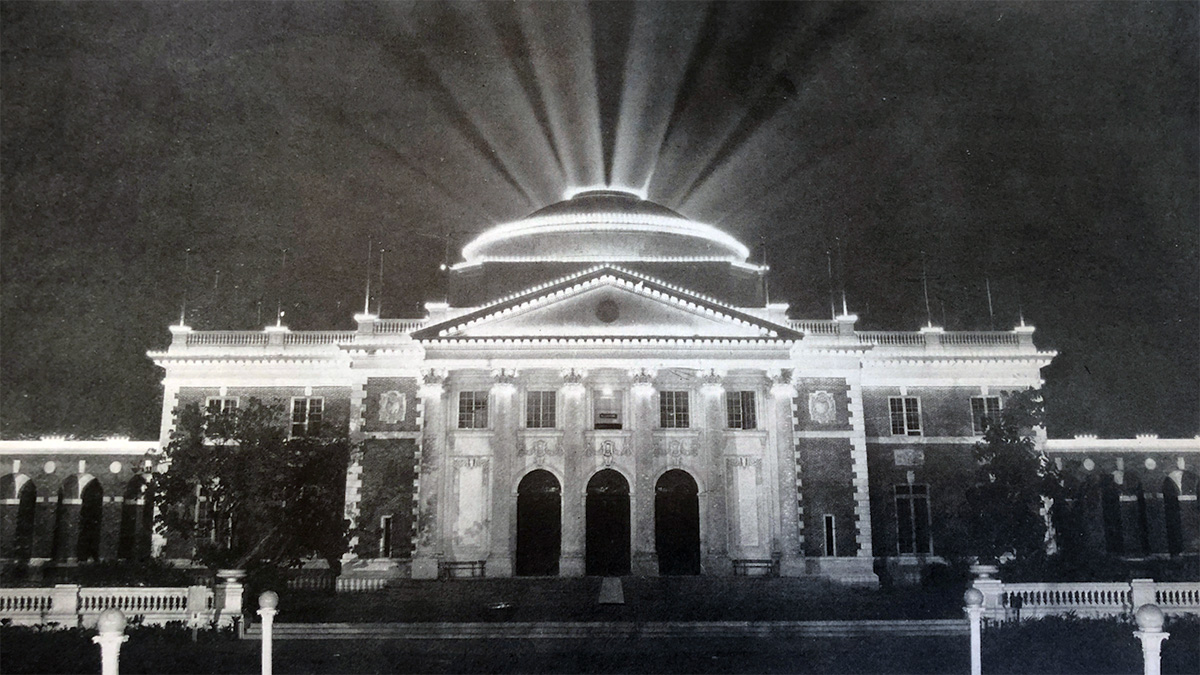
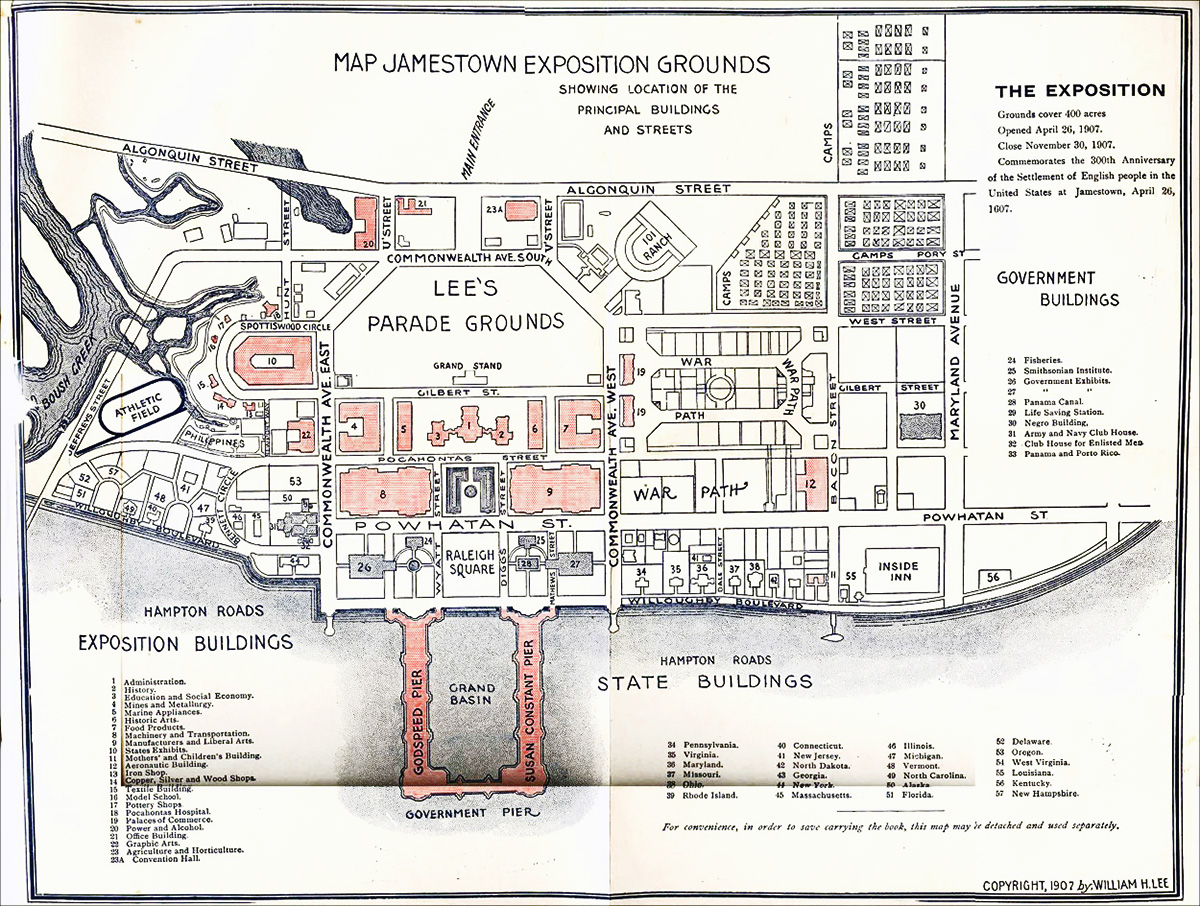
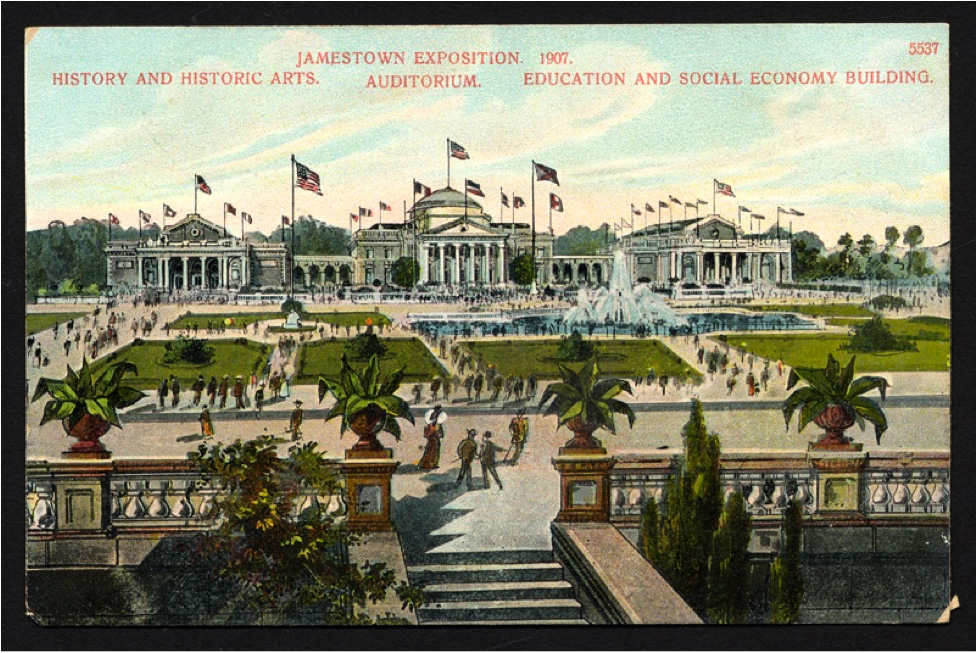
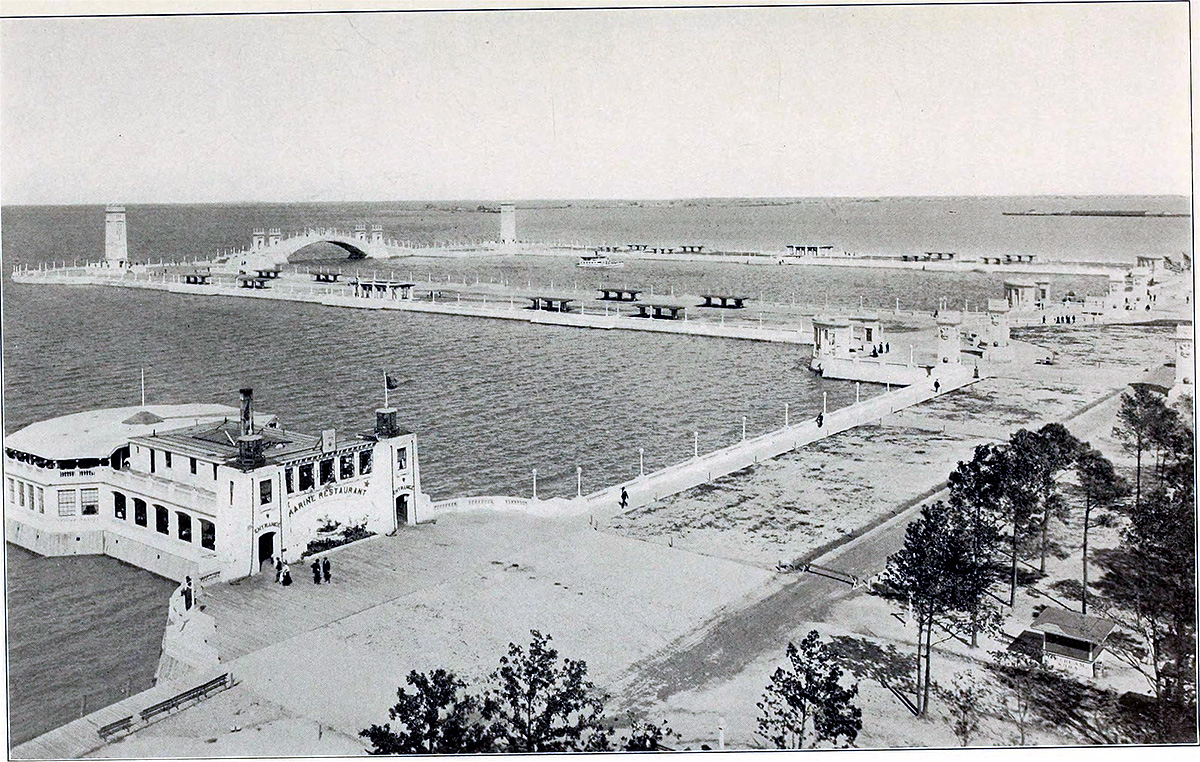
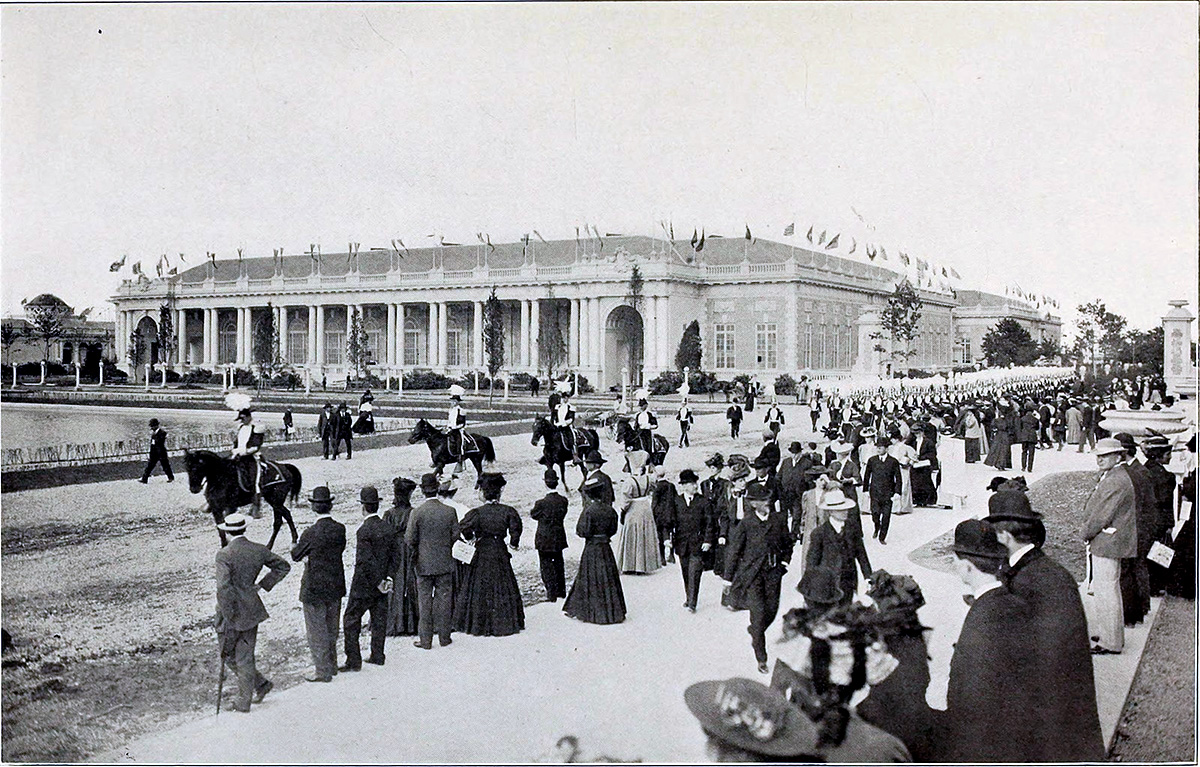
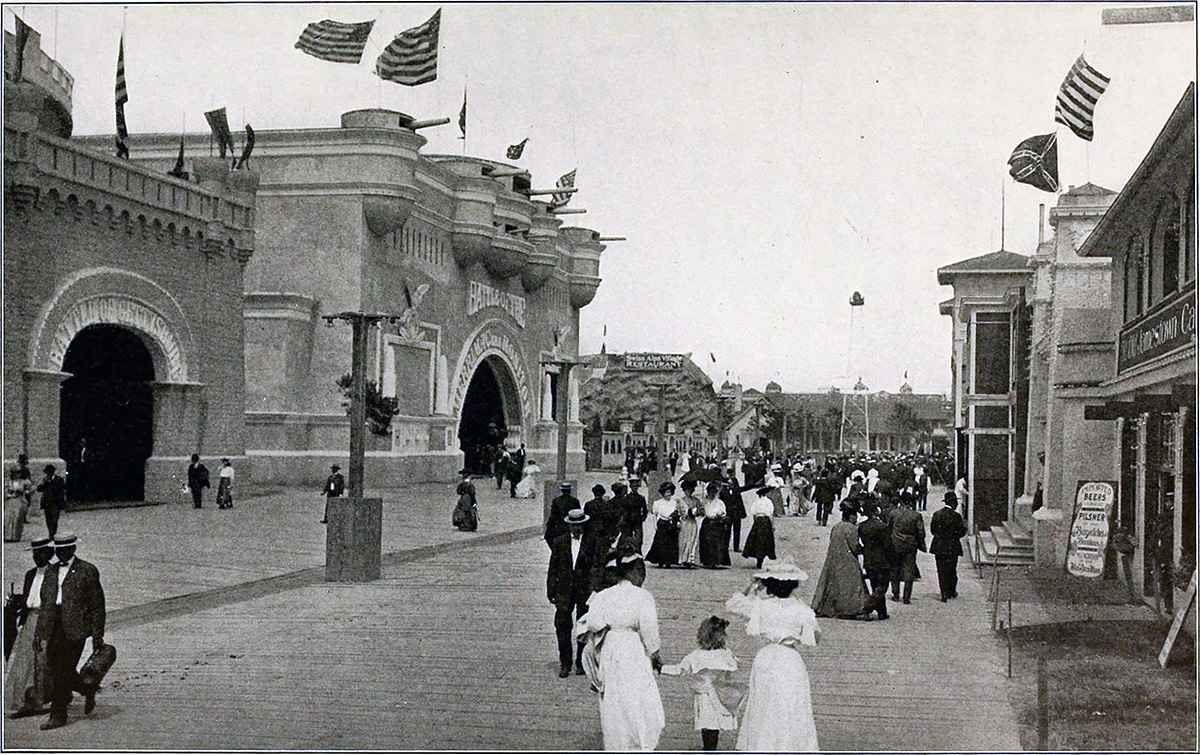
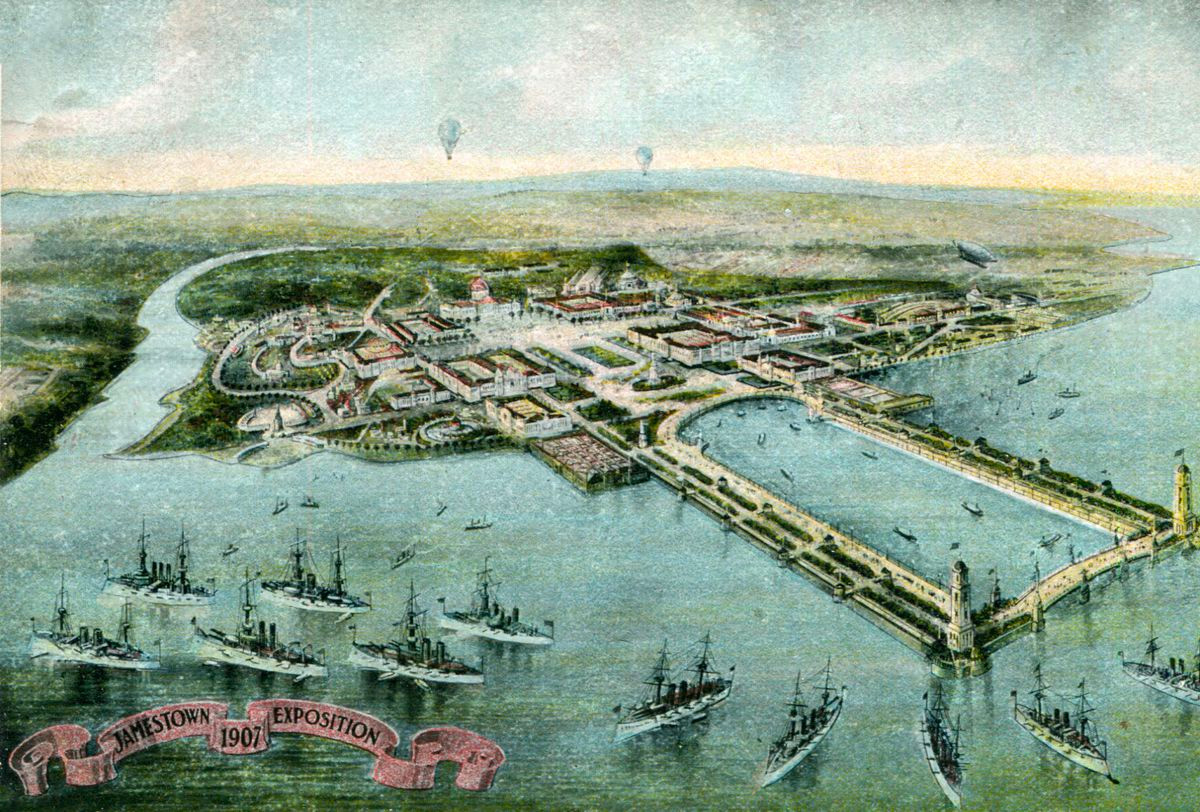
The purpose of the Exposition, like previous Expo's was to bring interest to the local economy. In this case Hampton Roads, Virginia. It was a private venture put together by local businessmen and supported by the local cities. At a late stage Congress loaned $1M to the expo. Despite issuing stock certificates money was always short. April 1907 was the opening date and yet most of the buildings were either incomplete or had no exhibits well into May 1907.The pier for travellers arriving by boat was not completed until September 1907, six weeks before the Expo closed in November 1907. There was a road and rail link which were built for the Expo but ended well short of the Expo and visitors had to take a very long walk, discouraging anyone wanting to visit again. That walk earned the Exposition the nickname of the "Imposition'.
In order to get support from the nearby towns of Hampton Roads it was built on Sewell's Point, a location that was about equal distance from each town and thus would not favor any town. Unfortunately Sewell's point was nothing but fields with no infrastructure, one of the biggest expenses was bringing sewage and water to the site. The organisers built a giant water tank which the visitors emptied every day and filled up overnight.
It was forecast there would be 6 million visitors, but only 2.8 million came and only half of those were paying visitors. A month after the Expo closed the Expo company went bust owing the Federal Government the $1M loan, which the bankruptcy did not clear. For the next year they tried to persuade the Federal Government to build a Naval base on the site. Only succeeding when WWI came along.
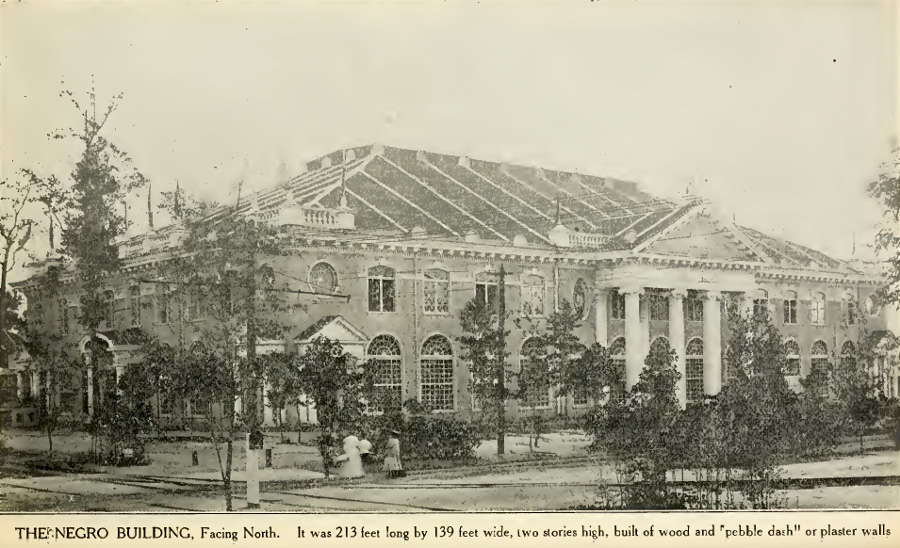
Today most of the building can still be found on the Naval base, although only eight are in their original location.
The Inspiration for the Design
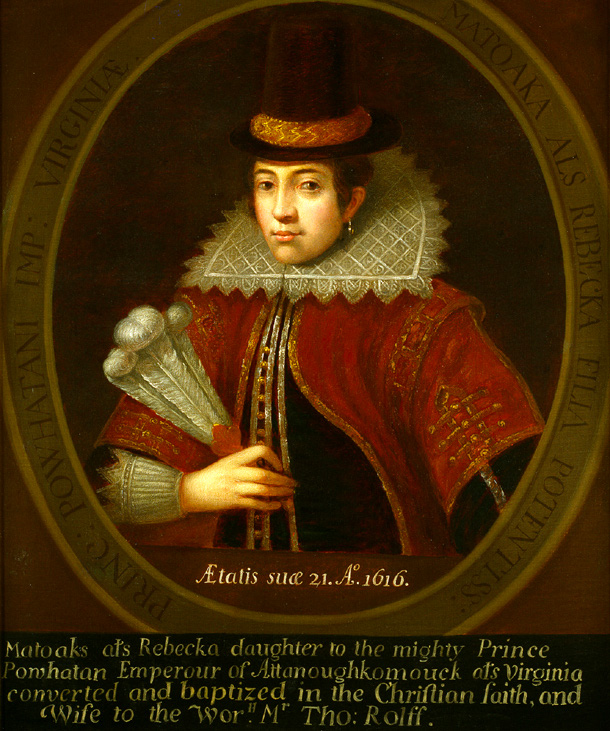
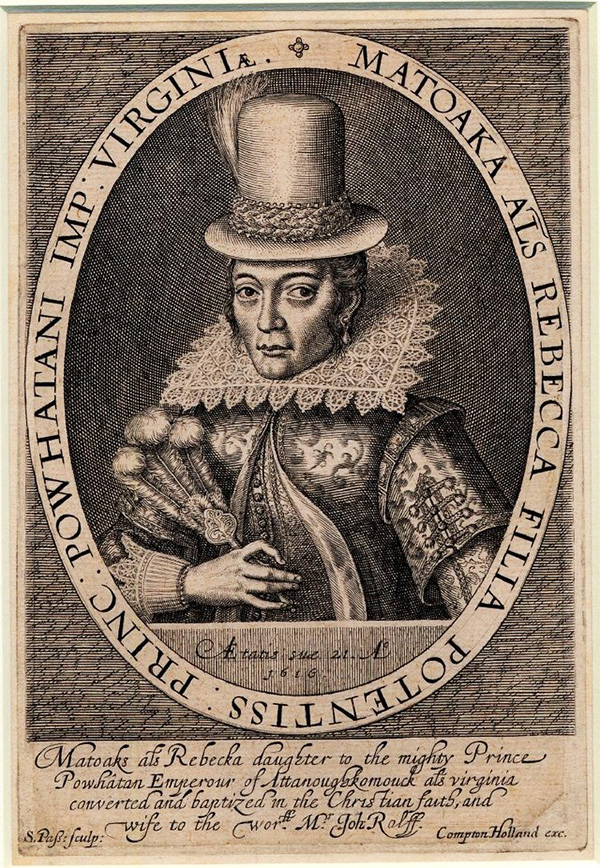
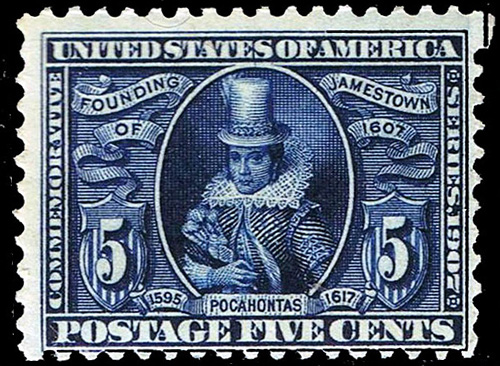
Simon Le Passe made this engraving from a live sitting of Pocahontas in 1616, whilst on her visit to England. She was portrayed as an English Gentlewoman. She holds an ostrich feather fan in her hand, to symbolize royalty. Her name is given as Matoaka all Rebecca, not Pocahontas. She is stated as being 21 years old at the time of the portrait.