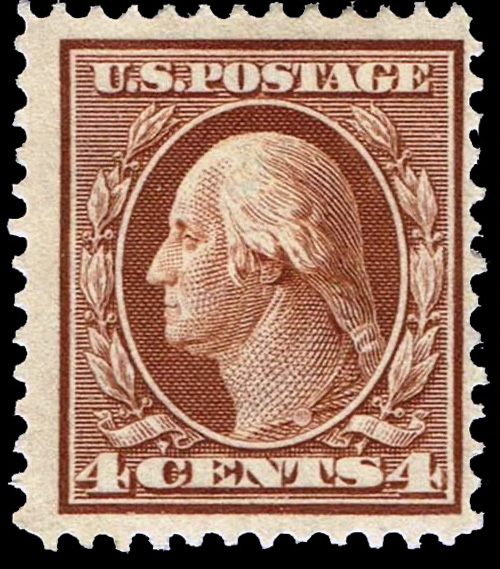
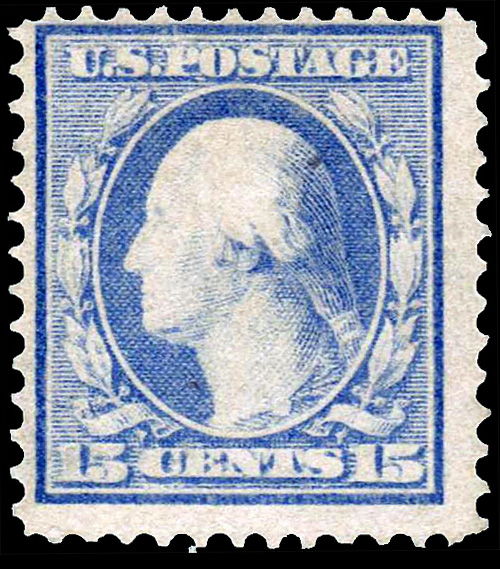
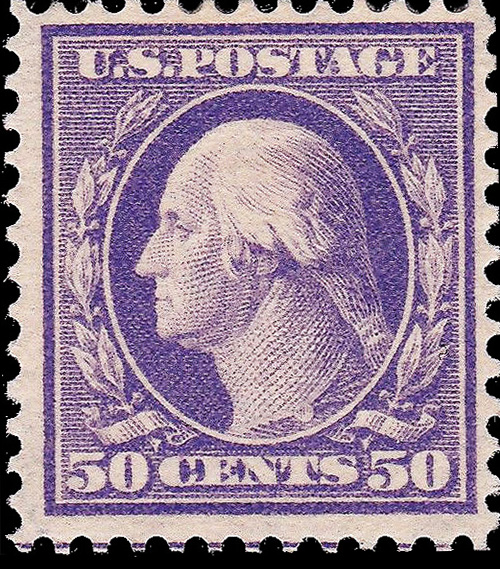
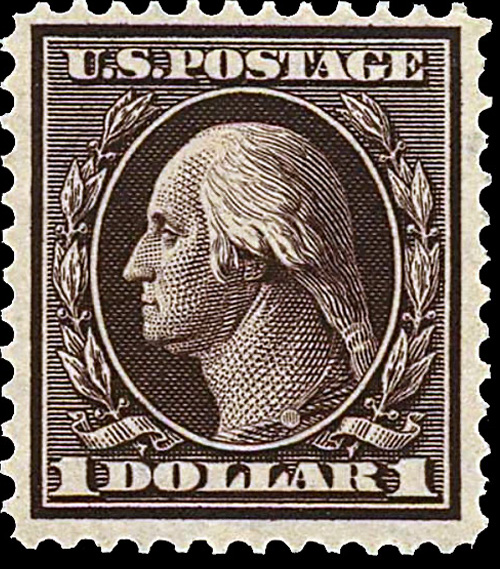
#334 - 1908 Double Line USPS Watermark P12 4¢

See below for details
Basic Info
4¢ - Orange brown, light brown, brown, dark brown
Printing Method: FLAT PLATE
Subject: George Washington
Number issued: 260,000,000
Perforations: P12
Watermark: Double Line USPS
Scott #: 334
Issued: December 24, 1908
Value
Used
20¢
No postmark with gum (MH)
$18 - $30
Full perfect gum, no postmark
no trace of stamp hinge mark (MNH)
$50 - $70
Plate #'s
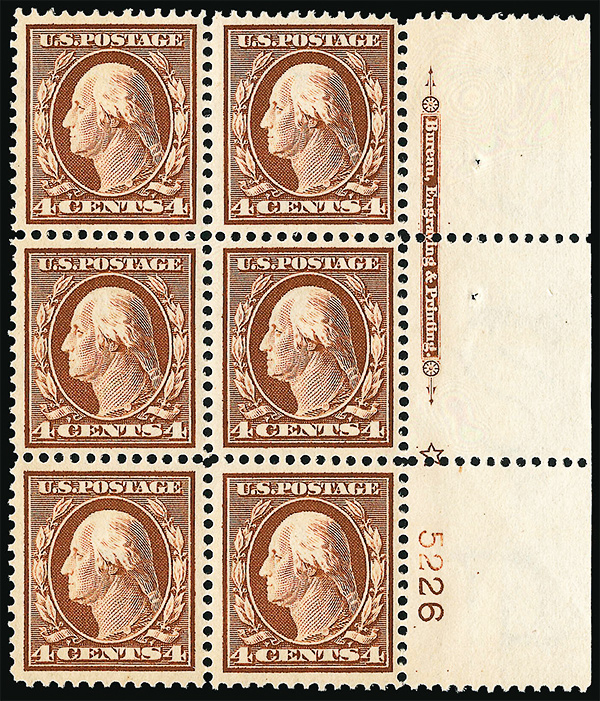
#334 was issued with the following plate #'s
Imprint and number
4932-35
Imprint, star and number
5132-38, 46, 58, 99
5212-17, 26
5405-08, 15, 17, 22, 26
The watermark
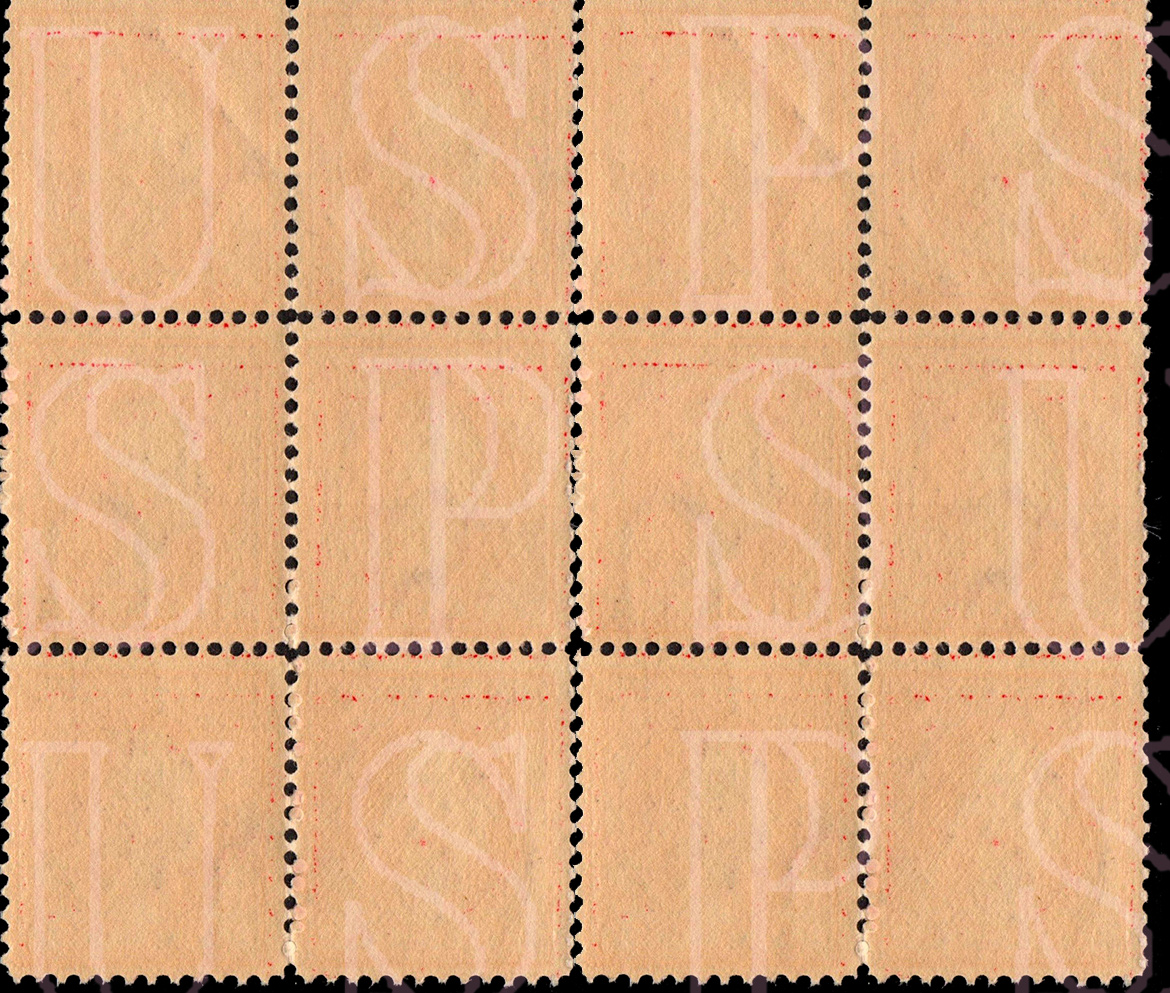
An illustration of the double line USPS watermark found on this stamp
Experimental paper ?
Sometimes you will see very expensive copies of #331 advertised as experimental paper or CHINA CLAY PAPER. There is no such thing, what exists are stamps which have "dirty water" paper because silica in the water became embedded in paper produced during drought conditions when the mill pond was low.
There are some old PF certificates still around that state that a stamp is a "China Clay' stamp. The PF no longer recognises China Clay stamps and has ceased certifying them.
Do not be tempted to buy something that does not exist.
From four to 4
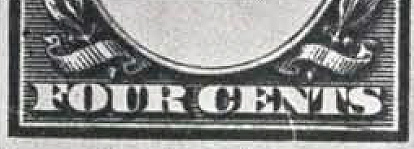
According to the Universal Postal Union regulations stamps should have the value in figures, not words. Both #331 and #332 had their value in words and it was intended that all the values should have the same. It was thought as the one cent and two cent stamps (#331 and #332) had adhered to the regulatory colors for their rate they would be easily identified by foreign postal agencies. But brown is not a standard postal rate and for all those postal workers in foreign countries who did not reed english they would have no idea what rate was paid. Hence the design of the 4¢ stamp was changed from the one above to the stamp that was issued, with the value in figures.
The meaning of the star
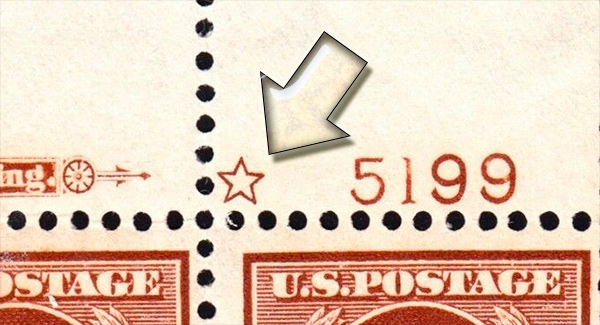
Early in 1909, most of the higher values had new plates made with gutters 3mm wide between the six outer rows on either side but with the remaining eight rows of 2mm spacing, the same as plates of the lower values. These were made to overcome the waste in perforating due to unequal shrinkage of the paper which was greatest at the outside. To guide the perforator in setting the wheels for these plates a star identification mark was added after the imprint, hence the name " Star Plate. " These plates produced blocks of stamps with different vertical spacings and although the 3mm out numbered the 2mm they are more desirable as few seem to have been saved of the 3mm spacing.
Working at the Bureau

Shown above is perforating machine at the bureau at the time of this issue. The perforator created a lost of paper dust and the ladies wore these odd looking hats to prevent their hair being full of dust at the end of the day. The hats were triangular too that dust would fall off the sides and not accumulate on a flat surface. That begs the question, why were they not wearing fast masks to protect their lungs
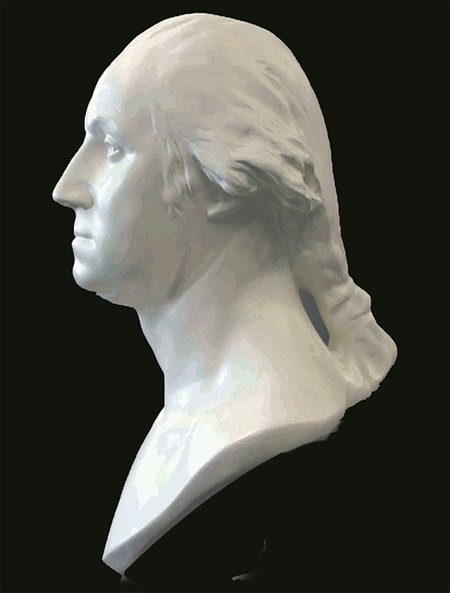
Proofs
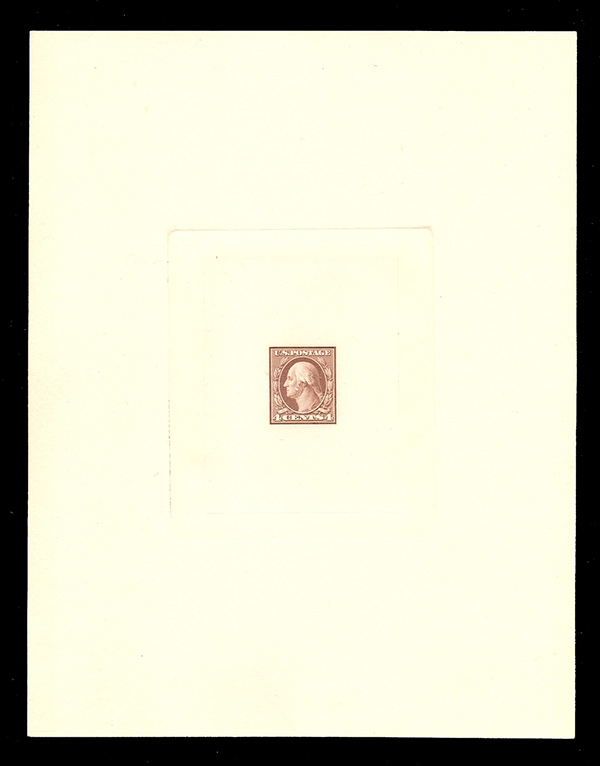
Die proof on India mounted on card
334-P1

334-P1
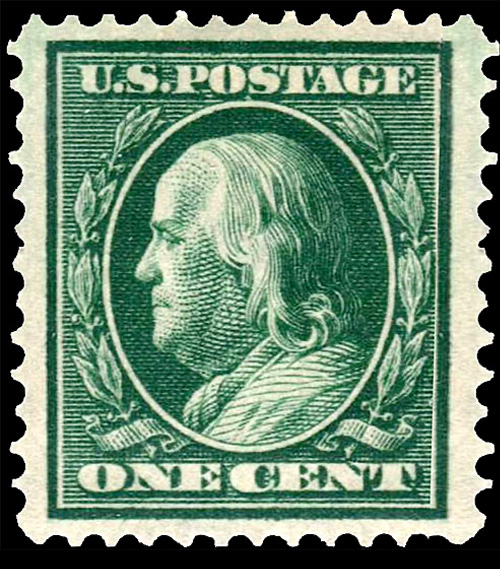
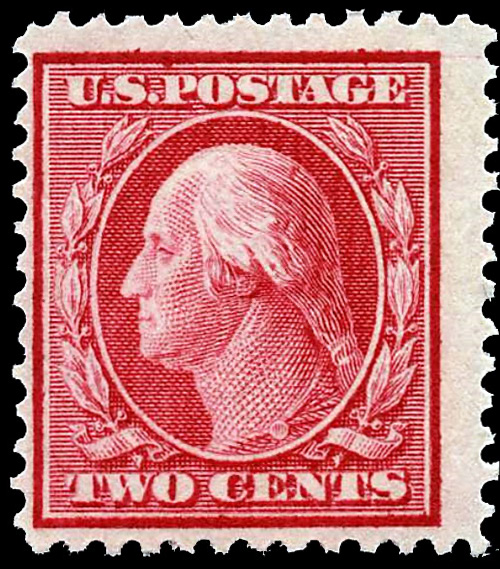
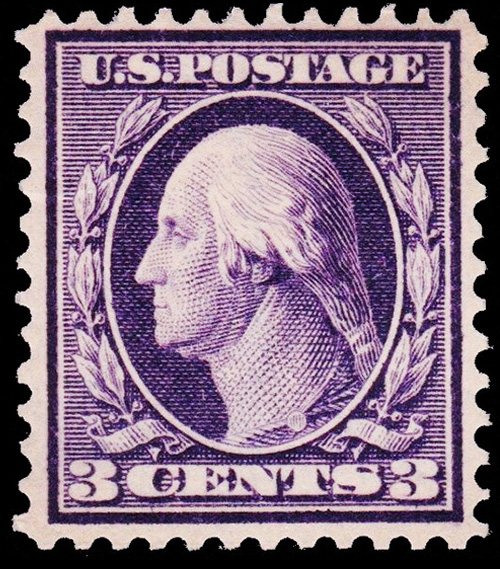
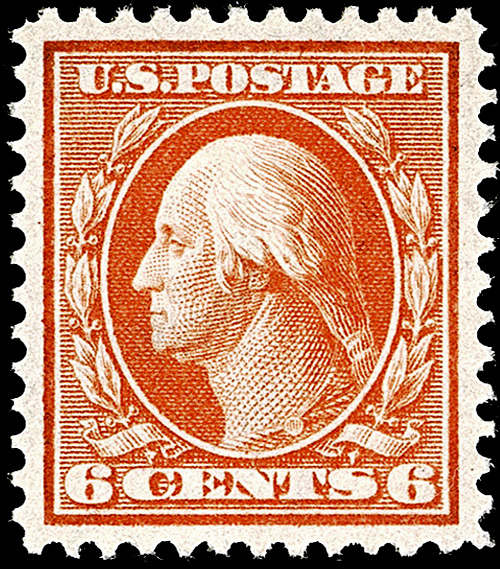
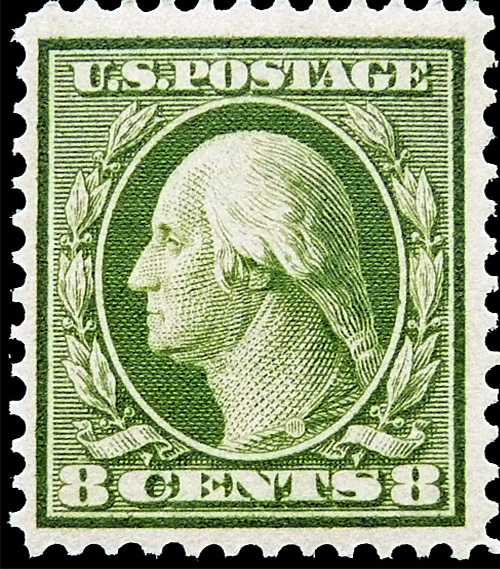
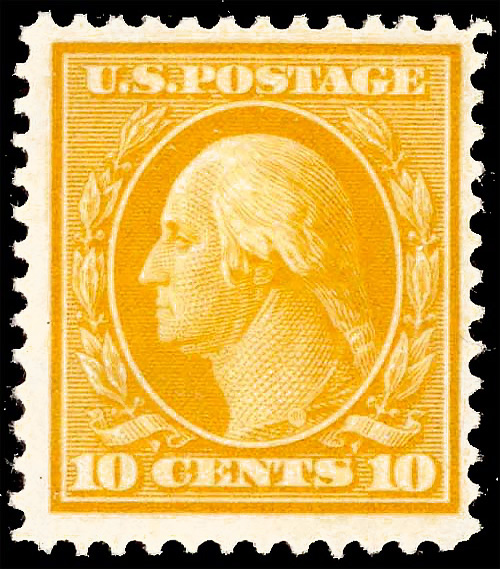
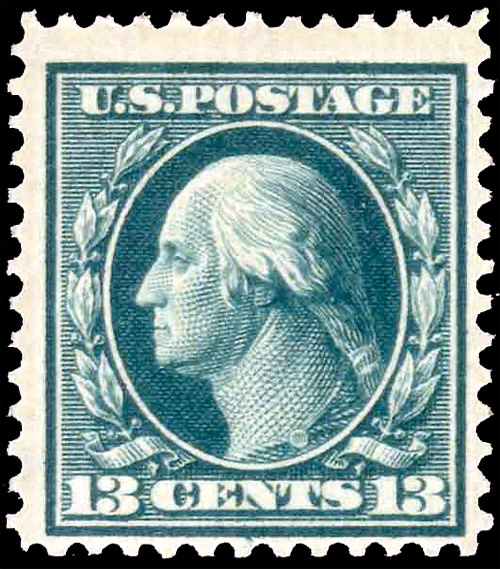
1908-09 Definitive Double Line USPS Watermark P12 Issues
Click your selected stamp