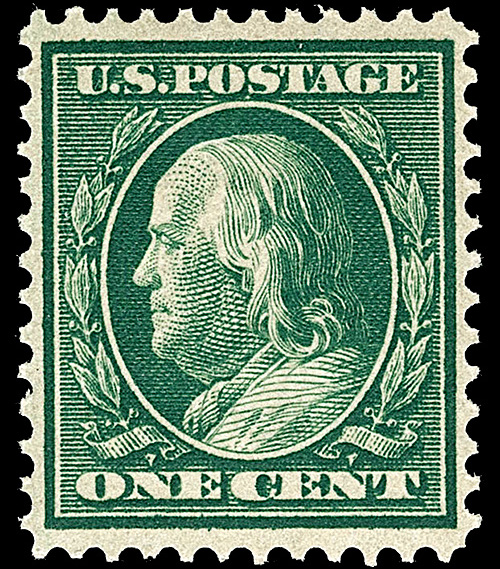
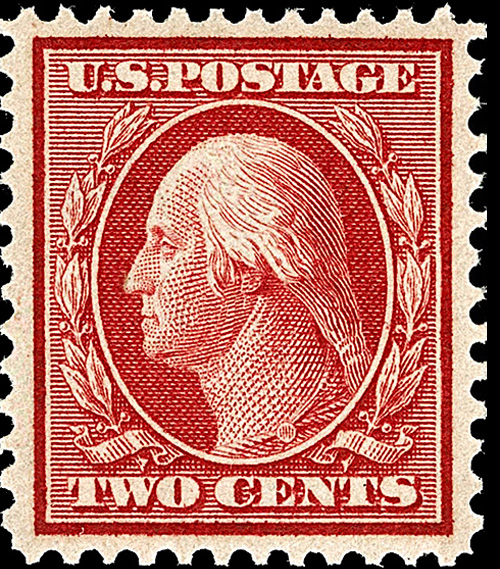
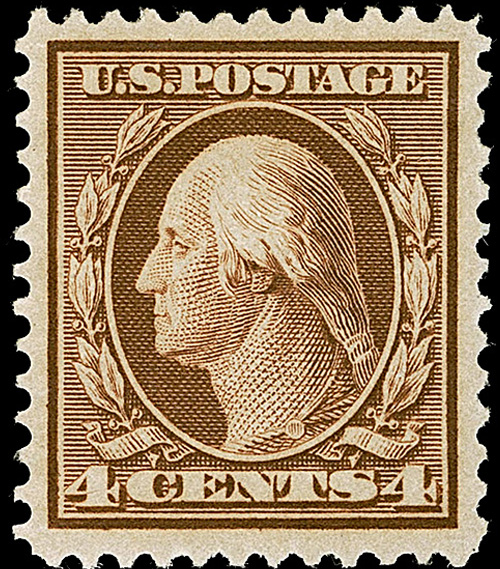
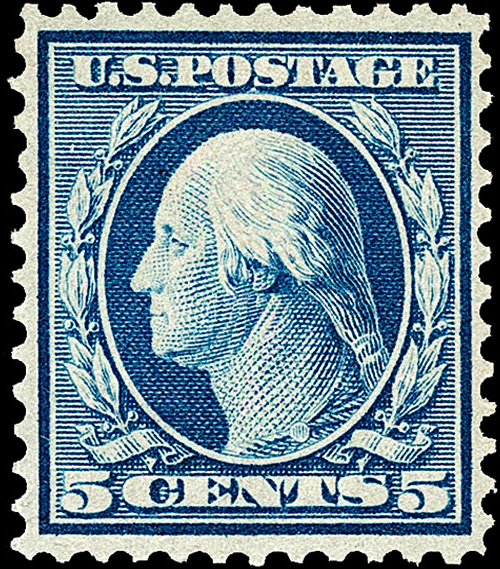
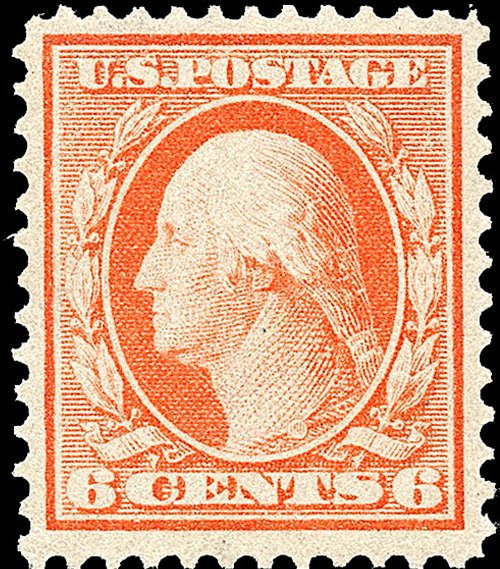
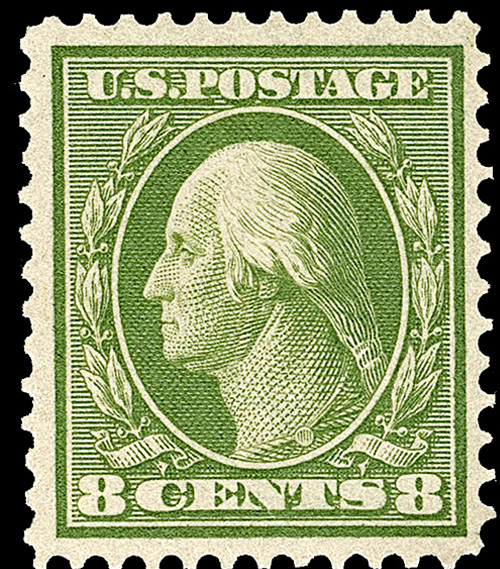
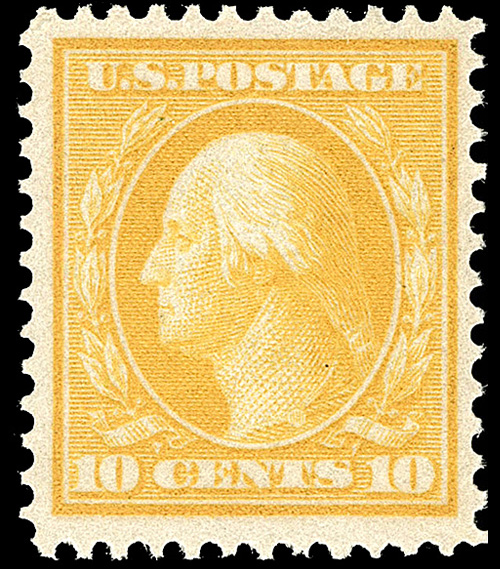
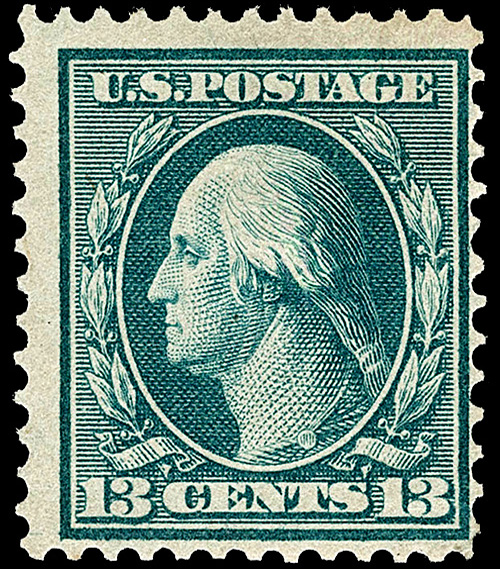
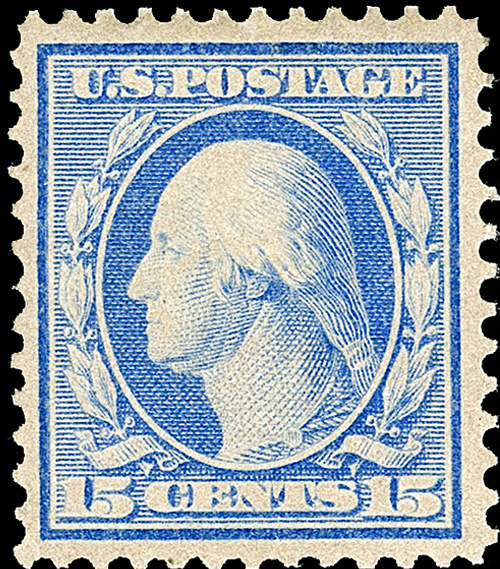
#359 - 1909 Bluish Paper 3¢
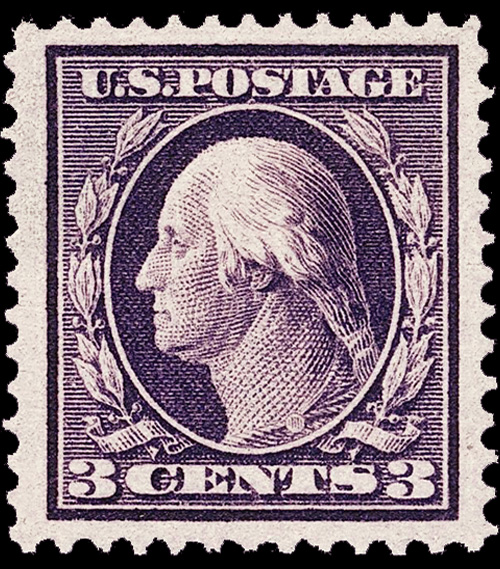
See below for details
Basic Info
3¢ Deep violet
Bluish Paper (see below)
Printing Method: FLAT PLATE
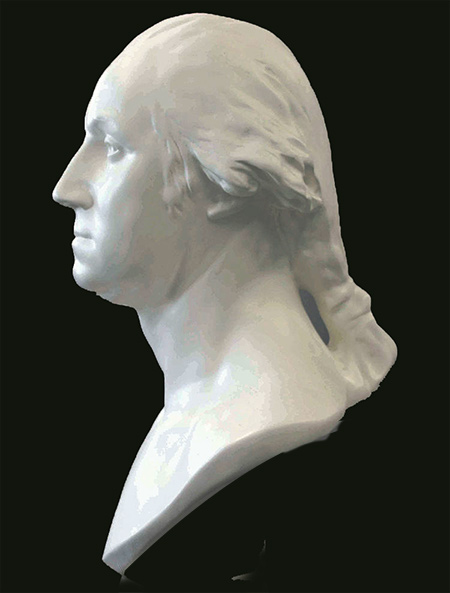
Subject: George Washington
Number issued: 4,000
Perforations: P12
Watermark: Double Line USPS
Scott #: 359
Issued: June, 1909
Value
Used
$3,000 - $6,000
No postmark with gum (MH)
$1,300 - $1,600
Full perfect gum, no postmark
no trace of stamp hinge mark (MNH)
$7,500 - $9,000
Plate #'s
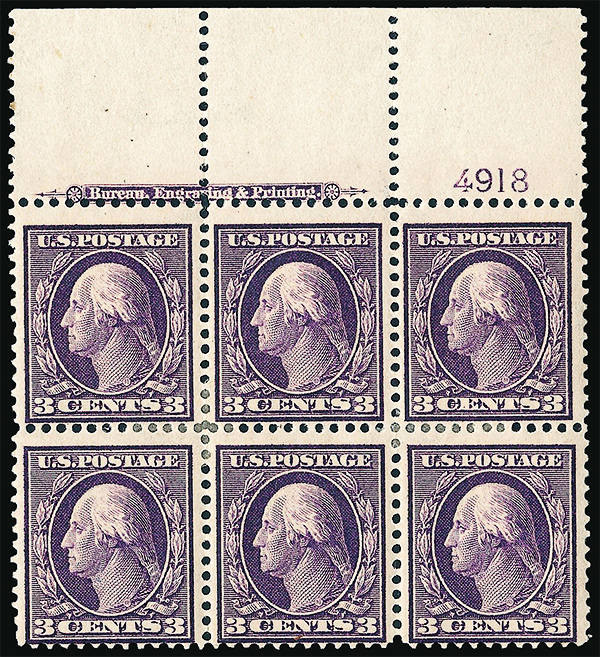
#359 was issued with the following plate #'s
Imprint and Number
4918-27
Bluish Paper
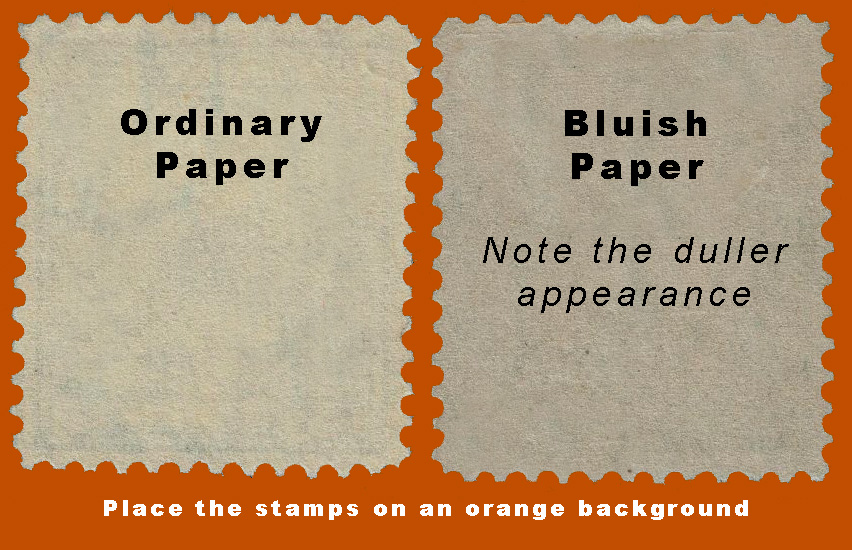
This was a printing on special paper containing about one third rag stock. It was hoped that this grade would materially reduce the great waste due to irregular or "off center" perforating, caused by the unequal shrinkage of the ordinary paper used. This "rag" paper did not help the question of shrinkage to any extent and was soon abandoned.
According to the official report of the Post Office Department 1,480,000 copies of the one cent were issued on this bluish paper. They were sent to the Washington Post Office for sale as ordinary stamps, the Bureau not considering them as anything special. Most of them were printed from the standard spaced plates and blocks of four with the 3mm spacings are almost impossible to obtain, while the others are far from common.
Although this group of stamps have always been noted as having been printed on bluish paper, the safest check as to their proper identification is by noting the greyish, color of the paper through the gum on the back, when compared to the ordinary stamps.
1909 Bluish Paper Issues
Click your selected stamp