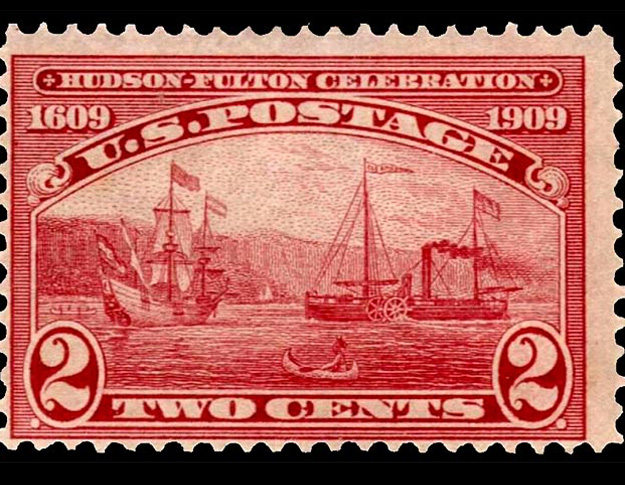
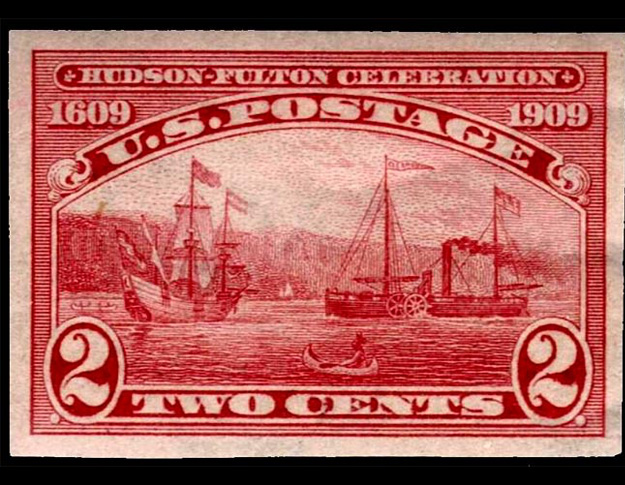
#373 - 1909 2¢ Hudson Fulton Issue Imperforate
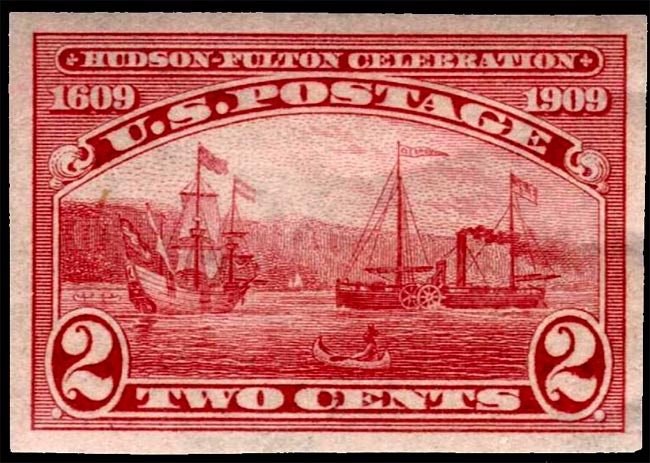
See below for details
Basic Info
2¢ - Carmine, bright carmine
Printing Method: FLAT PLATE
Subject: The Half Moon and the Clermont
Number issued: 216,480
Perforations: Imperforate
Watermark: Double line USPS
Scott #:373
Issued: September 25th, 1909
Value for Singles
Lorem ipsum dolor sit amet, sapien platea morbi dolor lacus nunc, nunc ullamcorper. Felis aliquet egestas vitae, nibh ante quis quis dolor sed mauris. Erat lectus sem ut lobortis, adipiscing ligula eleifend, sodales fringilla mattis dui nullam. Ac massa aliquet.
Used
$8 - $15
No postmark with gum (MH)
$5 - $13
Full perfect gum, no postmark
no trace of stamp hinge mark (MNH)
$12 - $15
Value for Pairs
Used
$12 - $16
No postmark with gum (MH)
$12 - $16
Full perfect gum, no postmark
no trace of stamp hinge mark (MNH)
$21 - $27
Updated Oct 2024
A full pane
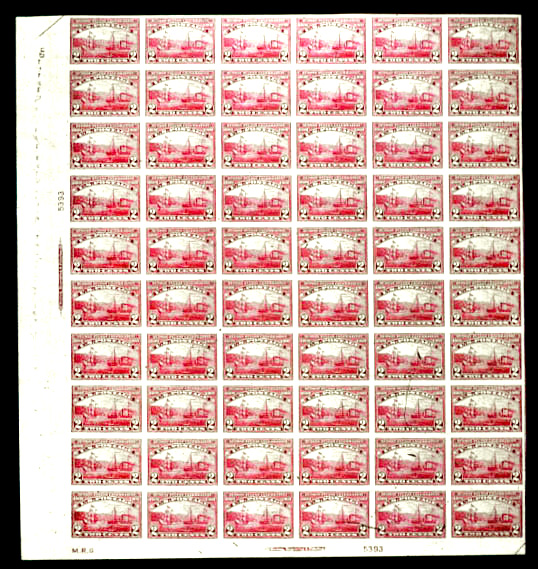
A pane of 60 of #373, there are four panes to a sheet of 240
#373 Plate #'s
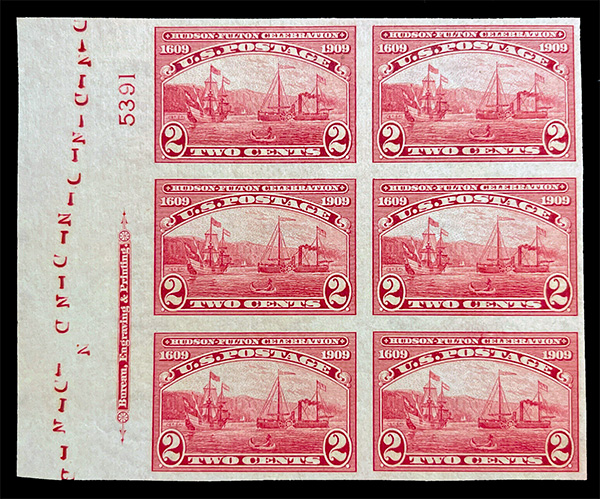
#373 was issued with the following plate #'s
5388-95
The design inspiration
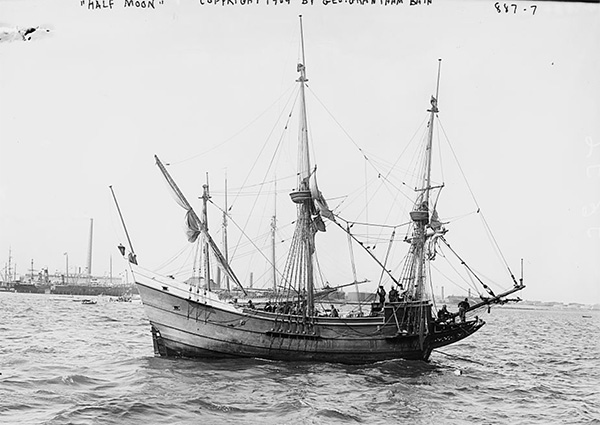

The Halve Maen (Half Moon )
Three hundred years prior, on September 12, Henry Hudson sailed into New York harbor in the Half Moone, and discovered the island of Mannahatta, now known as Manhattan. Unfortunately his crew mutinied and cast Henry Hudson adrift, he was never seen again.
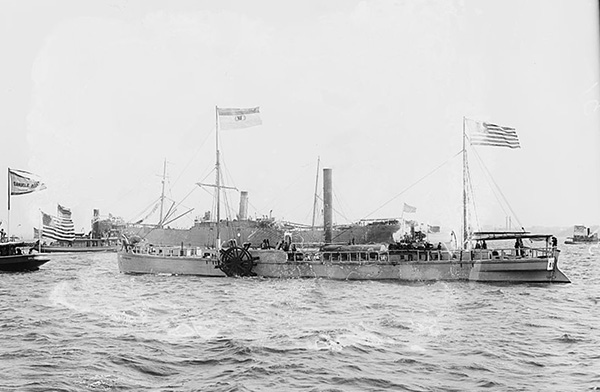
The Clermont
In 1807 ferry mogul Robert Fulton patented the steamboat, an engineering marvel he perfected, but did not invent. Fulton, a Pennsylvanian who originally tested his ship in Paris, became associated with New York with the development of the successful Clermont North River steamboat service.
Essays and Proofs

372-E1
Pen and ink frame on card
Measuring 286x170mm

372-E1

372-E2
Wash Drawing of Vignette on Artist's Cardboard
Measuring 198 x 149mm

372-E2

372-E3
Model on card, washed frame and cut out vignette
Measuring 126x100mm

372-E3

372-P1
Large die proof on India

372-P1

372-P2
Small die proof on India
Measures 39x28mm

372-P2

372-P2a
Small die proof on wove paper
Measures 39x28mm

372-P2a
The 1909 Anniversary of the Hudson and Fulton Expeditions
The Hudson-Fulton Celebrationwas the 300th anniversary of Henry Hudson’s exploration of the river that now carries his name. It also honored Robert Fulton’s journey up the Hudson River on his steamboat. (This actually took place in 1807). City officials and titans of industry like Andrew Carnegie and J.P. Morgan decided to throw a two-week fiesta from September 25 to October 11, 1909.
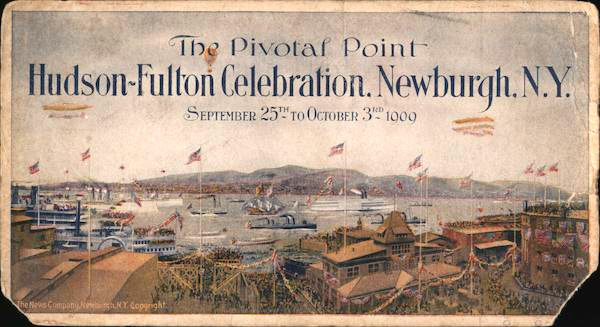
The Pivotal Point, Hudson-Fulton Celebration
From September 25 to October 11, the river was clogged with shipping and military vessels festooned with electric lights, while overhead the skies were filled with nightly firework displays. Inaugeral nautical displays were capped with the ceremonial entry into the harbor of both Hudson’s ship the Half-Moone and Fulton’s Clermont, both re-created for the event. (The Half-Moone and Clermont unceremoniously collided into each other during the ceremony!)
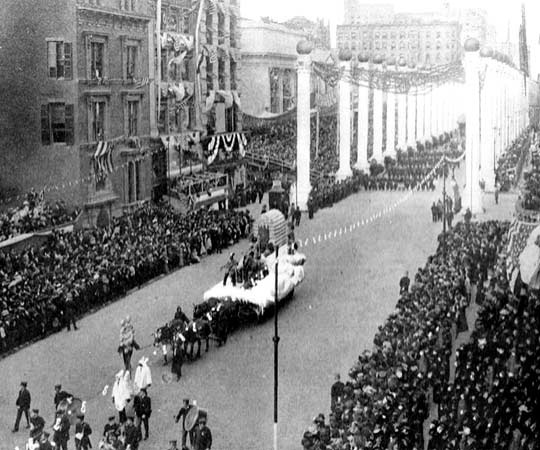
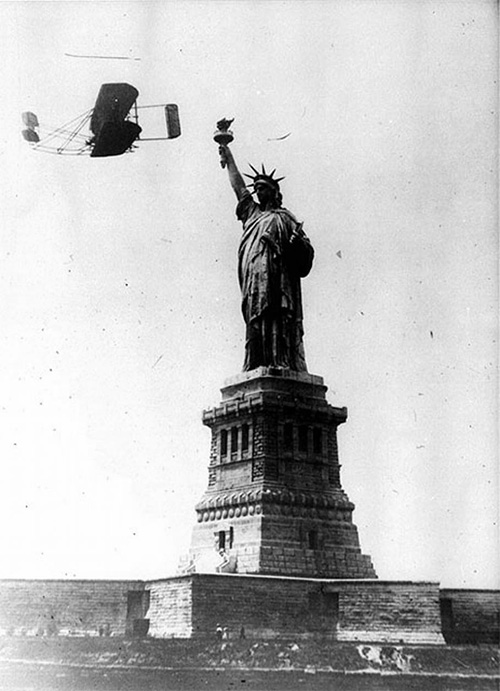
A six mile parade featuring dutch themed floats was held in NY, NY to celebrate the Hudson-Fulton Centenary. Famously the celebration was marked by Orville and Wrights flight fro Governor's Island and around the Statue of Liberty.

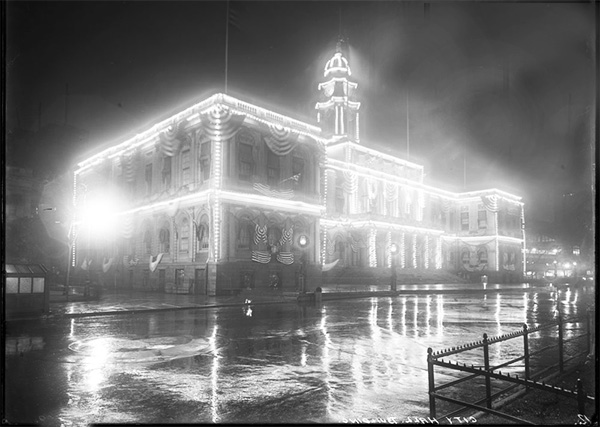
And electric light, which had recently transformed the city into a modern 24-hour metropolis of streetlights, marquees, and incandescent bulbs, illuminated many city monuments and buildings, including all its bridges.
1909 Commemoratives
Click your selected stamp