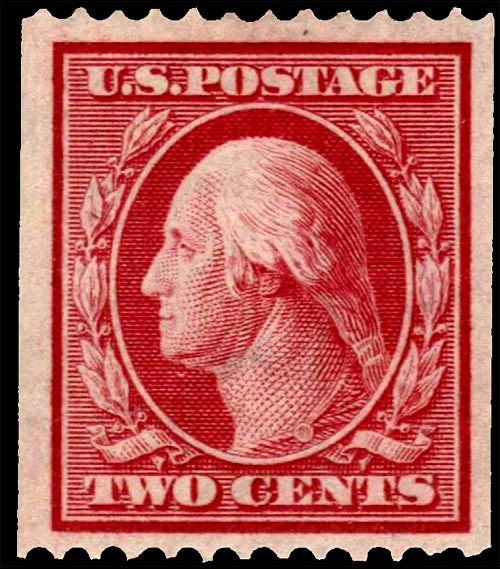
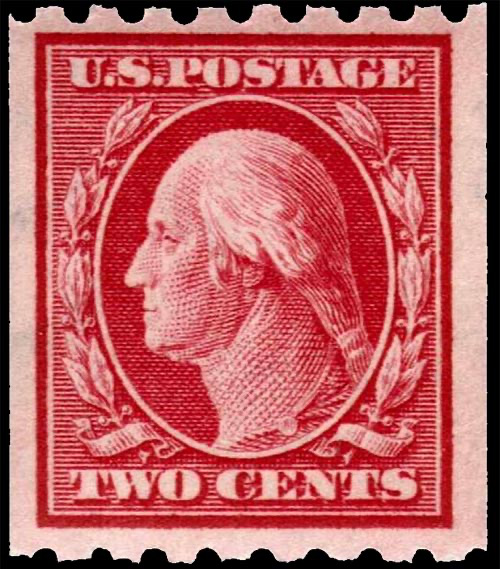
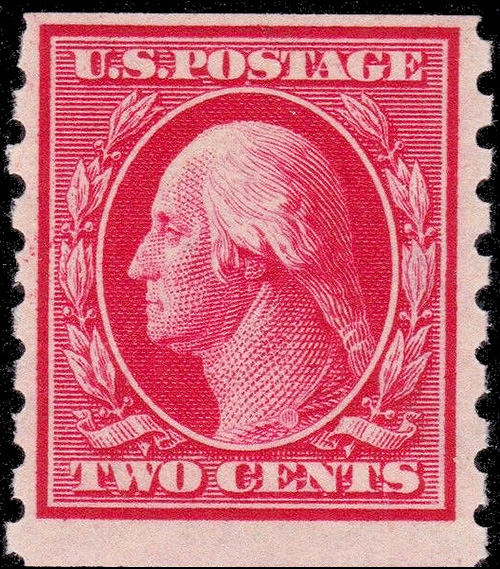
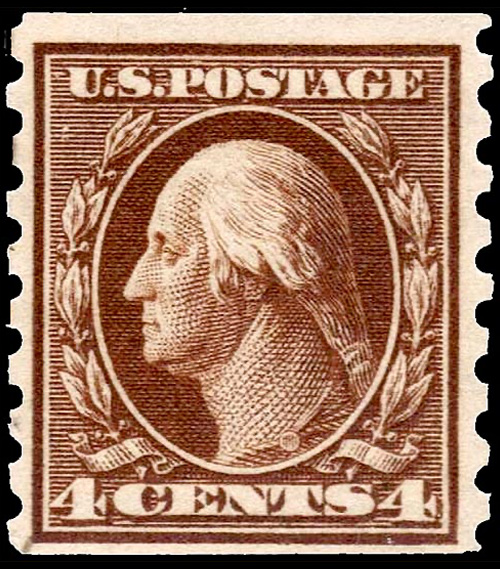
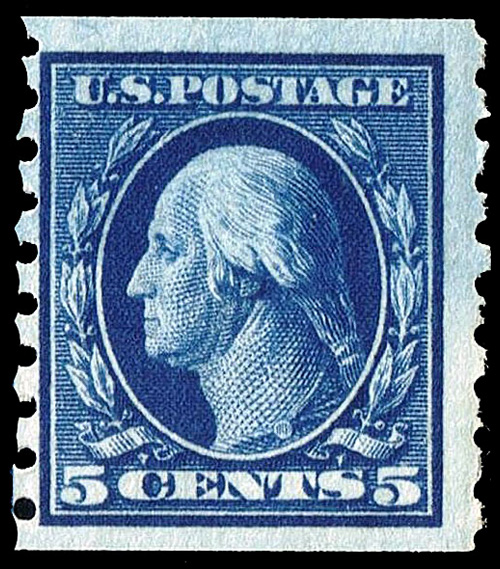
#388 - 1910 2¢ Single line USPS watermark, perf 12 vertically
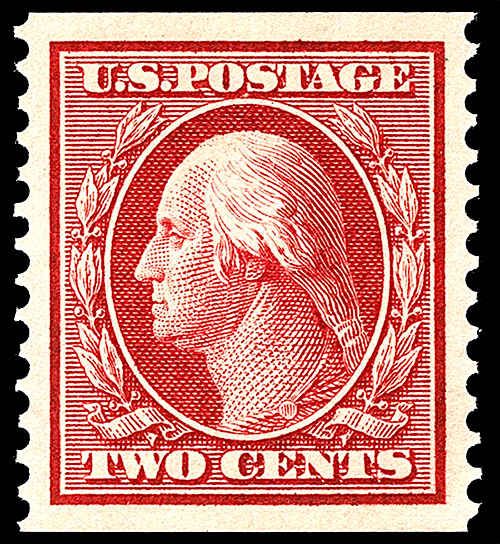
See below for details
Basic Info
2¢ light carmine, carmine
Subject: George Washington
Printing Method: Flat Plate
Perforations: 12 vertically
Watermark: single line USPS (see below)
Scott #: 388
Quantity Issued: 3,554,500
Issued: November 1, 1910
Earliest Documented Use: January 4, 1911
Value
SINGLES
Used
$85 - $200
No postmark with (MH)
$140 - $180
Full perfect gum, no postmark
no trace of stamp hinge mark (MNH)
$800 - $2,000
PAIRS
Used
$10,000 - $18,000
No postmark with (MH)
$2,000 - $4,700
Full perfect gum, no postmark
no trace of stamp hinge mark (MNH)
$5,000 - $11,000
Multiply by 2 for line pairs
Notable Sales

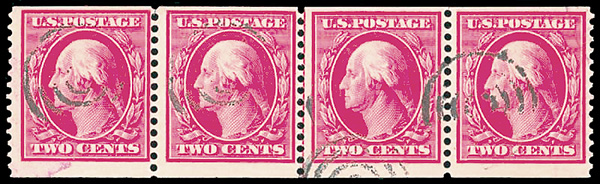
Approximately ten used pairs are known. The only used guide line multiple wSiegel's have been able to locate is this strip of four, which is specifically mentioned as being unique in Scott Catalogue.
Sold September 2012 for $47,500
Explore Robert Siegel's Auction Galleries
Counterfeit #388's
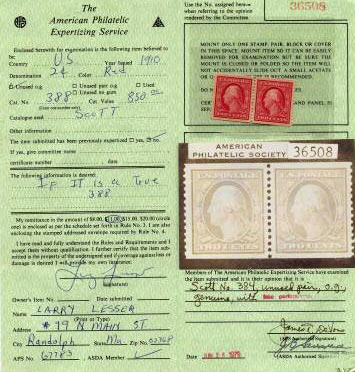
Typical faked #388 with a certificate noting the stamps are #384 with perforations added
Guide Line Pairs
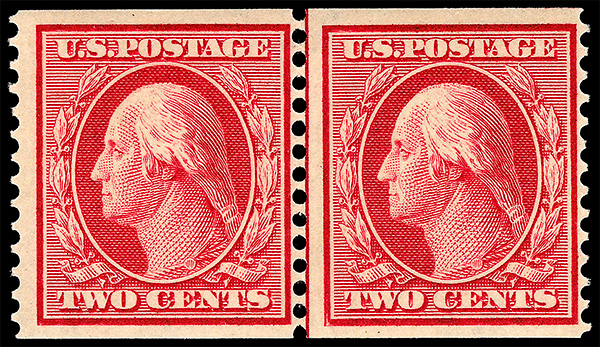
Ideally horizontal coil stamps should be collected in pairs. The guide line pair is so called because it is where the lines that separated panes are placed One can see the line along the center of the perforations.
A New Watermark
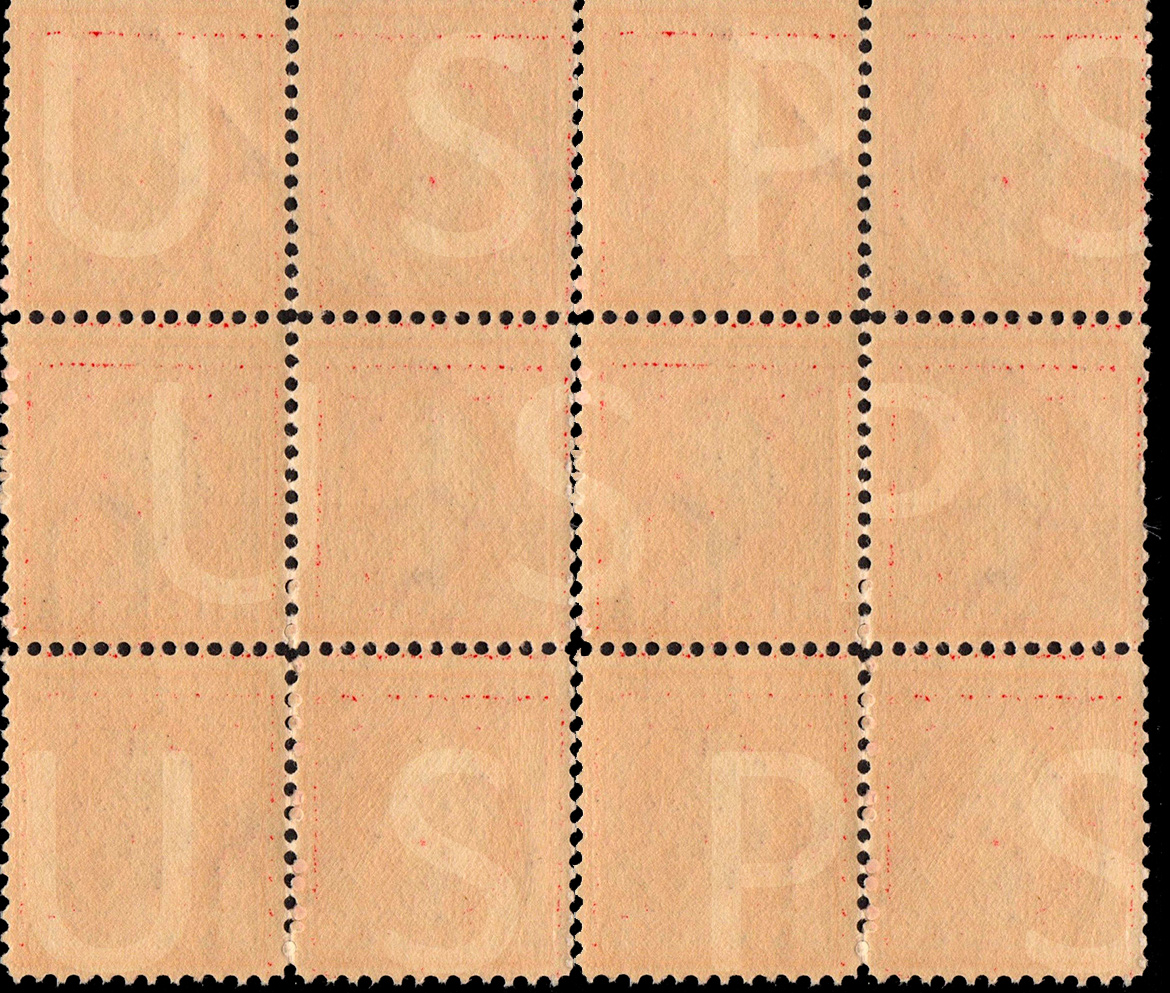
The purpose of this change was to strengthen the paper and to give it a more uniform thickness. The old double line watermark covered too much space and made the lettered area quite a bit thinner than the rest of the paper, which caused variation in the shrinkage of the paper. The new watermark was also smaller, occurring 400 letters to a full sheet instead of 360.
Single Line USPS Watermark
A brief life
This stamp was only on sale for two months. However many were collected by philatelists so whilst uncommon, it is not rare. The 12 gauge perforations were not a success, like all 12 perforations it made the stamps break apart from each other too easily. This problem was excerbated by the fact that these coils primary purpose was for stamp machines. They were replaced with the 8.5 perf, which caused the opposite problem.
Earliest documented use

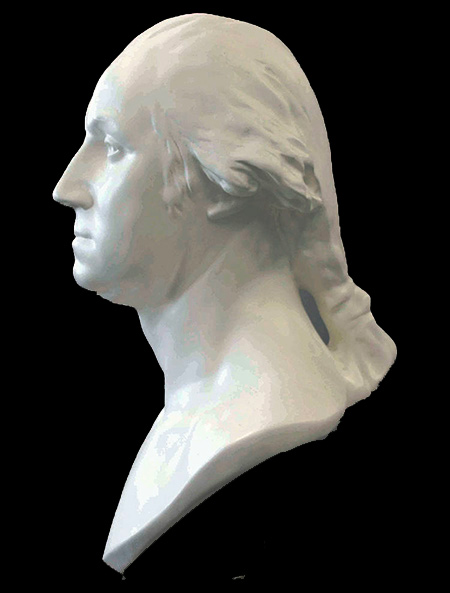
Earliest documented date of use, January 4th, 1911
The 1910-13 Coils and Imperfs
Click your selected stamp