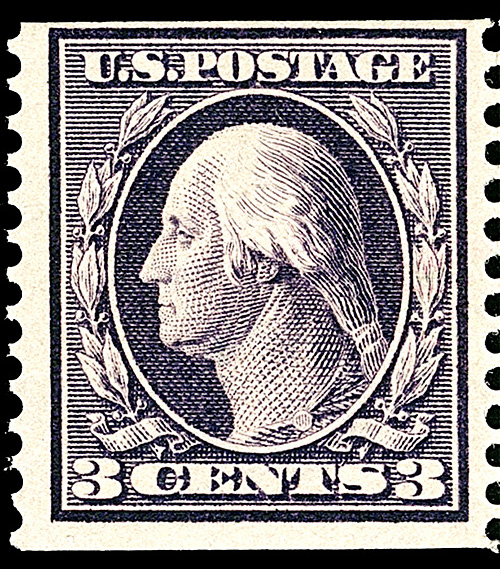
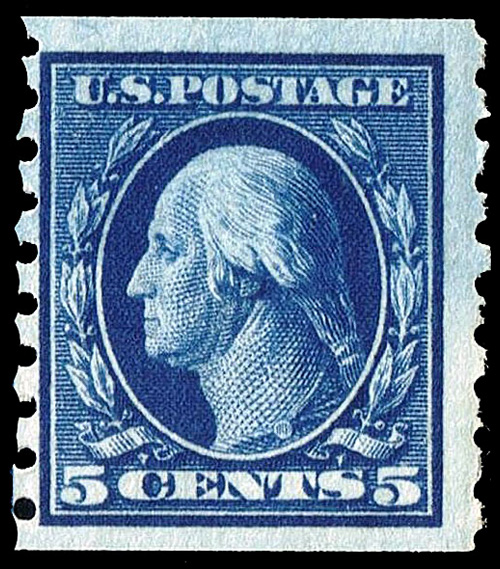
#389 - 1911 3¢ Single line USPS watermark, perf 12 vertically
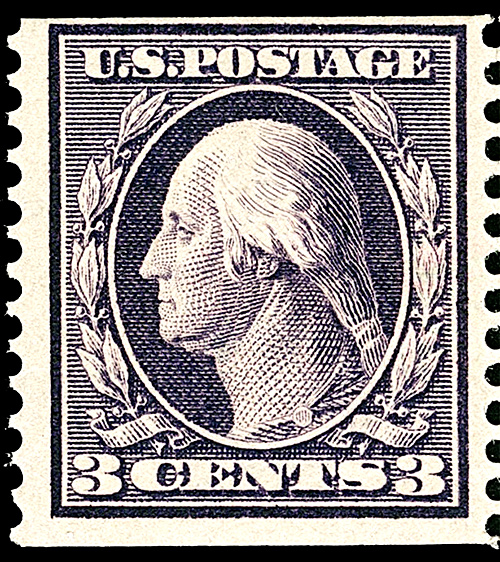
See below for details
Basic Info
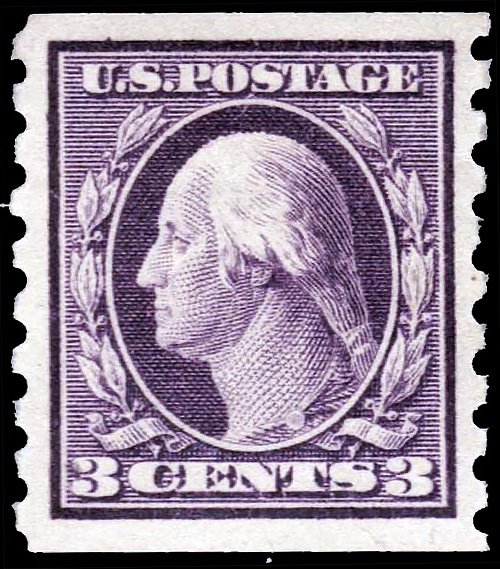
3¢ Deep violet
"The Orangeburg Coil"
Subject: George Washington
Printing Method: Flat Plate
Perforations: 12 vertically
Watermark: single line USPS (see below)
Scott #: 389
Quantity Issued:10,000
Issued: January 24, 1911
Earliest Documented Use: March 8, 1911
Value (singles)
Used
$5,500 - $10,000
No postmark with gum (MH)
$150,000 - $200,000
Full perfect gum, no postmark
no trace of stamp hinge mark (MNH)
No sales recorded
CERTIFICATES REQUIRED!
Notable Sales
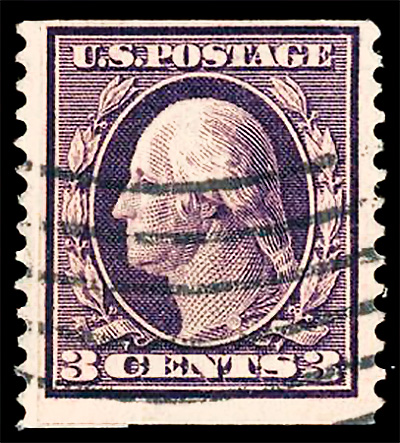
An interesting stamp as this is only one of four known paste up examples.
Sold August 2022 for $6,785
Explore Schuyler J. Rumsey Philatelic Auctions
The Bell Pharmaceutical Company
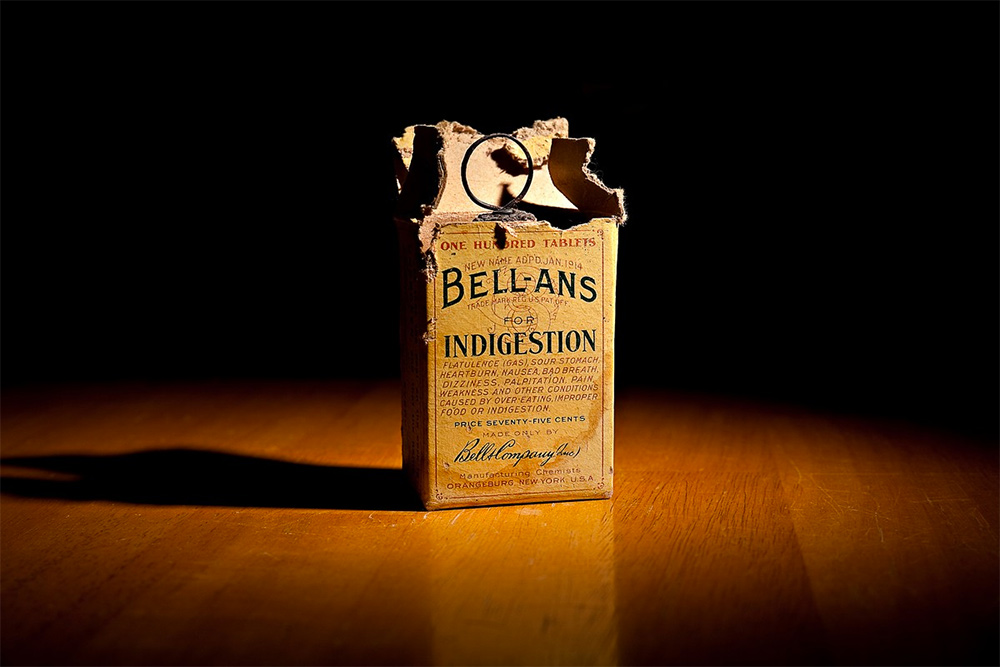
This 3¢ coil was special ordered by only one company, the Bell Pharmceutical Company in Orangeburg, New York. The stamp, when used, can be found with the wavy line cancellation that was applied to single stamp envelopes, or with the circular Orangeburg town stamp on the multiples used on heavier items.
Counterfeits


A New Watermark
The purpose of this change was to strengthen the paper and to give it a more uniform thickness. The old double line watermark covered too much space and made the lettered area quite a bit thinner than the rest of the paper, which caused variation in the shrinkage of the paper. The new watermark was also smaller, occurring 400 letters to a full sheet instead of 360.
Single Line USPS Watermark
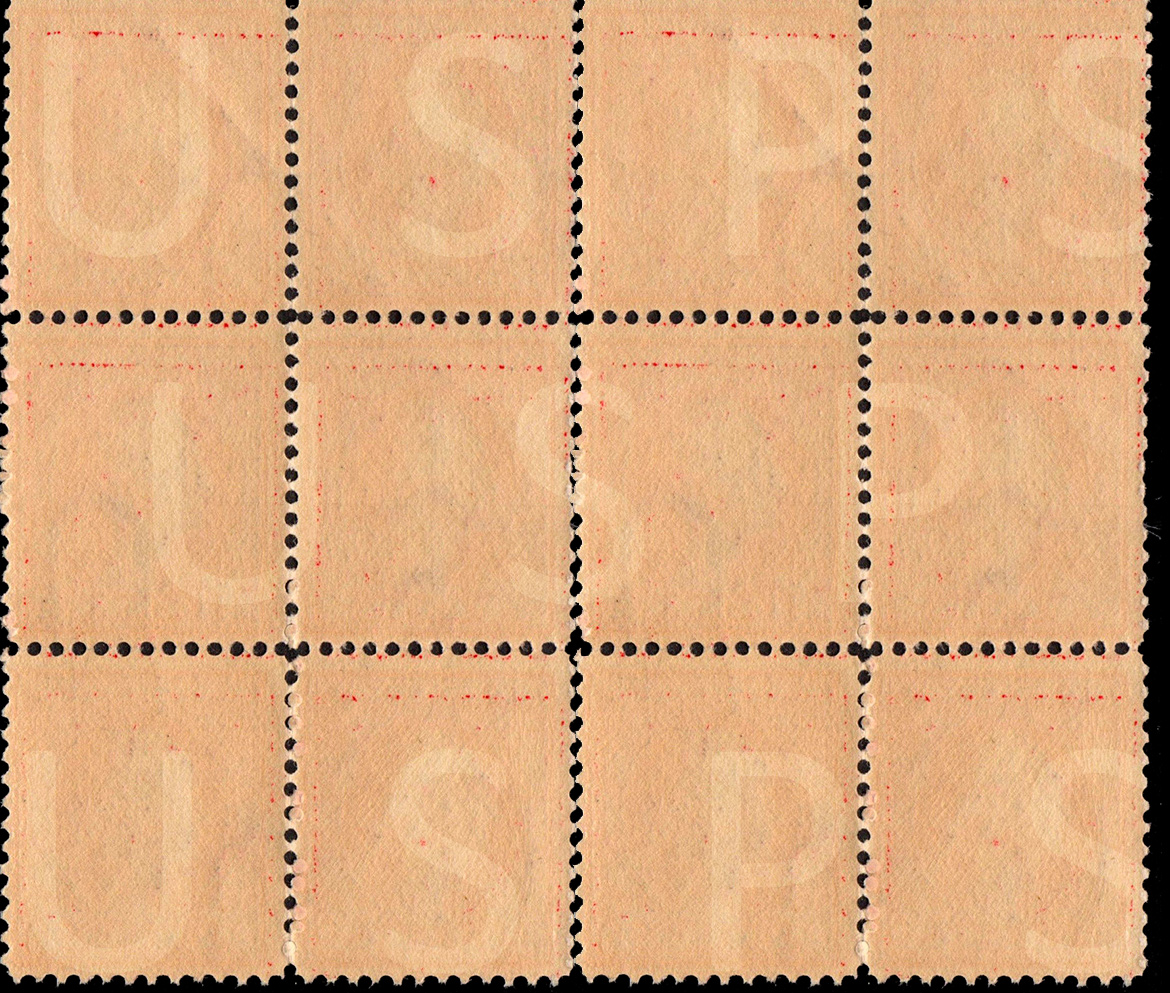
aka Orangeburg Coil
This is the rarest of all the Government coils. It is known as the "Bell" or "Orangeburg" Coil.
This particular coil was issued by the Post Office Department for the Bell Pharmaceutical Company, of Orangeburg, N. Y. This firm manufactured a patent medicine and the coil stamps were used on samples of their product mailed to physicians.
This stamp was almost entirely overlooked and only a few mint copies were saved for philately. Those which were saved were due almost entirely to a few collectors who having noticed this coil on mail from BeIl and Co. wrote to that firm endeavouring to obtain copies. A few copies are known used on cover with the Bell & Co. corner card and the wavy line Orangeburg cancellation as well as a few pieces on part cover.

Earliest documented use

Earliest documented date of use, March 8th, 1911
The 1910-13 Coils and Imperfs
Click your selected stamp