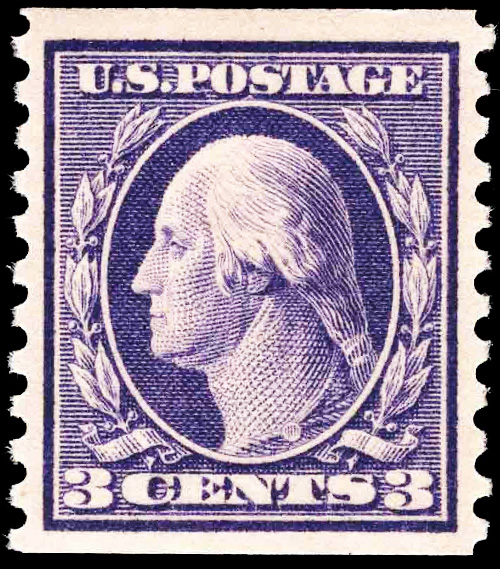
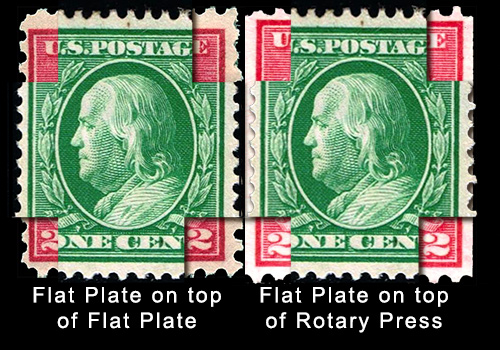
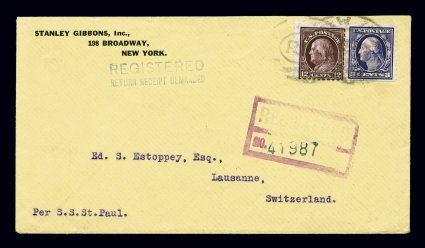
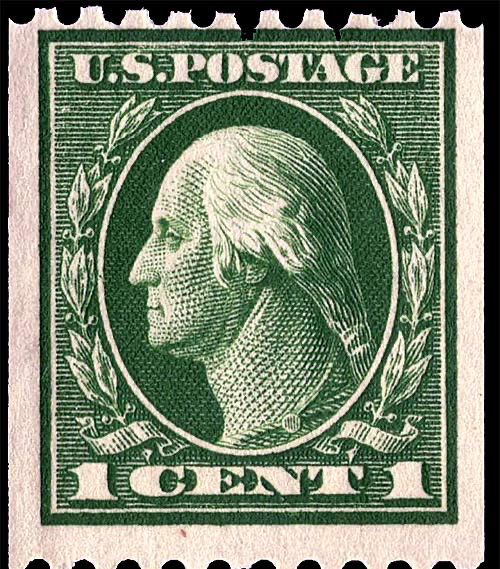
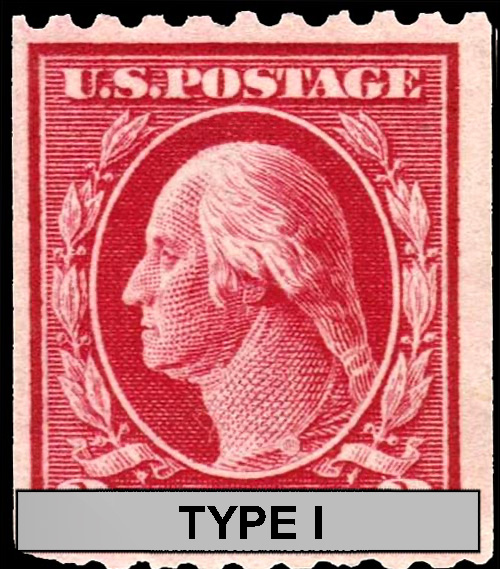
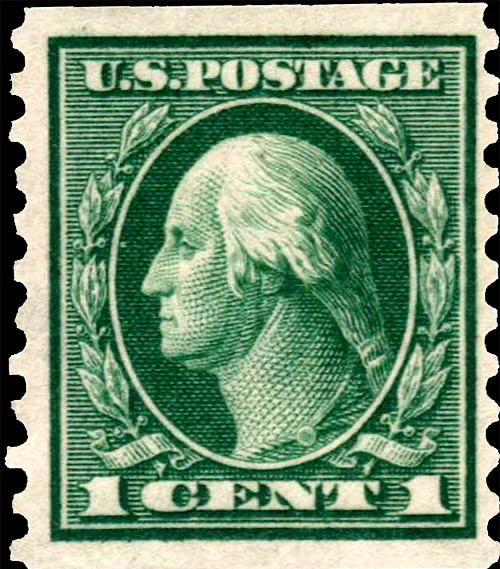
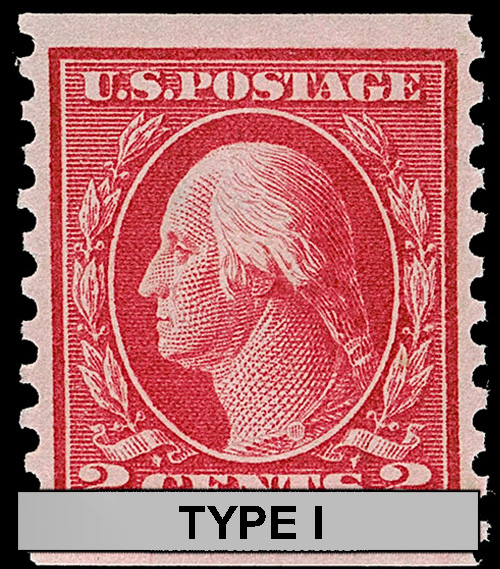
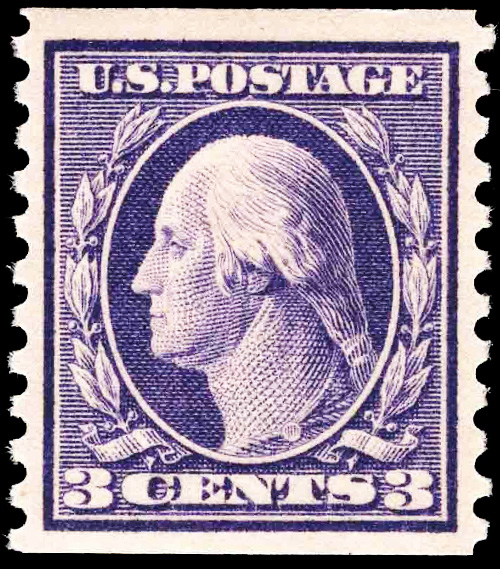
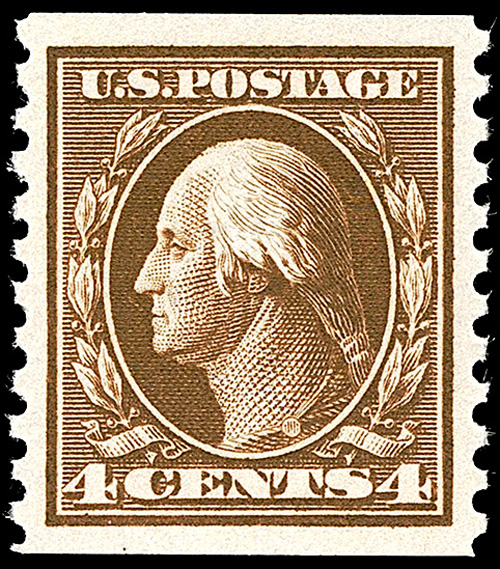
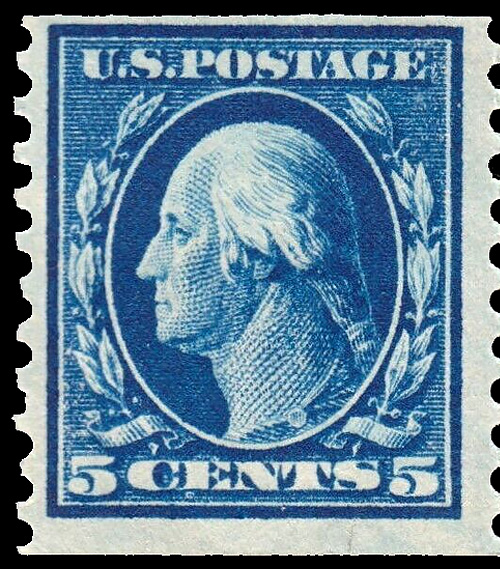
The earliest documented usage of #445, August 13th, 1915
In 1914, the standard domestic first-class letter rate in the United States was 2¢, so a 3¢ stamp was primarily used for mail weighing over the standard weight limit, foreign destinations, or combined with other values to meet heavier parcel and registration fees. Common uses were:
Uprated Letters: Paying postage for heavier first-class letters that exceeded the standard single-weight limit (over 1/2 ounce or 1 ounce depending on the exact era rules) Combined Denominations: Paired with 1¢ or 2¢ stamps to fulfill composite rates for special services, registry fees, or non-standard weight steps. Foreign Mail: Used as part of international destination postage calculations under Universal Postal Union guidelines.
Not a Standard Letter Rate: A common misconception is that 3¢ bought a standard letter in 1914; however, the universal 3¢ first-class letter rate did not arrive until the World War I emergency rate hike on November 2, 1917.
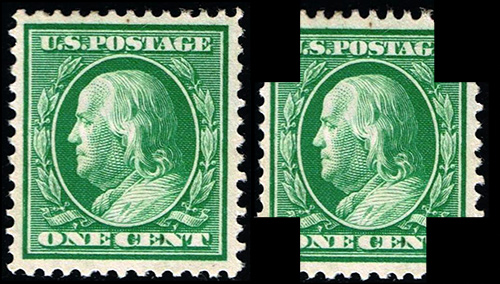
Changing from 12 to 10 perforations
Bureau of Engraving, Washington DC, Men printing sheets and women checking them in the stamp print room
The change from perforation 12 to perforation 10 during 1914 was driven by widespread public and postal worker complaints that the old gauge 12 perforations were too close together and brittle, causing stamp sheets to tear and fall apart too easily during routine handling.
Background and Evolution Perforation 12 Issues: Introduced around 1908, the 12-gauge holes weakened the paper (especially where watermarks intersected), leading to premature separation. Coil and Machine Experiments: Earlier adjustments to an 8½ gauge for mechanized coil dispensers proved too tough to tear, forcing a compromise. The Shift to Gauge 10: The Bureau of Engraving and Printing transitioned sheet and coil formats to a coarser 10-gauge perforation in 1914 to create a sturdier separation standard. Public Reaction: The new gauge 10 sheet stamps proved too coarse for many users, resulting in tearing rather than clean separation, which soon prompted a further adjustment to gauge 11 for sheets.
Paste-up Pairs
A paste up pair
In making this coil the ordinary 400 subject sheets were perforated in the horizontal spaces and then cut into 200 subject sheets along the vertical guide lines. These part perforated sheets were pasted together side by side and fed into a coiling machine which cut the sheets into strips and reeled them on cardboard cylinders in units of 500 and 1,000 stamps. The strips of 20 had a "paste up" at each end where joined and a section of the vertical guide line showed between each tenth and eleventh stamp. One row of each ten had a plate number covered by the "paste up."
The Plates
The plate numbers on the top and bottom were cut off and those on the sides were covered by the paste up. Normally the plate number would be covered by the pasted end of the next strip, however in a few instances the plate number is still visible.
#445 was issued with the following plate #'s
Number only 6044, 6048 6050, 6052
Identifying the Watermark on #445
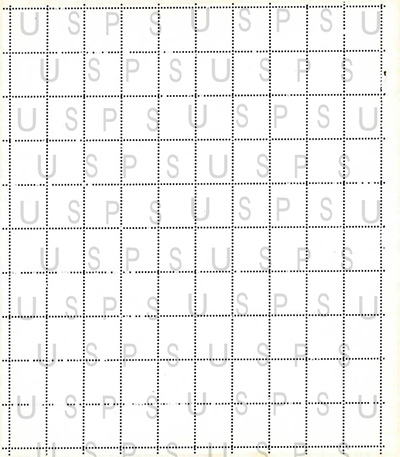
The SINGLE lined USPS watermark of #445
Between 1895 and 1916 the U.S. government used two different watermarks, double line and single line with the letters "USPS".
By placing the watermark face down on a dark surface or holding it up to bright light you might be able to see the watermark. If you cannot see the watermark it might be a good idea to invest in watermark fluid and a watermark tray. Ronsons lighter fluid works just as well as watermark fluid. Both fluids evaporate quickly.
Pour a little fluid in the tray, lay the stamp face down. In a few seconds the stamp will absorb the fluid and reveal the watermark to you.
As you will see from the illustrations the letters can span several stamps, so on the watermark, for instance, you can see only part of the letter S in one corner and only part the letter P in the other corner.
The Inspiration for the Design
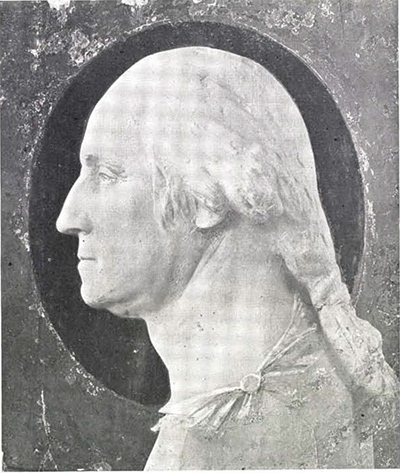
George Washington bust by Jean-Antoine Houdon
The vignette was based on a bust of George Washington by french sculptor Jean-Antoine Houdon.
Created in 1785 the bust is considered the most accurate likeness of the first U.S. president. Based on a life mask and clay model made at Mount Vernon, it captures Washington at age 53 with precise facial details, blending a Roman, toga-style aesthetic with realistic aging. It is considered one of the most accurate representations of Washington.