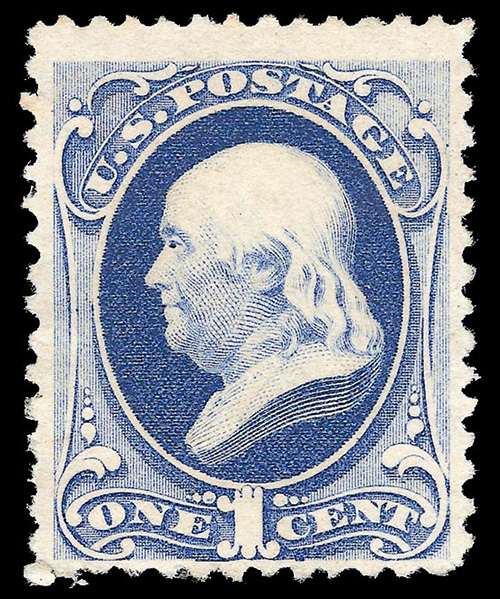
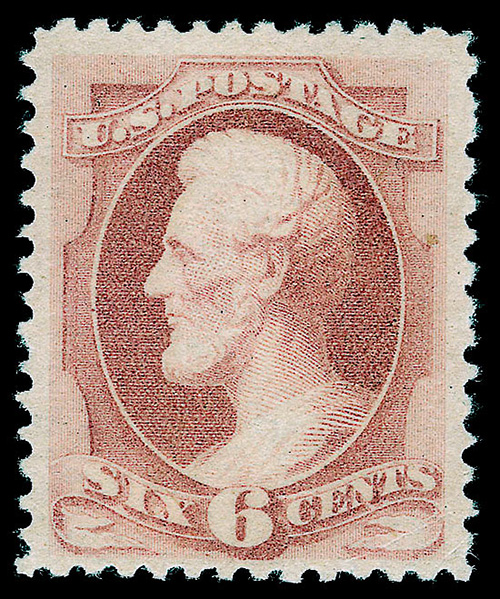
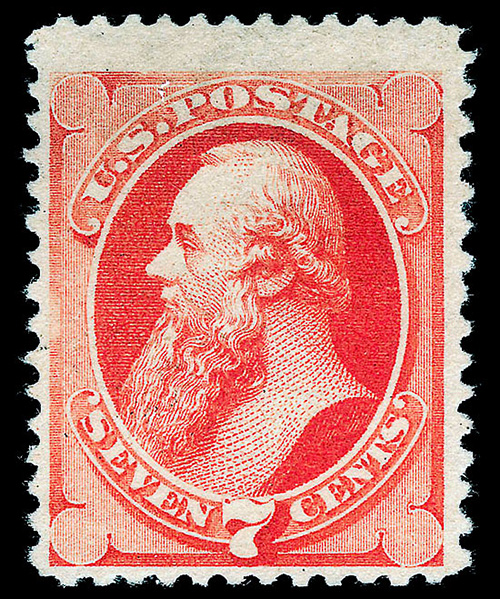
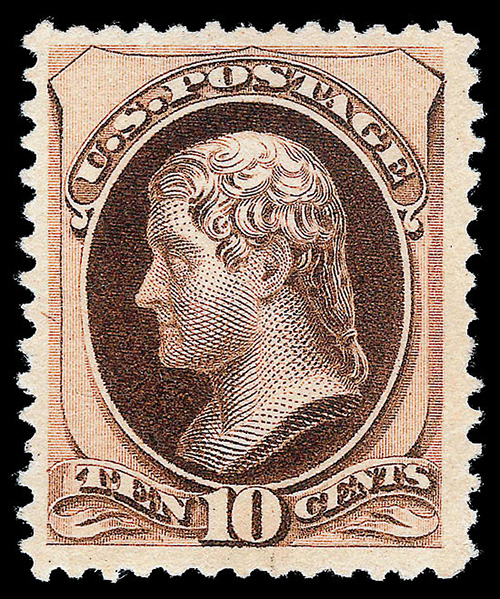
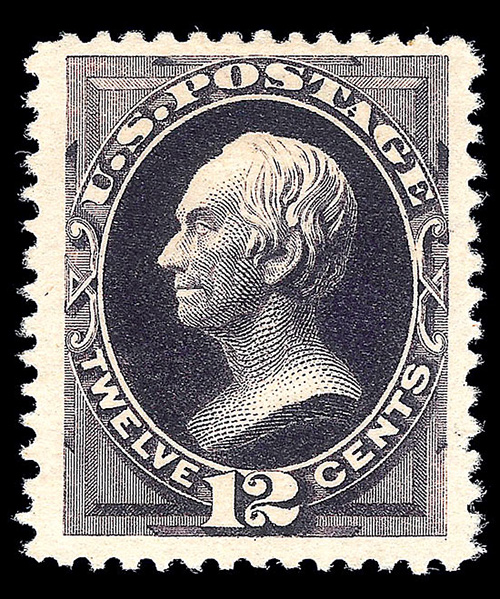
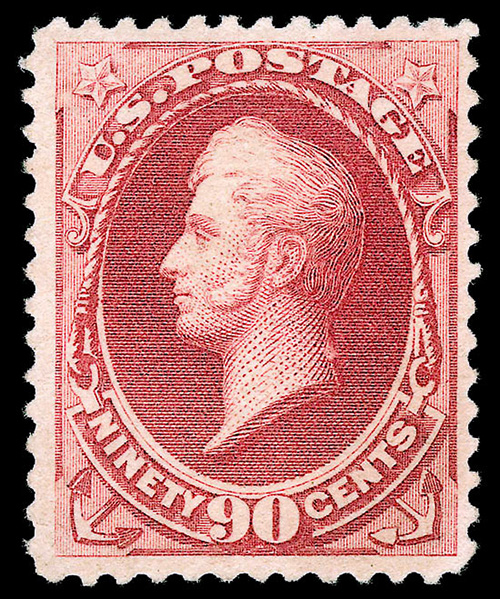
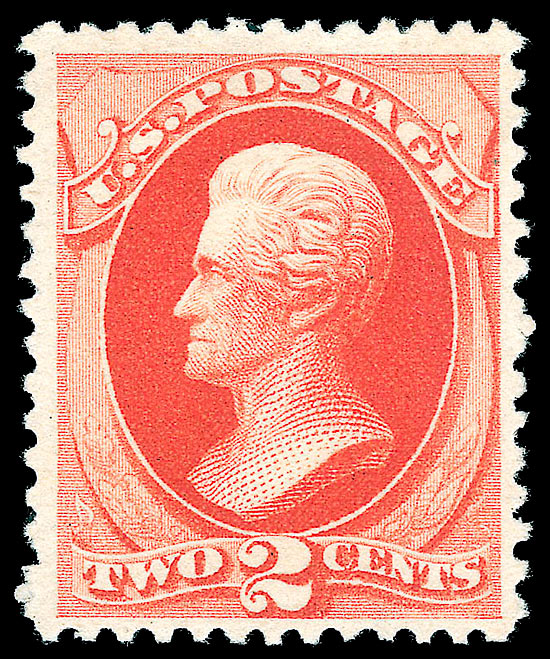
#198 - 1880 Special Printing 12¢
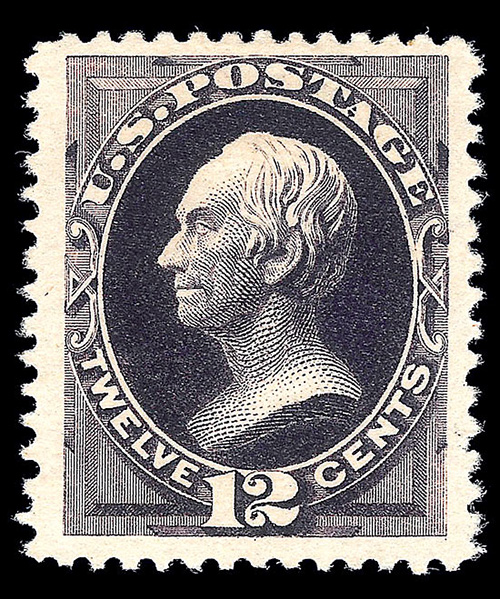
See below for details
Basic Info
12¢
Blackish purple
SPECIAL PRINTING
Subject: Henry Clay
Known copies: 65
Perforations: P12
Printer: American Bank Note Co.
Paper: Soft porous paper, without gum
Scott #: 198
Date Issued: January 1st, 1880
Value
Used
None recorded
No postmark with gum (MH)
$2,500 - $5,000
Full perfect gum, no postmark
no trace of stamp hinge mark (MNH)
None recorded
The history of large banknote paper
The 1873-1879 period was a period of intensive experimentation in the papers used to fulfil the tenets of the contract to print U.S. stamps. Charles Steele, the inventor of the grilling apparatus used to "grill" the 1869-1876 issues, was the superintendent of printing for the Continental Bank Note Company. He had hoped to reduce the labor costs involved with the printing and grilling processes, by employing the first steam powered printing press to print stamps, replace the grilling operation with a stamp washing proof paper, and by reducing the cost of the paper used to print stamps.
The hard white wove paper used on the labor intensive hand operated presses proved too brittle to withstand the rigours of the steam press process. To solve the problem, Steele tried using a machine made, continuous web, soft paper that was "porous" because it lacked "seizing", the "filler" (usually starch), used to harden the paper and provide a smooth surface to print on. This resulted in the introduction of thick to medium soft porous paper in the printing of U.S. stamps. The resultant printings were unsatisfactory as the porous paper sucked up the ink and distributed it through capillary action to make a "fuzzy" image. This low cost paper was also made from cotton rags and old paper, with sometimes a little straw added. This extremely calendared paper, looks "mottled" (like modern newsprint) when held to the light.
He began to add his own starch in an attempt to produce a printing surface which would produce an acceptable image; while trying to maintain enough flexibility to withstand the rigours of the steam press. The resultant paper is called "Continental Intermediate paper". This paper is a hard paper with the mottled pattern of the soft papers. This paper is identified by holding the stamp up to the light and seeing a "mottled" pattern in the paper similar to what you see when you hold newsprint up to the light, yet retains the high pitched "ping" response characteristic of the hard papers when subjected to the "snap test" (see above).
Some people can also ID hard paper be “flicking” the edges and thereby “feeling” the stiffness of the paper versus the feel of soft paper if flicked in the same way. Hold the stamp between the thumb and forefinger and "snap" it close to your ear. A high pitched reply is hard paper. A dull thud, "flop", or no sound, is soft paper. This is not a particularly accurate test.
THE SPECIAL PRINTING
In 1875 the previous years issues were reprinted in very limited quantities and it was decided in 1880 to continue on this tradition with the stamps issued in 1875. These special printings were handed out to selected dignitaries, staff and collectors.
Scissor cut copies are worth more or less the same as perforation separated copies.
Hard paper vs soft paper
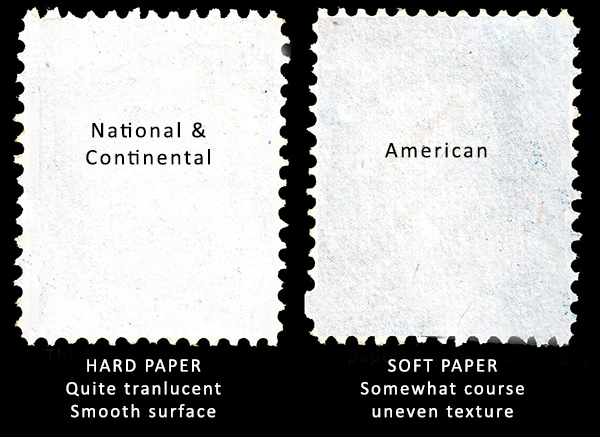
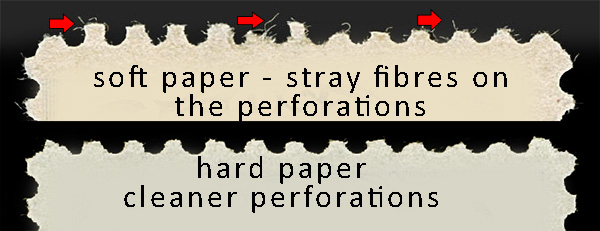
The snap test
Some people can also ID hard paper be “flicking” the edges and thereby “feeling” the stiffness of the paper versus the feel of soft paper if flicked in the same way. Hold the stamp between the thumb and forefinger and "snap" it close to your ear. A high pitched reply is hard paper. A dull thud, "flop", or no sound, is soft paper. This is not a particularly accurate test.
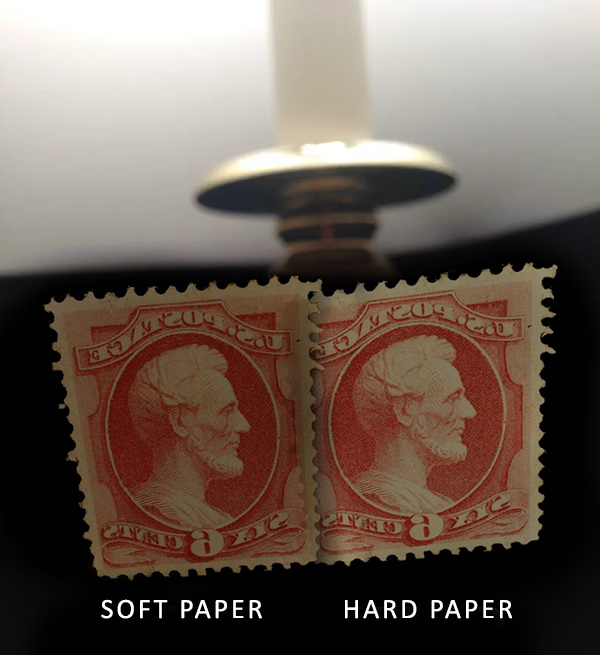
A simple test is to hold a stamp to a lamp, you will see the hard paper is more translucent.
How to ID this stamp
This stamp comes with no gum, and in a blackish purple color. They were printed on a steam press so the engraving is much crisper. Only certificated special printing stamps are genuine.
Printed by Steam Press
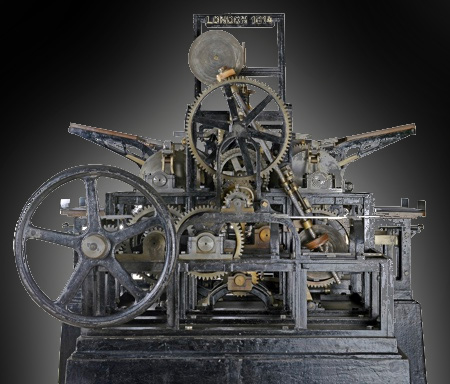
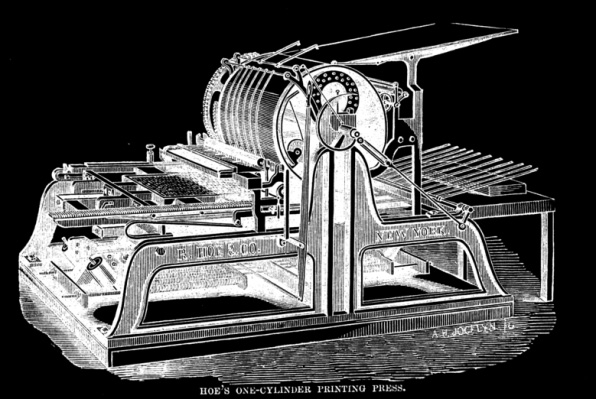
#198 was printed by the ABNC0's new Hoe & Co. steam driven printing press seen on the bottom engraving. A photo of a the first nineteenth century steam press is at top. These steam driven cylinder presses were still around at around the turn of the century although not in the form shown in the images above. The steams press was probably chosen to test the machine.
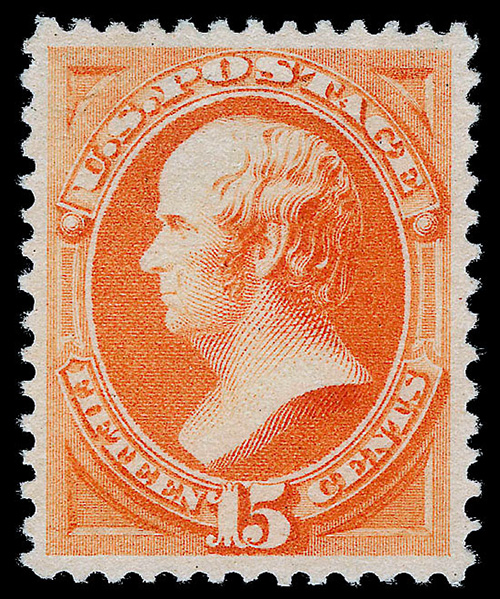
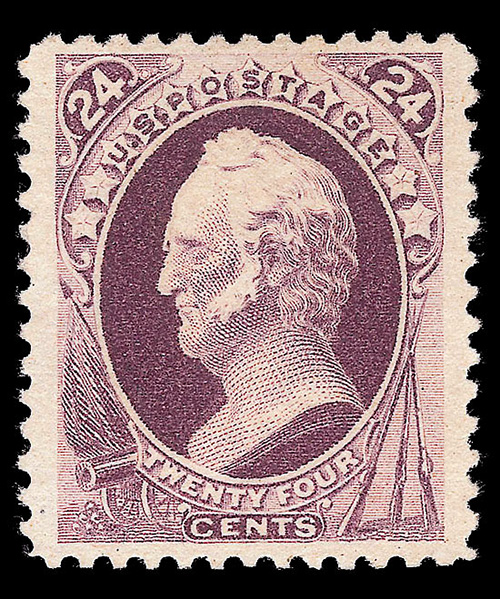
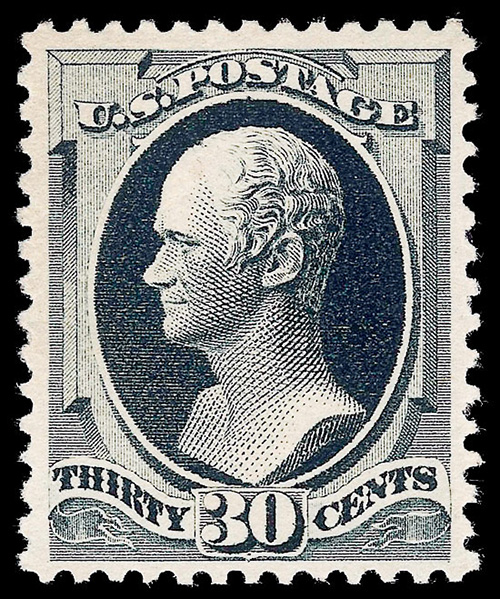
The 1880 American Special Printings
Please select a stamp by clicking it