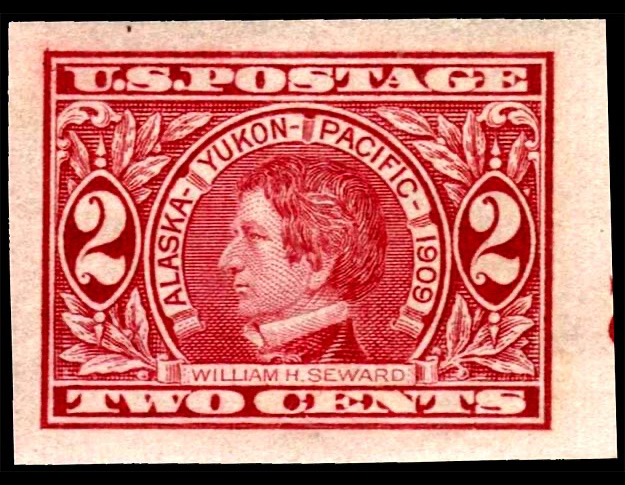
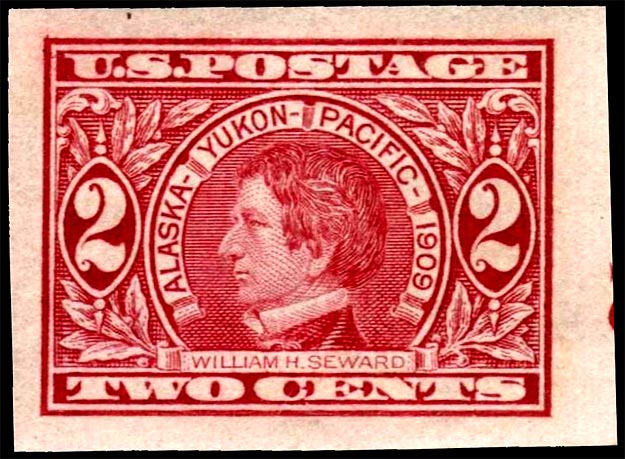
#371 - 1909 2¢ Alaska Yukon Issue Imperforate
See below for details
Basic Info
2¢ - Carmine, bright carmine
Printing Method: FLAT PLATE
Subject: William H. Seward
Number issued: 530,000
Perforations: Imperforate
Watermark: Double line USPS
Scott #: 371
Issued: June, 1909
Value
Value for Singles
Used
$4 - $9
No postmark with gum (MH)
$5 - $13
Full perfect gum, no postmark
no trace of stamp hinge mark (MNH)
$12 - $24
Value for Pairs
Used
$6 - $12
No postmark with gum (MH)
$12 - $16
Full perfect gum, no postmark
no trace of stamp hinge mark (MNH)
$18 - $25
Updated Oct 2024
Notable Sales


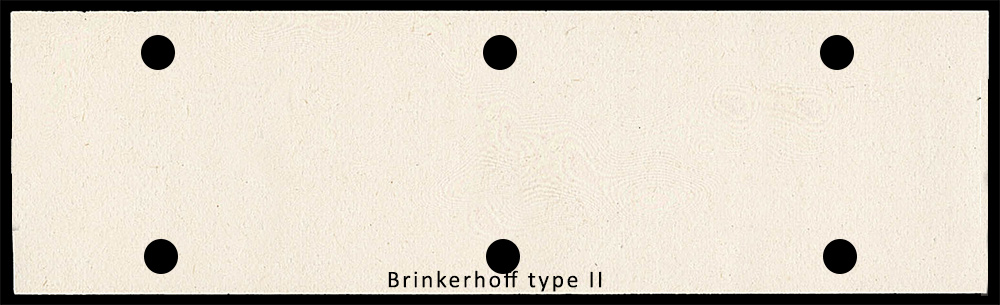
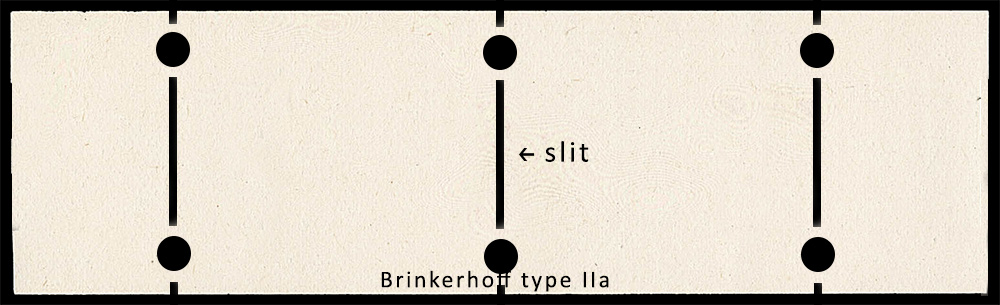
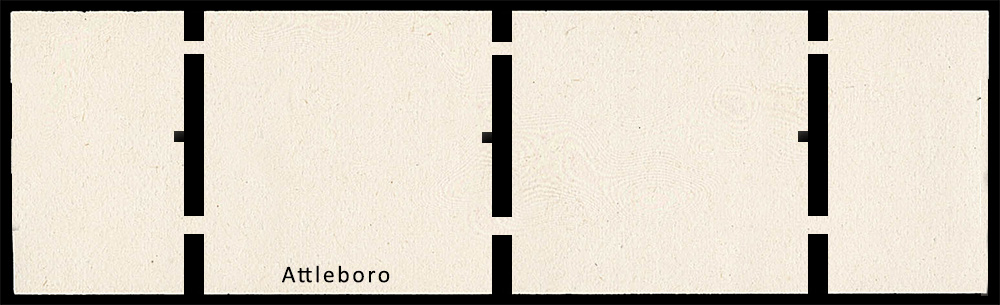
The most desirable #371's are this with private perforations and the most desirable of those is the Attleboro private perforation.
Sold December 2019 for $11,210 (MH)
Explore Schuyler Rumsey Auctions
A full pane
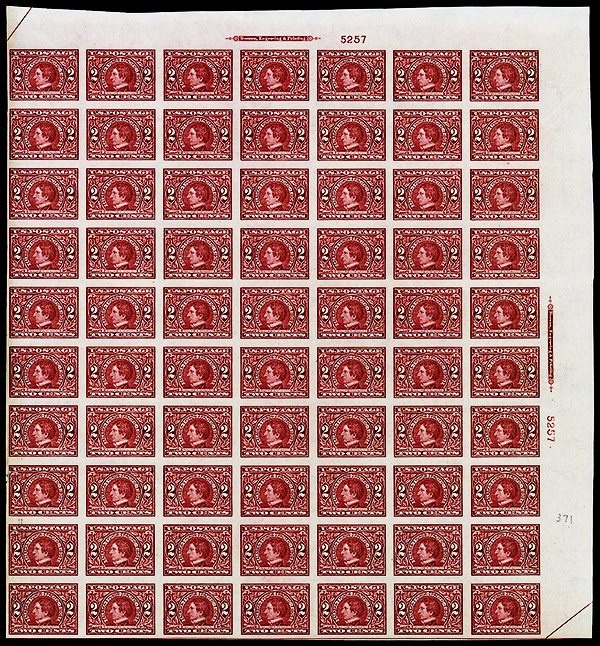
A pane of 70 of #371, there are four panes to a sheet of 280
#371 Plate #'s
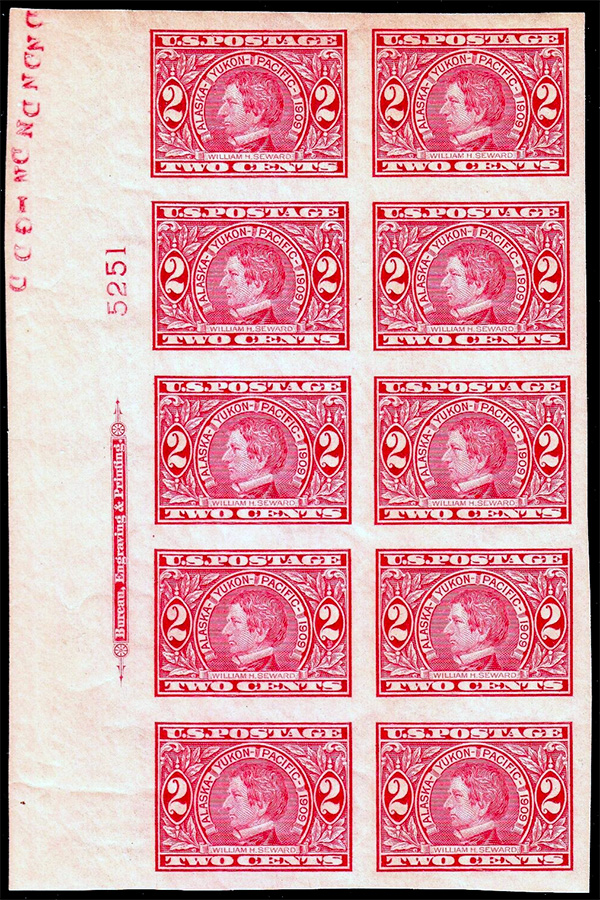
#371 was issued with the following plate #'s
5235-37, 41, 49-51, 57
Earliest Known Use
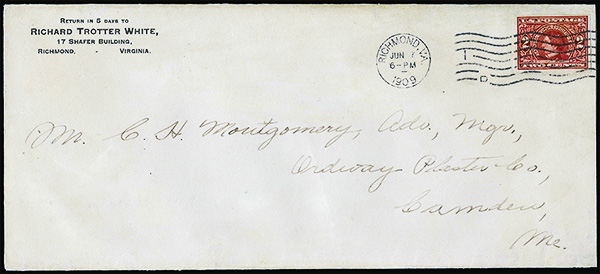
The earliest known use of #371, June 7th, 1909
A promotional tool
As it seemed to the organisers of the Alack-Yukon exposition, every previous expositions of note had seen a series of stamps to promote them. Thus they lobbied the Post Office Department and Congress to have a series of stamps dedicated to the Exposition. Their pleas fell on deaf ears and at the last moment the Post Office Department relented, however it would not be a series such as the Columbian Expo The post office would issue just one stamp, a 2¢ stamp
The stamp packet
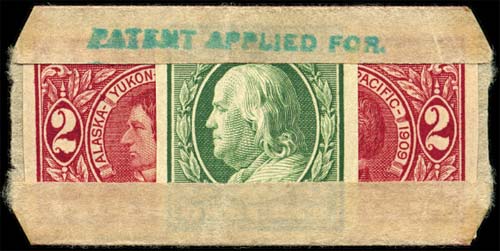
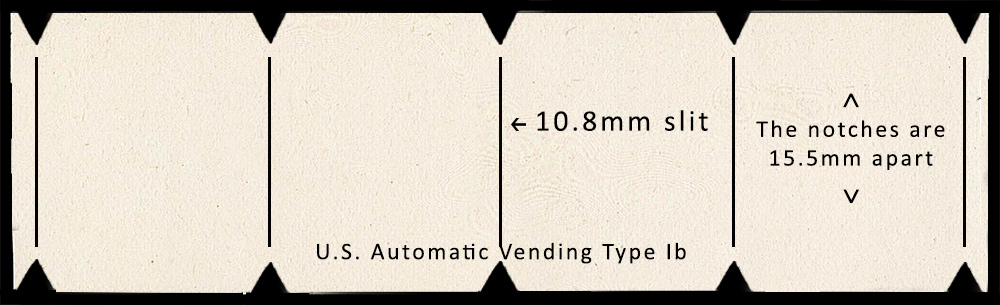
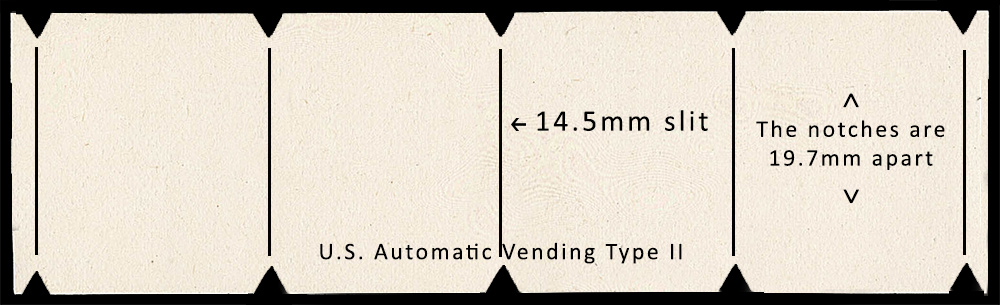
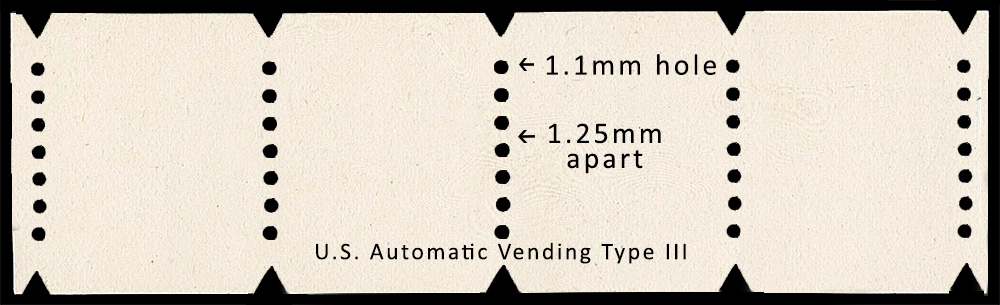
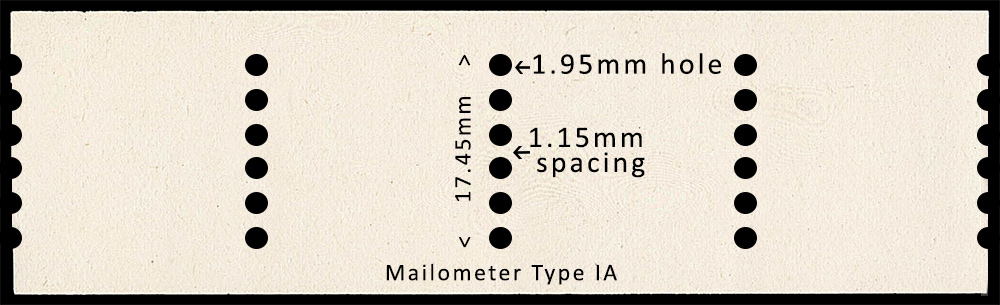
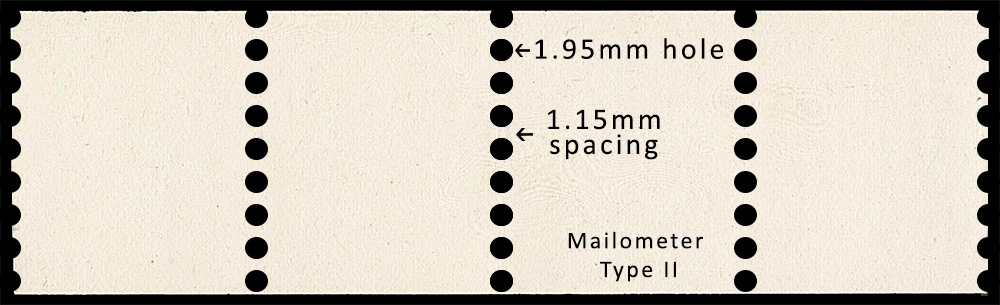
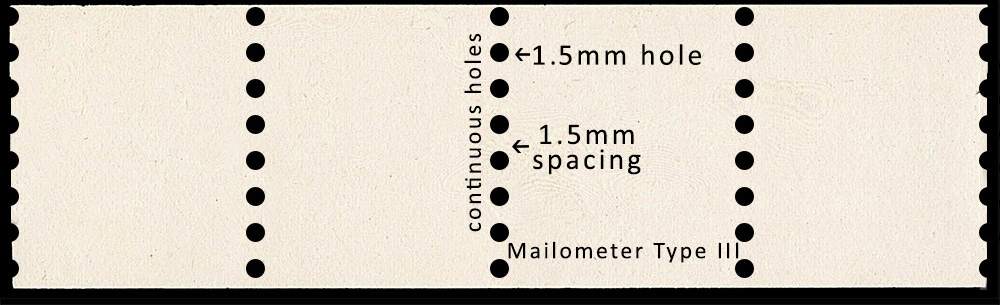
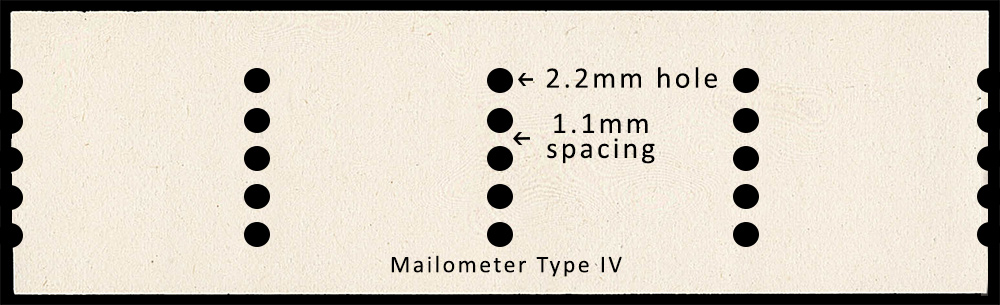
"U.S. Automatic Vending Company stamp pocket Type 2-3,with 1¢ Green (#343) with U.S. Automatic Vending Ty. I separations and two 2¢ Alaska-Yukon imperforates, enclosed within a stamp pocket with ""Patent Applied For"" hand-stamped. The vending machines dispensing stamp pockets were very well received by the public and the novelty was such that orders for the pockets had to be filled quickly. In order to satisfy this demand one roll of the 1¢ Green with U.S.A.V. Co. Ty. I separations was broken-up and put into the pockets. The Type 2 pockets filled with these stamps are among the scarcest of the stamp pocket varieties."
The design inspiration
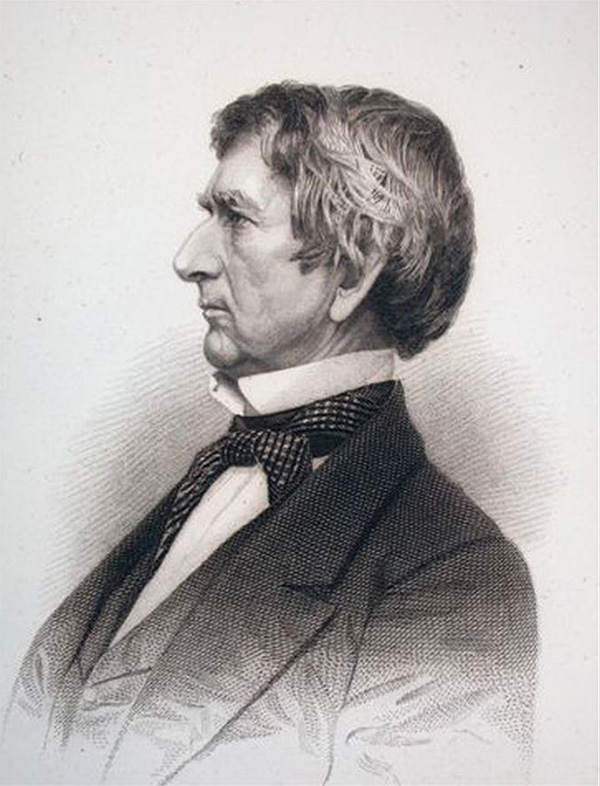
The design vignette is from an engraving by Richie Alexander, based on a contemporary photograph of William H Seward whilst Secretary of State
Private Perforations

The Chicago Roulette
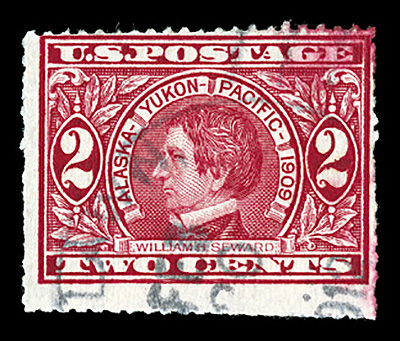
C.H. Mekeel private perforation
For more private perforations of #371 scroll down below
Essays and Proofs

370-E1var
Unadopted design for a seal stamp

370-E1var

370-E1
Photographic design on India

370-E1

370-E2
Photographic design on India

370-E2

370-E3
Photographic design on India
Essay on India with head alternative.
The seal design was rejected by the organisers of the Exhibition as it gave the impression that Alaska and Yukon was a year round land of snow and ice. Thus it would put off summer tourists

370-E3

370-E4
Photographic design on India, showing Seward's head

370-E4

370-E5
Photographic design on India

370-E5

370-P1
Proof on India die sunk on card

370-P1

370-P2
Proof on card

370-P2
The Alaska Yukon Exposition of 1909
Held in Seattle in 1909 was held to publicize the Pacific North West and was generally a success due to it's heavy promotion by both the organizers and railway companies. After the Exposition ended the buildings became the University of Washingon Campus. Two of the original buildings survive and are now the Architecture Hall and the Cunningham Hall.
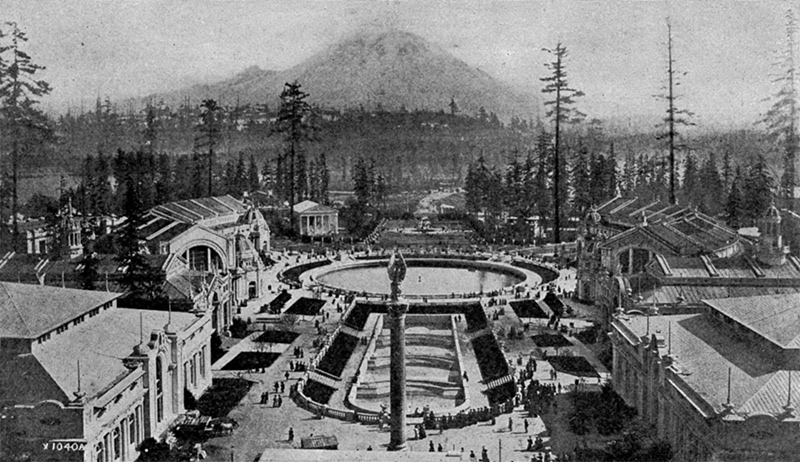
Looking down the Court of Honor at the Alaska-Yukon-Pacific Exposition toward Mount Rainier

The manufactures building under construction
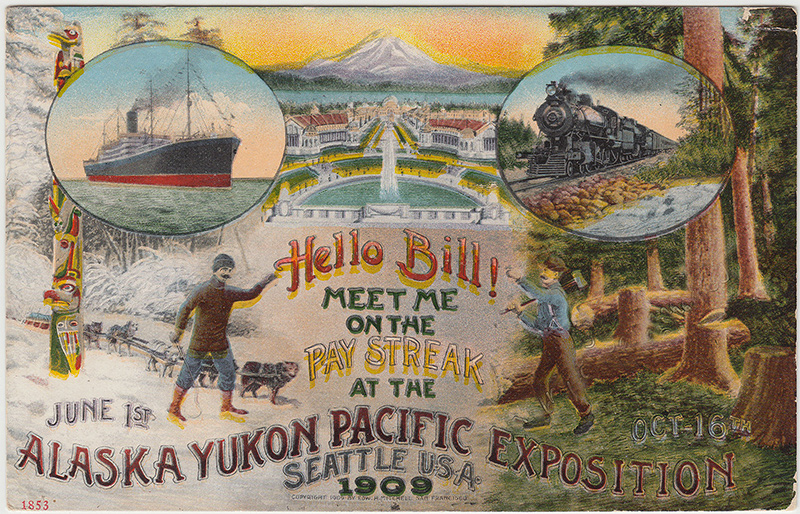
A card advertising the 'Pay Streak' attraction at the Exposition.
The Pay Streak featured games of chance with cash prizes, it
was added after the success of a similar attraction at the Chicago Fair.
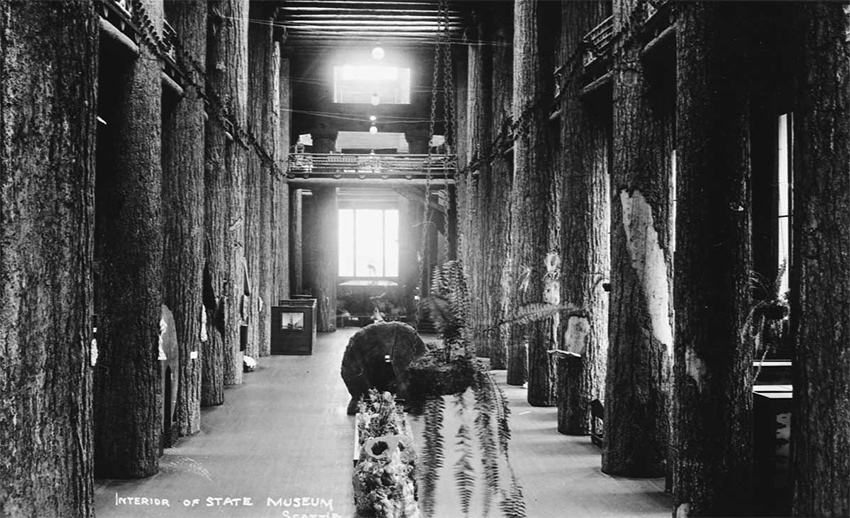
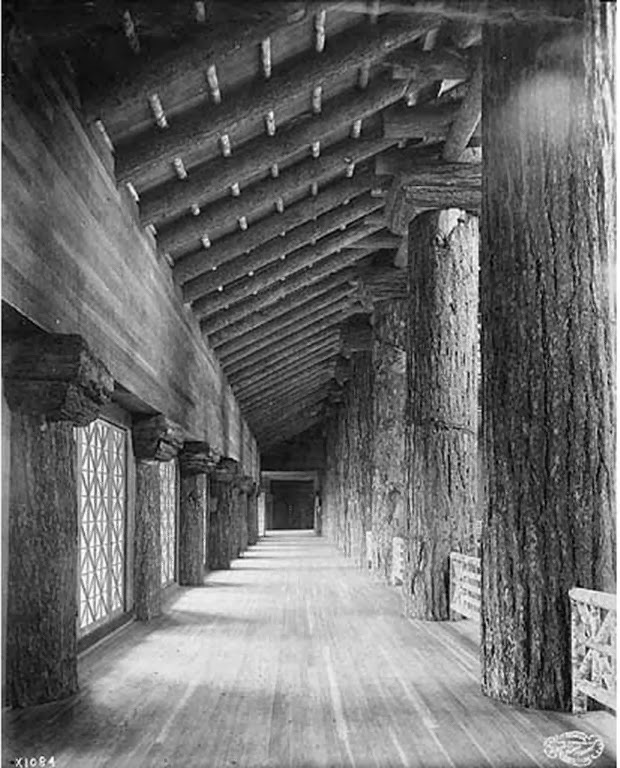
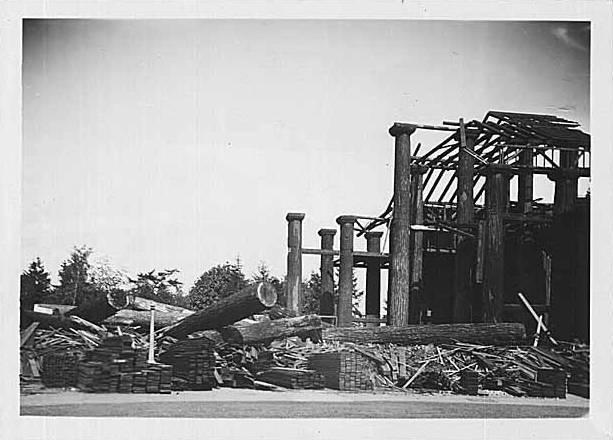
THE TEMPLE OF TIMBER (The Forestry Buiding)
Billed as the worlds largest log cabin the structure survived the Exposition.
Unfortunately it was demolished in 1930 as the logs were difficult to maintain
and no alternative use for the building could be found by the buildings new owners, the Univ. of Washington.

1909 Commemoratives
Click your selected stamp